Gluten-Free at Food Lion: A Southeast Celiac Guide
This post may contain affiliate links. As an Amazon Associate, Check Gluten earns from qualifying purchases. Please read our disclosure policy.
Food Lion is where a lot of the Southeast actually shops. Here's how to eat gluten-free from a conventional, budget-focused supermarket without spending specialist money.
Food Lion is where a lot of the Southeast actually shops. Here's how to eat gluten-free from a conventional, budget-focused supermarket without spending specialist money.
Want to save this recipe?
Enter your email and we'll send it to you! Plus, get new recipes every week.
✓Key Takeaways
Food Lion runs conventional supermarkets across the Southeast and mid-Atlantic with a budget focus, and that is worth taking seriously, because most coeliac shopping advice quietly assumes a Whole Foods budget. It does not need one.
The specialist gluten-free range here is thinner than at a natural-foods retailer. What the store does carry is a full complement of naturally gluten-free food at prices that work, which is the larger part of the diet anyway.
Own brands and where claims appear
Food Lion brand covers the staples and carries gluten-free claims on a reasonable share of them.
Nature's Place is the natural and organic line and is where specialist items concentrate — snacks, some baking, some frozen.
Taste of Inspiration covers premium and prepared items.
As everywhere in the US, a gluten-free claim means the product is made to contain less than 20 parts per million of gluten under FDA rule 21 CFR 101.91, whether the pack is own-brand or national.
Eating gluten-free without specialist prices
The expensive part of this diet is the replacement products — the breads, the crackers, the flour blends engineered to behave like wheat. The rest of it is ordinary food.
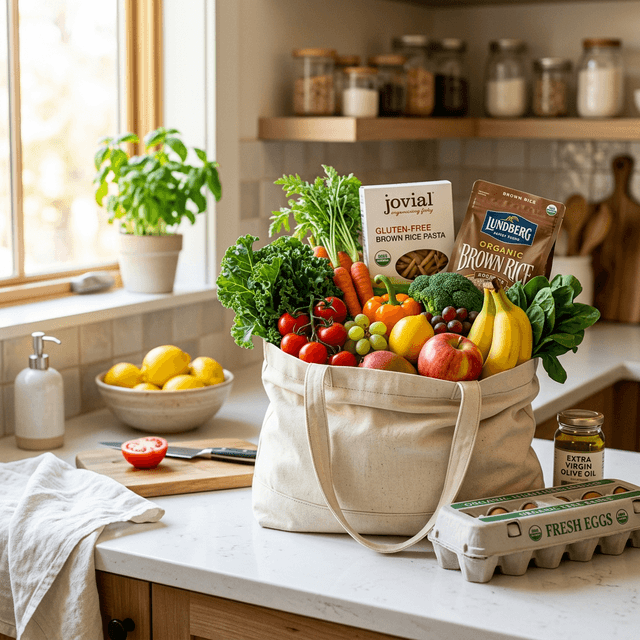
Rice, potatoes, corn, beans, lentils, eggs, plain meat and fish, plain dairy, fruit and vegetables are all naturally gluten-free and none of them carries a premium. A week of meals built on those costs no more than it did before a diagnosis.
Buying two or three specialist products you actually want — a bread you like, a pasta that holds up — and building everything else from naturally gluten-free ingredients is both cheaper and, for most people, easier than trying to replace every wheat product one-for-one.
📩 Want more tips like this?
Join celiacs getting weekly gluten-free tips, recipes, and hidden gluten alerts.
No spam. Unsubscribe anytime.
The departments to treat as unsafe
The in-store bakery works with wheat flour openly. Shared ovens, shared racks, airborne flour, shared tongs on self-serve cases.
The deli counter slices on shared blades, and some deli meats contain gluten through binders, fillers or marinade regardless of the blade.
Hot food, fried chicken and prepared cases share fryers and utensils. A shared fryer is a reliable source of gluten even when the item going into it is not breaded.
Bulk bins, where present, are unusable.
Search Amazon for gluten-free snack
Amazon search results · Look for a certified gluten-free seal on the label
Gluten-Free snack on Amazon

Simple Mills Almond Flour Crackers
Clean ingredients, great taste

Glutino GF Pretzels
Classic pretzel taste, certified GF
Enjoy Life Snack Bars
Free from top 14 allergens
The rotisserie chicken question
A plain roast chicken is naturally gluten-free. Supermarket rotisserie chicken is usually not plain — commercial poultry marinades and brines frequently include wheat starch or hydrolysed wheat protein.
Ask for the ingredient specification. If nobody can produce it, buy the bird raw and season it yourself. It is cheaper anyway.
🛒 Not sure if what you're holding is safe?
Point your phone at any ingredient label and get a clear safe / caution / unsafe answer in about three seconds — including the hidden gluten most labels bury.
Hidden gluten on a budget shop
Budget-focused ranges use more fillers, thickeners and seasonings than premium ones, which makes label reading more rather than less important.
Read the allergen statement first — wheat must be declared. Then read the ingredient list for barley, which does not require an allergen declaration in the US and hides as malt, malt extract, malt syrup, malt flavouring or malt vinegar. Cheaper breakfast cereals, gravy mixes, seasoning packets, soups and sauces are the usual homes.
Traditionally brewed soy sauce contains wheat, which puts it into marinades and anything teriyaki-flavoured. Brewer's yeast carries gluten from beer production.
A realistic first trip
Shop the perimeter first. Produce, plain proteins, eggs, plain dairy — almost no label reading, and it feeds you tonight for ordinary money.
Then pick two centre-aisle categories and solve them properly. Not five. Two. You can widen the list next week, and you will have eaten in the meantime.
When the label does not answer
Some packs genuinely do not resolve. No claim, no allergen statement, an ingredient list with several entries that could be anything. Check those rather than guessing, and leave them if you cannot get an answer.
🔍 Not sure about a product?
Photograph any food label and the AI reads every ingredient, including the 500+ names gluten hides under. Free for 14 days.
Search Amazon for gluten-free snack
Amazon search results · Look for a certified gluten-free seal on the label
Gluten-Free snack on Amazon
Simple Mills Almond Flour Crackers
Clean ingredients, great taste
Glutino GF Pretzels
Classic pretzel taste, certified GF
Enjoy Life Snack Bars
Free from top 14 allergens
Celiac Safety Glossary
- Celiac disease
- Celiac disease is a serious autoimmune disorder in which ingesting gluten — a protein found in wheat, barley, and rye — triggers an immune response that damages the small intestine's villi, affecting approximately 1 in 100 people worldwide according to the Celiac Disease Foundation.
- Gluten
- Gluten is a family of storage proteins (prolamins and glutelins) found naturally in cereal grains like wheat (including varieties like spelt, kamut, and farro), barley, and rye, which acts as a binder to give food elasticity and shape.
- Malt (Barley)
- Malt is fermented barley used as a flavoring or sweetener in cereals, chocolates, and beer; it is a major source of hidden gluten that is often overlooked on ingredient lists.
- Wheat starch
- Wheat starch is wheat flour that has had the gluten protein washed out. While some European gluten-free foods use codex-grade wheat starch (tested below 20 ppm), it can still trigger reactions in sensitive individuals.
- Brewer's yeast
- Brewer's yeast is a byproduct of beer brewing that is heavily contaminated with gluten from barley; it is a common hidden ingredient in savory snacks and seasonings.
📢 Found this helpful? Share it!
Stop Guessing. Start Scanning.
Every ingredient label has hidden gluten risks. Check Gluten's AI catches them all — in 3 seconds flat.
Camera + text input
& cross-contamination
$0 today • cancel anytime

The Essential Celiac Cookbook & Survival Bundle
Stop stressing over dinner and crumbling bread. 300+ comfort mains, 200 baking masterclass recipes, 4-week meal plans, and grocery checklists.
About This Article
Check Gluten
Written with AI assistance and checked against published sources — not by a doctor or dietitian. Confirm anything that matters with the label, the manufacturer, or your own healthcare provider.
How our content is checked →Medical Disclaimer: This article is for informational purposes only and is not a substitute for professional medical advice. Always consult your physician or a registered dietitian before making dietary changes related to celiac disease or gluten sensitivity. Read full disclaimer.
📚Sources & Citations
- •Celiac Disease Foundation — celiac.org — Comprehensive research and patient resources on celiac disease
- •Beyond Celiac — beyondceliac.org — Research-driven celiac disease advocacy and resources
- •GFCO (Gluten-Free Certification Organization) — gfco.org — Certification standards (<10 ppm)
- •FDA Gluten-Free Labeling — fda.gov — Federal regulations for <20 ppm labeling
Content reviewed and fact-checked by our clinical & nutrition team. Last updated July 2026.
Never Miss a Hidden Gluten Alert
Weekly tips on safe eating, hidden gluten warnings, and recipes — free, and one click to unsubscribe.
Related Articles
Gluten-Free at Ingles: Shopping the Southeast on a Budget
Ingles covers the Appalachian Southeast with conventional supermarkets and a strong own brand. Here is how to eat gluten-free from one without paying specialist prices.
Gluten-Free at H-E-B: A Texas Celiac Shopping Guide
H-E-B's own-brand ranges are unusually deep, which helps a gluten-free shopper more than it might sound. Here's how to read them and where the store's strengths turn into risks.
Gluten-Free at Kroger: How to Shop the Biggest US Supermarket
Kroger and its sister banners cover most of the country. Here's how their gluten-free labelling works, which own-brand lines to learn, and the three departments to treat with caution.
Best Gluten-Free Snacks: Certified, Dedicated-Facility and Labelled Picks
Gluten-free snacks sorted by how much each brand guarantees: certified and made in dedicated facilities, certified, or labelled gluten-free. No invented taste scores.