Just Diagnosed with Celiac Disease?
Take a breath. You're going to be okay. This guide walks you through everything you need to know for your first month gluten-free — step by step, week by week.
Celiac Disease vs. Non-Celiac Gluten Sensitivity (NCGS)
| Feature / Standard | Celiac Disease | Gluten Sensitivity (NCGS) |
|---|---|---|
| Immune Mechanism | Autoimmune (anti-tTG, EMA) Attacks small intestine villi | Innate / Non-autoimmune No intestinal villous atrophy |
| Gluten Threshold | < 20 ppm strictly required Trace crumbs cause internal damage | Varies by individual Symptoms without intestinal scarring |
| Diagnostic Gold Standard | tTG-IgA Blood Panel + Biopsy Must be consuming gluten when tested | Diagnosis by exclusion Rule out celiac & wheat allergy first |
| Cross-Contamination Risk | Critical risk (Dedicated tools) Requires separate toaster & boards | Moderate to low risk Depends on personal symptom threshold |
🕐 Reading time: 12 minutes | 📋 Actionable tasks: 24 items | 💬 Written by celiacs, for celiacs
Start the GuideYour First Month — Week by Week
Don't try to do everything at once. Follow this pace and you'll feel confident by the end of the month.
- Understand what gluten is: a protein in wheat, barley, and rye
- Learn the 30+ hidden names for gluten on food labels
- Download Check Gluten to start scanning everything in your pantry
- Tell your close family/friends about your diagnosis
- Schedule a follow-up with your gastroenterologist
- Get blood work done: check for nutrient deficiencies (iron, B12, vitamin D, calcium)
The Pantry Cleanout Checklist
These are the common items that need to go (or be moved to a separate "not for me" shelf if you share a kitchen).
Not sure about something? Don't toss it — scan it first with Check Gluten. Our AI will tell you if it's safe in 3 seconds.
The Emotional Side (Nobody Talks About This)
A celiac diagnosis isn't just a diet change — it's an emotional journey. Here's what you might be feeling, and why it's completely normal.
Grief
It's normal to mourn the foods you can't eat anymore. Pizza, beer, your grandma's cookies — these losses are real.
Frustration
Label reading is exhausting. Eating out feels impossible. Being "that person" at dinner parties is awkward. This frustration is valid.
Anxiety
Fear of accidental gluten exposure is common. Over time, as you learn and build routines, this anxiety decreases significantly.
Relief
Many people feel relieved to finally have an answer for years of mysterious symptoms. You're not crazy — your body was telling you something.
Empowerment
Knowledge is power. The more you learn, the more confident you'll become. Most long-term celiacs say it becomes second nature.
You are not alone. Over 3 million Americans have celiac disease. The community is welcoming, supportive, and full of people who've been exactly where you are right now.
Trusted Resources & Support
Bookmark these — they'll be your go-to references as you learn to live GF.
Celiac Disease Foundation ↗
Leading US celiac organization — research, advocacy, and resources
Beyond Celiac ↗
Research-focused organization working toward celiac treatments
Gluten Intolerance Group (GIG) ↗
Runs the GFCO certification program — the gold standard
r/Celiac on Reddit ↗
Active community of celiacs sharing tips, product finds, and support
Celiac Disease Foundation — Find a Doctor ↗
Directory of celiac-specialized gastroenterologists
Set Up Your Gluten-Free Kitchen
The certified GF pantry staples we recommend starting with on day one.
Search Amazon for gluten-free default
Amazon search results · Look for a certified gluten-free seal on the label
Gluten-Free default on Amazon

Bob's Red Mill GF Flour
Essential GF pantry staple

Canyon Bakehouse GF Bread
Best-tasting GF bread

Barilla GF Pasta
Closest to regular pasta taste
Celiac Safety Glossary
- Celiac disease
- Celiac disease is a serious autoimmune disorder in which ingesting gluten — a protein found in wheat, barley, and rye — triggers an immune response that damages the small intestine's villi, affecting approximately 1 in 100 people worldwide according to the Celiac Disease Foundation.
- Gluten
- Gluten is a family of storage proteins (prolamins and glutelins) found naturally in cereal grains like wheat (including varieties like spelt, kamut, and farro), barley, and rye, which acts as a binder to give food elasticity and shape.
- Gluten-free certification
- Gluten-free certification, such as the GFCO (Gluten-Free Certification Organization) seal, verifies that a product contains fewer than 10 parts per million (ppm) of gluten — stricter than the FDA's 20 ppm threshold for "gluten-free" labeling.
- Avenin (Oats)
- Avenin is a protein found in oats that is structurally similar to gluten. While most celiacs can tolerate pure, uncontaminated oats, a small percentage of celiacs react to avenin itself.
- Malt (Barley)
- Malt is fermented barley used as a flavoring or sweetener in cereals, chocolates, and beer; it is a major source of hidden gluten that is often overlooked on ingredient lists.
- Wheat starch
- Wheat starch is wheat flour that has had the gluten protein washed out. While some European gluten-free foods use codex-grade wheat starch (tested below 20 ppm), it can still trigger reactions in sensitive individuals.
Frequently Asked Questions
Answers to the most common questions for individuals newly diagnosed with celiac disease.
How long does it take for the small intestine to heal after going gluten-free?+
According to the Celiac Disease Foundation, small intestinal healing can take anywhere from several months to a few years. In children, healing is typically faster (usually within 3-6 months), while in adults, complete mucosal recovery may take 2 to 3 years of a strict gluten-free diet.
What should I do if I accidentally eat gluten (get glutened)?+
If exposed to gluten, stay hydrated by drinking water or broth, rest to manage fatigue, and use a heating pad for abdominal pain. According to Beyond Celiac, there is no medical cure to stop a reaction once ingested; you must allow your body time to recover and consult your doctor if symptoms are severe.
Can I share a toaster or kitchen utensils with non-celiac family members?+
No. Cross-contamination from shared toasters, wooden cutting boards, colanders, and scratched non-stick pans can trigger autoimmune damage. People with celiac disease must use a dedicated gluten-free toaster and separate, non-porous utensils (like silicone or metal) to prevent ingesting trace gluten particles.
How do I verify if a food product is completely gluten-free?+
Look for a "Certified Gluten-Free" seal (like the GFCO mark, which ensures less than 10 ppm of gluten). In the US, products labeled "gluten-free" without a seal must meet the FDA threshold of under 20 ppm. Always check the ingredients for wheat, barley, rye, malt, and brewer's yeast, or use the Check Gluten app.
Do I need to use gluten-free shampoo, toothpaste, and cosmetics?+
You must use gluten-free toothpaste, mouthwash, and lip balm because they are easily ingested. For cosmetics like shampoo, lotion, and soap, the Celiac Disease Foundation states that gluten cannot be absorbed through the skin unless you have open wounds, but washing your hands before eating is critical.
The Complete Celiac Toolkit
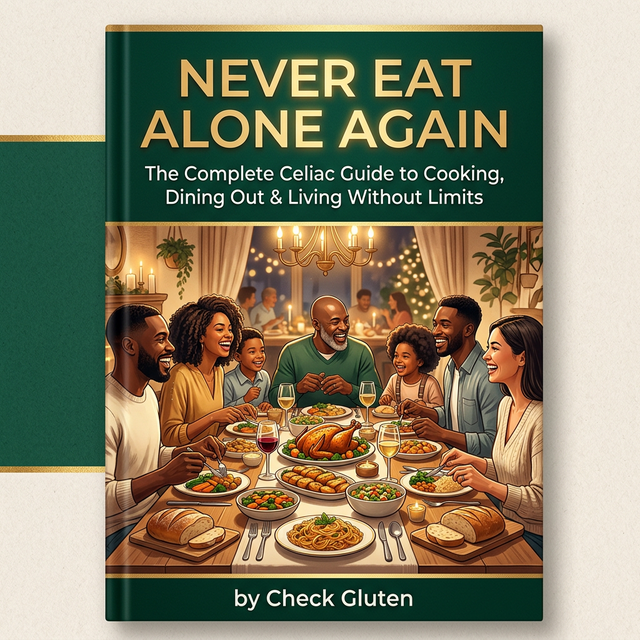
We created the Ultimate Celiac Bundle for people exactly where you are right now. It includes everything we wish someone had given us on day one:
- 500+ gluten-free & dairy-free recipes (so you never run out of meal ideas)
- Dining out survival system (exactly what to say to waiters)
- Travel cards in 6 languages (for eating safely abroad)
- Printable shopping lists & 4-week meal plans
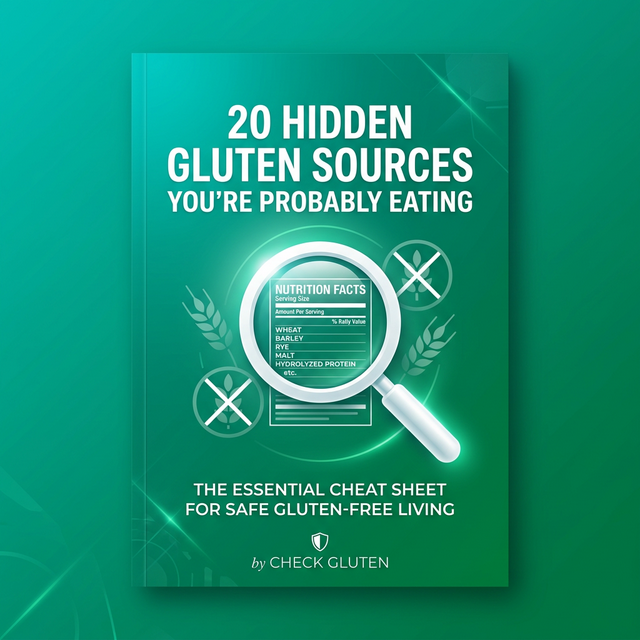
- Label reading cheat sheet (all 30+ hidden gluten names)
Your First Tool for Going Gluten-Free
Check Gluten scans any food label with AI and tells you instantly if it's safe. No more memorizing 30+ hidden gluten names — let AI do the work.
Try free for 14 days. Cancel anytime.