Know Instantly If Your Food
Contains Hidden Gluten.
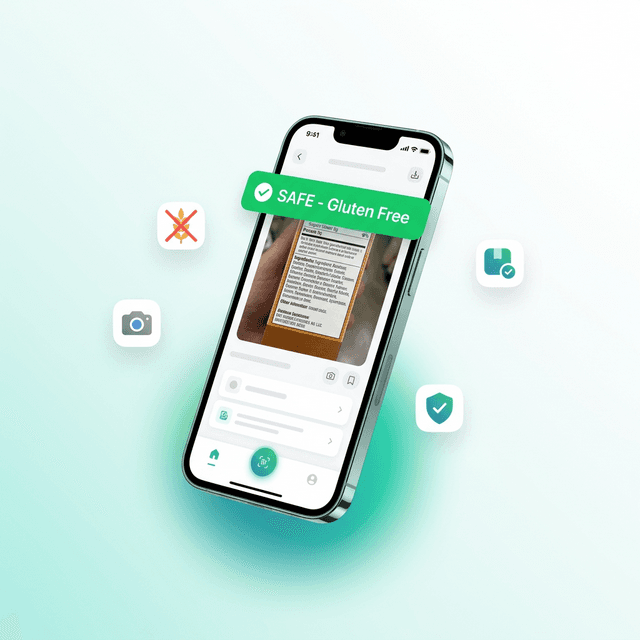
Gluten hides behind 30+ ingredient names, and recipes change without warning. Check Gluten's AI reads the full ingredient list for you — flagging hidden gluten and cross-contamination risks in seconds, so you can shop and eat with confidence.
500+ gluten-free recipes & meal plans · instant PDF · 60-day money-back —
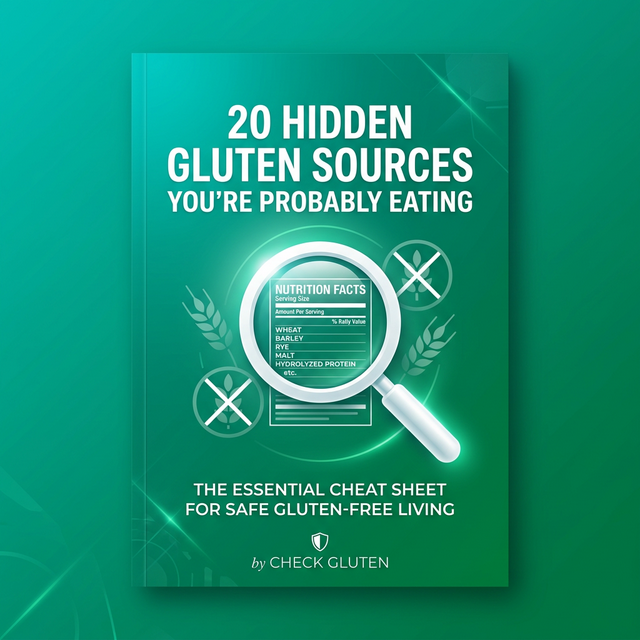
Free PDF: 20 Hidden Gluten Sources
Gluten Laws & Safety Differ Worldwide
Did you know oatmeal, soy sauce, and restaurant labeling are regulated differently in the US, Europe, and Australia? Explore guidelines tailored to your location.
Select Destination
Gluten-Free in Italy
Timezone-assisted regional profile
Local Rules & Regulations
Exceptional celiac standards. AIC-certified restaurants are legally audited. Pharmacies sell GF food.
🍻 Beer & Barley Standards
Enzymatically gluten-removed beers are sold as gluten-free under 20ppm.
Check Beer RulesTraveling soon? Grab our translation cards and check curated city guides.
View Italy Travel GuideWhy Reading Labels Isn't Always Enough
Even careful, experienced label-readers still get glutened. The reason isn't carelessness — it's that the tools most people rely on have real, structural blind spots. Here's where they fall short, and how AI helps close the gap.
Manual Reading Fails
Human eyes get tired. Formulas change without warning. No person alive can reliably decode industrial biochemical nomenclature on microscopic text, every single time, with zero margin for error. You shouldn't have to have a PhD in chemistry to eat safely.
Barcode Apps Fail
Every tool you've tried before—barcode apps, static databases—relies on outdated information submitted by volunteers. When a manufacturer quietly changes an ingredient, the barcode stays exactly the same. The app says it's safe. You get sick.
The Paradigm Shift
Check Gluten is an AI trained specifically on the chemistry of hidden gluten. It doesn't rely on barcodes or old databases. It reads the raw, real-time ingredient text right in front of you, instantly catching what human eyes and databases miss.
What the scanner actually does
Three things a barcode app cannot do, which is the whole reason this exists.
Reads the label, not a barcode
Barcode databases go stale the moment a recipe changes. The scanner reads the ingredient list in front of you, so a reformulated product is caught the first time you check it.
Explains why, not just whether
A flagged ingredient comes with the reason — which protein, which processing step, which certification would settle it.
Works in any language
Point it at a label you cannot read. It handles the ingredient list whatever language the pack is printed in.
🍞 Get Celiac Tips & Gluten-Free Deals
Weekly tips on safe eating and hidden gluten alerts, plus our free 20 Hidden Gluten Sources cheat sheet. One click to unsubscribe.
No spam, ever. Unsubscribe anytime.
The Cheapest Health Insurance You'll Ever Buy
Cost of 1 Glutening Event
$847+
ER visit + lost work + 2 weeks recovery
Check Gluten Premium
$0.43/day
Unlimited scans · AI protection · Peace of mind
Premium AI Protection
Billed $59.88/year · Save 62%
That's less than a single coffee per week.
- Unlimited gluten checks
- Personal Safe Product List
- Cross-contamination risk score
- Scan history & exportable reports
- Multi-language label support
- Save favorite products
- Priority customer support
- Ad-free experience
- 14-day free trial via PayPal
Prefer to try first?
Gluten-Free Resources
Expert guides trusted by thousands of celiacs worldwide. Start free, upgrade when ready.

Never Eat Alone Again
Complete celiac guide to dining out, traveling, and living without limits.
The Cookbook Bundle
500+ delicious recipes, baking masterclass, and 4 weeks of meal plans.
Ultimate Celiac Bundle
Both guides + cookbook — 500+ recipes, meal plans, travel guides, everything.
Gluten-Free Knowledge Base
Expert guides to help you navigate gluten-free living with confidence.
Gluten-Free Halloween Candy 2026: What the Candy Makers Say
Which Halloween candy is labeled gluten-free by its maker, which lists wheat or barley, and which makers publish no list, with every verdict linked to the candy maker's own page.
Gluten-Free at P.F. Chang's: The Menu and What It Promises
P.F. Chang's publishes a dedicated gluten-free menu and says how those dishes are prepared. Here is what is on it, what the chain promises, and what to say when you order.
Gluten-Free at WinCo: The Cheapest Store With the Worst Aisle
WinCo is one of the cheapest places in the West to buy food, and it is built around the single department a coeliac cannot use. Here is how to shop it anyway.
Celiac Disease Symptoms Checklist
The complete checklist of symptoms to help identify celiac disease early.
Your Partner Has Celiac: The Honest Guide
Everything spouses and partners need to know about living with a celiac.
GF Meal Prep: Cook Once, Eat All Week
The Sunday System that cuts your cooking from 14 hours to 2.
I Accidentally Ate Gluten: What to Do Now
Step-by-step guide for what to do right now if you've been glutened.
Understanding Gluten
Essential knowledge for anyone with celiac disease, gluten sensitivity, or following a gluten-free diet.
What Is Gluten?
Gluten is a family of storage proteins found naturally in wheat, barley, rye, and triticale. The two main proteins in gluten are glutenin and gliadin — gliadin is responsible for most of the negative health effects in people with celiac disease.
When flour is mixed with water, gluten proteins form a sticky, elastic network that gives bread its chewy texture, helps dough rise, and provides structure to baked goods. This is why gluten-free baking requires different techniques and substitutes.
For the approximately 1 in 100 people worldwide who have celiac disease, even trace amounts of gluten (as little as 20 parts per million) can trigger an autoimmune reaction that damages the small intestine's lining, leading to nutrient malabsorption and a wide range of symptoms.
Who Needs to Avoid Gluten?
Celiac Disease
An autoimmune disorder where gluten triggers immune attacks on the small intestine. Affects roughly 1% of the population. Requires strict, lifelong avoidance of all gluten — even trace amounts from cross-contamination.
Non-Celiac Gluten Sensitivity
Causes symptoms similar to celiac disease (bloating, fatigue, headaches) but without intestinal damage. Estimated to affect 6–7% of the population. Diagnosis is by exclusion after ruling out celiac disease and wheat allergy.
Wheat Allergy
An allergic reaction to proteins in wheat (not limited to gluten). Can cause hives, difficulty breathing, or anaphylaxis. Most common in children and often outgrown by adulthood.
Dermatitis Herpetiformis
A chronic skin condition directly linked to celiac disease. Causes intensely itchy blisters, typically on elbows, knees, and buttocks. Resolves with a strict gluten-free diet.
30+ Hidden Names for Gluten on Food Labels
Gluten isn't always listed as "gluten." These ingredients all contain or may contain gluten — and Check Gluten's AI catches every one of them.
Definite Gluten Sources
- • Wheat (and all varieties: durum, spelt, kamut, einkorn, farro, emmer)
- • Barley
- • Rye
- • Triticale (wheat-rye hybrid)
- • Malt, malt extract, malt flavoring
- • Brewer's yeast
- • Wheat starch (unless specifically labeled gluten-free)
- • Semolina
- • Bulgur
- • Couscous
- • Seitan (pure wheat gluten)
May Contain Gluten
- • Modified food starch (may be from wheat)
- • Hydrolyzed vegetable protein
- • Natural flavors / artificial flavors
- • Dextrin (sometimes from wheat)
- • Caramel color (rarely from barley)
- • Maltodextrin (usually safe, but check source)
- • Textured vegetable protein
- • Seasonings (may contain wheat flour)
- • Soy sauce (traditionally made with wheat)
- • Teriyaki sauce
Safe Alternatives
- • Rice (all varieties)
- • Corn and cornstarch
- • Quinoa
- • Buckwheat (despite the name, no wheat)
- • Millet
- • Amaranth
- • Teff
- • Arrowroot
- • Tapioca / cassava
- • Potato starch
- • Certified gluten-free oats
Can't memorize all these? That's exactly why Check Gluten exists. Our AI knows 500+ gluten-related ingredients and checks every one in under 3 seconds. Try it free →
Celiac Disease by the Numbers
people worldwide have celiac disease
of celiacs are undiagnosed or misdiagnosed
average time to get a correct diagnosis
threshold for "gluten-free" labeling (FDA)
Frequently Asked Questions
Everything you need to know about checking food for gluten with Check Gluten.
How does Check Gluten detect gluten in food?+
Check Gluten uses AI to read the full ingredient list on a food label or menu — either from a photo you take or text you paste. It analyzes every ingredient against 500+ gluten-related terms, including 30+ names that hide gluten (like malt, hydrolyzed wheat protein, and modified food starch), then returns a clear green (safe), yellow (caution), or red (contains gluten) result with an explanation.
Is Check Gluten free to use?+
The AI gluten scanner is a Premium feature ($4.99/month billed annually, or $12.99/month) with unlimited scans, saved scan history, a personal safe-product list, deeper chemical analysis, and an ad-free experience. Every plan starts with a 14-day free trial — cancel anytime. Our recipes, food guides, and AI Recipe Maker are free to browse.
Can it catch hidden gluten and cross-contamination risks?+
Yes. Unlike barcode-scanning apps that rely on databases that go out of date when manufacturers change recipes, Check Gluten reads the actual ingredient text in front of you. It flags hidden gluten sources such as malt flavoring, brewer’s yeast, and wheat-based soy sauce, and highlights ingredients that carry a cross-contamination risk.
Does it work on restaurant menus and foreign-language labels?+
Yes. Check Gluten works on packaged food labels, restaurant menus, and labels in many languages, which makes it especially useful when traveling. Photograph or paste the text and the AI analyzes it for gluten and cross-contamination risks.
What’s the difference between celiac disease and gluten sensitivity?+
Celiac disease is an autoimmune disorder (about 1 in 100 people) in which gluten triggers the immune system to damage the small intestine — even trace amounts can cause harm, so strict lifelong avoidance is required. Non-celiac gluten sensitivity causes similar symptoms without the intestinal damage and affects an estimated 6–7% of people. Both benefit from carefully checking ingredient labels.
How accurate is Check Gluten?+
Check Gluten’s AI is trained to recognize 500+ gluten-related ingredients and the 30+ alternate names gluten hides behind on labels. It’s a fast, reliable assistant for reading labels — but not a substitute for medical advice or a manufacturer’s allergen statement. If you have celiac disease, always confirm with the product’s official allergen labeling when in doubt.
Celiac Safety Glossary
- Celiac disease
- Celiac disease is a serious autoimmune disorder in which ingesting gluten — a protein found in wheat, barley, and rye — triggers an immune response that damages the small intestine's villi, affecting approximately 1 in 100 people worldwide according to the Celiac Disease Foundation.
- Gluten
- Gluten is a family of storage proteins (prolamins and glutelins) found naturally in cereal grains like wheat (including varieties like spelt, kamut, and farro), barley, and rye, which acts as a binder to give food elasticity and shape.
- Cross-contamination
- Cross-contamination (or cross-contact) occurs when gluten-free food comes into contact with gluten-containing food or surfaces — such as shared cutting boards, toasters, fryers, or utensils — rendering otherwise safe food dangerous for people with celiac disease.
- Gluten-free certification
- Gluten-free certification, such as the GFCO (Gluten-Free Certification Organization) seal, verifies that a product contains fewer than 10 parts per million (ppm) of gluten — stricter than the FDA's 20 ppm threshold for "gluten-free" labeling.
- Parts Per Million (ppm)
- Parts per million (ppm) is a unit of measurement used to quantify gluten concentration. Labeling laws in the US and Europe permit a maximum threshold of 20 ppm, while Australia requires no detectable gluten (0 ppm).
- Avenin (Oats)
- Avenin is a protein found in oats that is structurally similar to gluten. While most celiacs can tolerate pure, uncontaminated oats, a small percentage of celiacs react to avenin itself.
- Malt (Barley)
- Malt is fermented barley used as a flavoring or sweetener in cereals, chocolates, and beer; it is a major source of hidden gluten that is often overlooked on ingredient lists.
- Wheat starch
- Wheat starch is wheat flour that has had the gluten protein washed out. While some European gluten-free foods use codex-grade wheat starch (tested below 20 ppm), it can still trigger reactions in sensitive individuals.
- Brewer's yeast
- Brewer's yeast is a byproduct of beer brewing that is heavily contaminated with gluten from barley; it is a common hidden ingredient in savory snacks and seasonings.
You Deserve to Eat Without Fear
Shop, cook and travel with more confidence using Check Gluten. Start your free trial today — $0 for 14 days, cancel anytime.