The 10 Most Dangerous Hidden Gluten Sources in Your Kitchen Right Now
This post may contain affiliate links. Please read our disclosure policy.
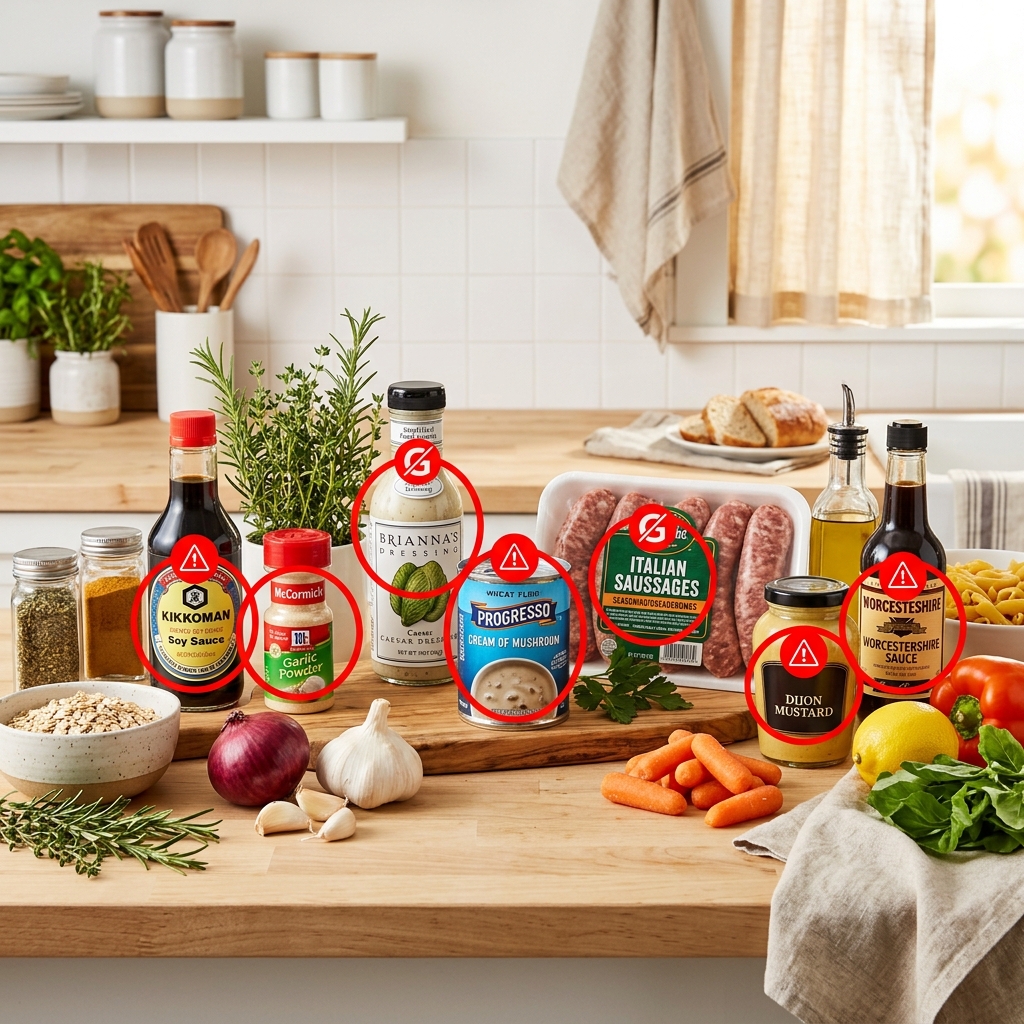
That soy sauce in your fridge? The spice blend you use every night? The salad dressing you pour without thinking? Hidden gluten is everywhere in "normal" kitchens — even kitchens that are supposed to be 100% gluten-free. Here are the 10 most dangerous offenders.
Want to save this recipe?
Enter your email and we'll send it to you! Plus, get new recipes every week.
Your Kitchen Is Lying to You
I thought my kitchen was 100% gluten-free.
I was wrong.
After 4 years of strict celiac living, I found 7 products with hidden gluten sources that I'd been eating regularly. Not because I'm careless — because ingredient labels are genuinely confusing, names change, formulas change, and gluten hides under names that sound completely harmless.
Here are the 10 worst offenders. Check yours today.
1. Soy Sauce (Yes, Regular Soy Sauce)
What you think: "It's made from soybeans."
The truth: Regular soy sauce is 40-60% wheat. It is brewed from a fermented paste of soybeans AND wheat.
This is the #1 source of hidden gluten exposure in celiac kitchens. It hides in stir-fries, marinades, dressings, and sauces.
The fix: San-J Tamari (GF) or coconut aminos.
👉 Is soy sauce gluten-free? Full guide
2. Oats & Oatmeal (If Not Certified GF)
What you think: "Oats are a grain, but they're not wheat."
The truth: Up to 88% of commercial oats are contaminated with wheat, barley, or rye from shared farming and processing equipment.
Even "100% whole grain oats" can contain gluten above 20 ppm if they're not certified GF.
The fix: ONLY buy certified GF oats. Bob's Red Mill GF Oats or GF Harvest.
👉 Is oatmeal gluten-free? Full guide
🔍 Still reading labels the hard way?
Check Gluten scans any food label in 3 seconds and tells you exactly what's safe. Trusted by celiacs worldwide.
3. Salad Dressings (Malt Vinegar Is Everywhere)
What you think: "It's just oil and vinegar."
The truth: Many dressings use *malt vinegar* (from barley) instead of distilled vinegar. Others use wheat-based thickeners, soy sauce, or "natural flavors" that may be wheat-derived.
Even balsamic vinaigrette can contain malt vinegar as a secondary ingredient.
The fix: Make your own (olive oil + apple cider vinegar + mustard + lemon), or scan the label before buying.
4. Spice Blends & Seasoning Mixes
What you think: "Spices are just ground plants."
The truth: Single-ingredient spices are safe. But blends (taco seasoning, Cajun blend, curry powder, everything bagel seasoning) often contain wheat flour as an anti-caking agent, maltodextrin from wheat, or barley malt flavoring.
The fix: Buy single spices and mix your own, or use certified GF spice brands. Scan any suspicious blend.
5. Imitation Crab (Surimi)
What you think: "It's seafood, right?"
The truth: Imitation crab is made from processed white fish bound together with WHEAT STARCH. It's in California rolls, seafood salads, and crab cakes at most restaurants.
The fix: Use real crab or ask restaurants specifically about imitation crab. Always ask at sushi restaurants.
📩 Want more tips like this?
Join celiacs getting weekly gluten-free tips, recipes, and hidden gluten alerts.
No spam. Unsubscribe anytime.
6. Processed Deli Meats
What you think: "It's just turkey/ham/roast beef."
The truth: Many deli meats contain "modified food starch" (sometimes from wheat), wheat-based fillers, caramel color (sometimes from barley), or are dusted with flour to prevent sticking during processing.
The fix: Applegate makes certified GF deli meats. Or buy whole cuts of meat and slice them yourself.
7. Breakfast Cereals (Even "Safe" Ones)
What you think: "Rice cereal should be fine."
The truth: Rice Krispies contain barley malt flavoring. Regular Corn Flakes contain malt flavor. Cheerios claims to be GF but has repeatedly failed independent testing.
Is cereal gluten-free? Full guide
The fix: Buy dedicated GF cereal brands like Nature's Path Envirokidz or Three Wishes.
8. Gravy & Sauce Thickeners
What you think: "It's just broth with seasoning."
The truth: Most gravies and many sauces are thickened with wheat flour or wheat-based roux. Canned gravy, packet gravy mix, and restaurant gravy are almost always NOT gluten-free.
The fix: Thicken with cornstarch, arrowroot, or GF flour. Make your own gravy from GF stock + cornstarch.
9. Beer & Malt Beverages
What you think: "I know beer has gluten, but malt seltzer is fine."
The truth: Any "malt" beverage is made from barley. This includes some hard seltzers, malt liquor, and Mike's Hard Lemonade. "Gluten-removed" beers are NOT recommended by the Celiac Disease Foundation.
Is beer gluten-free? Full guide
The fix: Glutenberg, Holidaily, hard cider, wine, or spirits.
10. Play-Doh (Yes, Really)
What you think: "My kid's art supplies can't be a problem."
The truth: Play-Doh is made from wheat flour. If your child plays with it and then touches food, surfaces, or their face, cross-contamination occurs. Some celiacs react to dermal exposure.
The fix: Use GF play dough or make your own with rice flour, salt, water, and food coloring.
The 3-Minute Kitchen Audit
You don't have to throw out your entire kitchen. Here's a fast method:
The whole process takes about 10 minutes with the scanner. Without it? You'd need to Google each ingredient individually. The AI does it in 3 seconds per product.
Don't Beat Yourself Up
Finding hidden gluten doesn't mean you failed. It means:
The fact that you're reading this means you're doing MORE than most people. Now you have a tool to make it even easier.
👉 Scan your kitchen now — free, no signup
Frequently Asked Questions
How often should I re-check products I've already verified?
Every 3-6 months. Manufacturers change ingredients, suppliers, and production lines regularly. A product that was safe 6 months ago may not be today.
Can gluten enter my food through shared cutting boards?
Yes. Porous surfaces like wooden cutting boards can harbor gluten residue. Use dedicated GF cutting boards or use glass/plastic boards that clean easily.
My celiac blood work is still elevated despite being strict. Could hidden gluten be the cause?
Absolutely. This is one of the most common reasons for persistently elevated tTG-IgA levels. A thorough kitchen and pantry audit — using AI scanning — often reveals sources of ongoing exposure.
Do I need to worry about cross-contamination from shared toasters?
Yes. Bread crumbs in shared toasters are a significant source of cross-contamination. Use a dedicated GF toaster or toaster bags to prevent this.
Are restaurants required to disclose gluten in their food?
In the US, the FDA requires allergen labeling on packaged foods but NOT restaurant menu items. You must ask directly. Use our restaurant guide for dining out safely.
🔍 Not sure about a product?
Check any food label instantly with our free AI gluten scanner — detects 500+ hidden gluten sources in 3 seconds.
Find Gluten-Free Food Safety on Amazon
Shop certified gluten-free options
Top Gluten-Free Picks
📢 Found this helpful? Share it!
Stop Guessing. Start Scanning.
Every ingredient label has hidden gluten risks. Check Gluten's AI catches them all — in 3 seconds flat.
Camera + text input
Priority support
No credit card required • Cancel anytime
The Ultimate Celiac Survival Bundle
Stop stressing over cross-contamination and what to make for dinner. Get our complete 500+ recipe cookbook, dining out guide, and label reading cheat sheets.
200+ GF Baking Recipes
& Fast Food Protocols
Instant PDF Download • 60-Day Money Back Guarantee
About the Author
Sarah Mitchell
Lead Content Writer & Nutritionist, B.S. Nutrition Science
Sarah was diagnosed with celiac disease in 2018 and writes evidence-based guides combining clinical nutrition knowledge with 6+ years of personal gluten-free living experience. All health content is medically reviewed by our advisory team.
Meet our full team →Medical Disclaimer: This article is for informational purposes only and is not a substitute for professional medical advice. Always consult your physician or a registered dietitian before making dietary changes related to celiac disease or gluten sensitivity. Read full disclaimer.
Related Articles
The Celiac College Survival Guide: Dining Halls, Dorm Life & Social Eating
How to navigate dining halls, dorm kitchens, late-night pizza runs, and social eating as a celiac college student. From meal plans to microwave hacks — everything you need.
Is Your Medication Gluten-Free? Hidden Gluten in Pills, Vitamins & Supplements
Wheat starch, barley malt, and modified food starch are used as fillers in hundreds of medications. Here is how to check if your pills are safe for celiac disease.
25 Things Only Someone with Celiac Disease Will Understand
The bread aisle grief, the restaurant anxiety, the "but you look fine" comments. If you know, you know. This is the most relatable list on the internet for celiacs.
Celiac Disease and Dating: The Honest Guide Nobody Writes
How to tell someone you have celiac on a first date, handle the "it is just a little gluten" comments, navigate shared kitchens, and build a relationship where your partner actually gets it.