Stop Squinting at Labels — Scan for Gluten in 3 Seconds Flat
This post may contain affiliate links. As an Amazon Associate, Check Gluten earns from qualifying purchases. Please read our disclosure policy.
Tired of reading tiny ingredient lists at the store? Our AI scans any food label and tells you instantly if it's gluten-free. Try it free.
Tired of reading tiny ingredient lists at the store? Our AI scans any food label and tells you instantly if it's gluten-free. Try it free.
Want to save this recipe?
Enter your email and we'll send it to you! Plus, get new recipes every week.
✓Key Takeaways
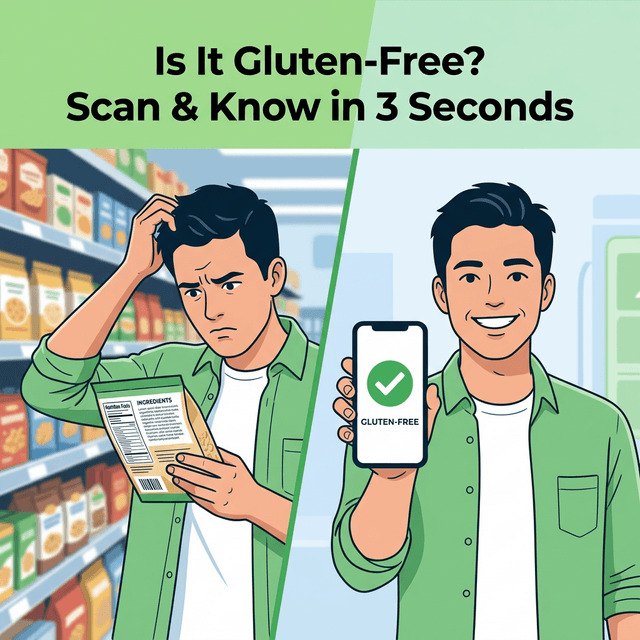
The Grocery Store Struggle Is Real
You're standing in aisle 7. You found a sauce that looks amazing. You flip it over, squint at the tiny ingredient list, and see:
*"Modified food starch, natural flavors, hydrolyzed vegetable protein, dextrin, caramel color..."*
Is it safe? 🤷♀️
You Google "is modified food starch gluten-free" — and get 47 conflicting answers.
Sound familiar? You're not alone. This is every grocery trip for the 3+ million Americans with celiac disease.
---
What If Your Phone Could Read Labels For You?
That's exactly what Check Gluten does:
No memorization. No Googling. No anxiety. 3 seconds, done.
---
📩 Want more tips like this?
Join celiacs getting weekly gluten-free tips, recipes, and hidden gluten alerts.
No spam. Unsubscribe anytime.
What Our AI Catches That You Might Miss
Our AI knows every single hidden gluten name — over 200+ ingredients flagged and cross-referenced.
---
Search Amazon for gluten-free app features
Amazon search results · Look for a certified gluten-free seal on the label
Gluten-Free app features on Amazon

Bob's Red Mill GF Flour
Essential GF pantry staple

Canyon Bakehouse GF Bread
Best-tasting GF bread

Barilla GF Pasta
Closest to regular pasta taste
Real Stories From Real Users
Vitamins and supplements are a good example: wheat starch is permitted as an excipient, and because wheat is a major allergen in the US it has to be declared — but on a supplement label it appears in the "other ingredients" line rather than anywhere prominent, which is exactly where people stop reading.
*"Grocery shopping used to take me 2 hours. Now it takes 45 minutes. I scan, I know, I move on."* — Jake T.
*"I got glutened by a 'gluten-free' product that was processed in a shared facility. Check Gluten warned me about the cross-contamination risk."* — Maria L.
---
🛒 Not sure if what you're holding is safe?
Point your phone at any ingredient label and get a clear safe / caution / unsafe answer in about three seconds — including the hidden gluten most labels bury.
Try It Free — Zero Risk
🎯 Start your 14-day free trial — unlimited scans, full AI analysis.
No credit card games. Cancel anytime. If it doesn't change your grocery shopping life, walk away.
But spoiler: you won't want to.
---
P.S. — Share This With Someone Who Needs It
Know someone recently diagnosed with celiac? A friend who always asks you to check labels? Share this post. You might change their grocery shopping life too.
→ Start Free Trial | → Get the Cookbook Bundle ($12)
🔍 Not sure about a product?
Photograph any food label and the AI reads every ingredient, including the 500+ names gluten hides under. Free for 14 days.
Search Amazon for gluten-free app features
Amazon search results · Look for a certified gluten-free seal on the label
Gluten-Free app features on Amazon
Bob's Red Mill GF Flour
Essential GF pantry staple
Canyon Bakehouse GF Bread
Best-tasting GF bread
Barilla GF Pasta
Closest to regular pasta taste
Celiac Safety Glossary
- Celiac disease
- Celiac disease is a serious autoimmune disorder in which ingesting gluten — a protein found in wheat, barley, and rye — triggers an immune response that damages the small intestine's villi, affecting approximately 1 in 100 people worldwide according to the Celiac Disease Foundation.
- Gluten
- Gluten is a family of storage proteins (prolamins and glutelins) found naturally in cereal grains like wheat (including varieties like spelt, kamut, and farro), barley, and rye, which acts as a binder to give food elasticity and shape.
- Cross-contamination
- Cross-contamination (or cross-contact) occurs when gluten-free food comes into contact with gluten-containing food or surfaces — such as shared cutting boards, toasters, fryers, or utensils — rendering otherwise safe food dangerous for people with celiac disease.
- Malt (Barley)
- Malt is fermented barley used as a flavoring or sweetener in cereals, chocolates, and beer; it is a major source of hidden gluten that is often overlooked on ingredient lists.
- Wheat starch
- Wheat starch is wheat flour that has had the gluten protein washed out. While some European gluten-free foods use codex-grade wheat starch (tested below 20 ppm), it can still trigger reactions in sensitive individuals.
📢 Found this helpful? Share it!
Stop Guessing. Start Scanning.
Every ingredient label has hidden gluten risks. Check Gluten's AI catches them all — in 3 seconds flat.
Camera + text input
& cross-contamination
$0 today • cancel anytime

The Essential Celiac Cookbook & Survival Bundle
Stop stressing over dinner and crumbling bread. 300+ comfort mains, 200 baking masterclass recipes, 4-week meal plans, and grocery checklists.
About This Article
Check Gluten
Written with AI assistance and checked against published sources — not by a doctor or dietitian. Confirm anything that matters with the label, the manufacturer, or your own healthcare provider.
How our content is checked →Medical Disclaimer: This article is for informational purposes only and is not a substitute for professional medical advice. Always consult your physician or a registered dietitian before making dietary changes related to celiac disease or gluten sensitivity. Read full disclaimer.
📚Sources & Citations
- •Celiac Disease Foundation — celiac.org — Comprehensive research and patient resources on celiac disease
- •Beyond Celiac — beyondceliac.org — Research-driven celiac disease advocacy and resources
- •GFCO (Gluten-Free Certification Organization) — gfco.org — Certification standards (<10 ppm)
- •FDA Gluten-Free Labeling — fda.gov — Federal regulations for <20 ppm labeling
Content reviewed and fact-checked by our clinical & nutrition team. Last updated July 2026.
Never Miss a Hidden Gluten Alert
Weekly tips on safe eating, hidden gluten warnings, and recipes — free, and one click to unsubscribe.
Related Articles
How to Grocery Shop With Celiac Disease (Without the Anxiety, Frustration, or Second-Guessing)
Grocery shopping with celiac disease can take hours: reading every label twice, Googling ingredients in the aisle, and still going home unsure. Here is a system that makes it faster and far less stressful.
The 10 Most Dangerous Hidden Gluten Sources in Your Kitchen Right Now
That soy sauce in your fridge? The spice blend you use every night? The salad dressing you pour without thinking? Hidden gluten is everywhere in "normal" kitchens — even kitchens that are supposed to be 100% gluten-free. Here are the 10 most dangerous offenders.
Gluten-Free at Giant Eagle: Two Stores Under One Name
A Giant Eagle and a Market District carry the same sign and a very different gluten-free range. Knowing which one you are standing in changes what you should expect.
Gluten-Free at Hannaford: The Star Rating Is Not About You
Hannaford puts a nutrition rating on its shelf edges, and it is easy to read as a general safety signal. It says nothing whatsoever about gluten.