Best Gluten-Free Frozen Pizza: What to Look For (and What to Avoid)
This post may contain affiliate links. As an Amazon Associate, Check Gluten earns from qualifying purchases. Please read our disclosure policy.
Not every gluten-free frozen pizza is celiac-safe. Here's how to read the box, which crust styles hold up, and the shared-oven trap that catches people out.
Not every gluten-free frozen pizza is celiac-safe. Here's how to read the box, which crust styles hold up, and the shared-oven trap that catches people out.
Want to save this recipe?
Enter your email and we'll send it to you! Plus, get new recipes every week.
✓Key Takeaways
Frozen pizza is one of the first things people miss after a celiac diagnosis, and one of the easiest to get wrong. A box can say "gluten free" in large type and still be made on a line that runs wheat crusts an hour earlier.
This guide is about reading the box properly, so the pizza you bring home is one you can actually eat.
What "gluten-free" on a pizza box legally means
In the United States, a product labelled gluten-free must contain less than 20 parts per million of gluten. That is the FDA threshold, and it applies whether or not the manufacturer paid for any certification.
Third-party certification is stricter. The Gluten Intolerance Group's GFCO mark, for example, requires 10ppm or less. For most people with celiac disease that extra margin is the difference between a pizza night and a bad evening.
So there are three tiers on the shelf, and they are not equal:
That third one is the trap. It tells you what was deliberately added, and nothing about what drifted in during production.
The crust tells you what you are getting
Gluten is what makes ordinary pizza dough stretch. Take it out and manufacturers have to rebuild that structure from something else, which is why gluten-free crusts vary so wildly.
None of these is inherently safer than another. The crust affects whether you enjoy it; the label and the facility affect whether it is safe.
📩 Want more tips like this?
Join celiacs getting weekly gluten-free tips, recipes, and hidden gluten alerts.
No spam. Unsubscribe anytime.
The shared-line problem nobody puts on the front
A dedicated gluten-free facility is the gold standard. Most frozen pizza is not made in one.
Look on the back for a line like "made in a facility that also processes wheat". That statement is voluntary in the US, so its absence does not prove anything. What it does mean when present is that you should weigh it against your own sensitivity — some celiacs tolerate shared-facility products fine, others react.
If the box carries a certification mark, the certifying body has already assessed those controls. That is most of what you are paying for.
Search Amazon for gluten-free pizza
Amazon search results · Look for a certified gluten-free seal on the label
Gluten-Free pizza on Amazon

Caulipower Pizza Crusts
Cauliflower-based, crispy crust

Schär GF Pizza Crusts
Authentic Italian-style GF crust

Against the Grain Pizza
Cheese-based crust, unique flavor
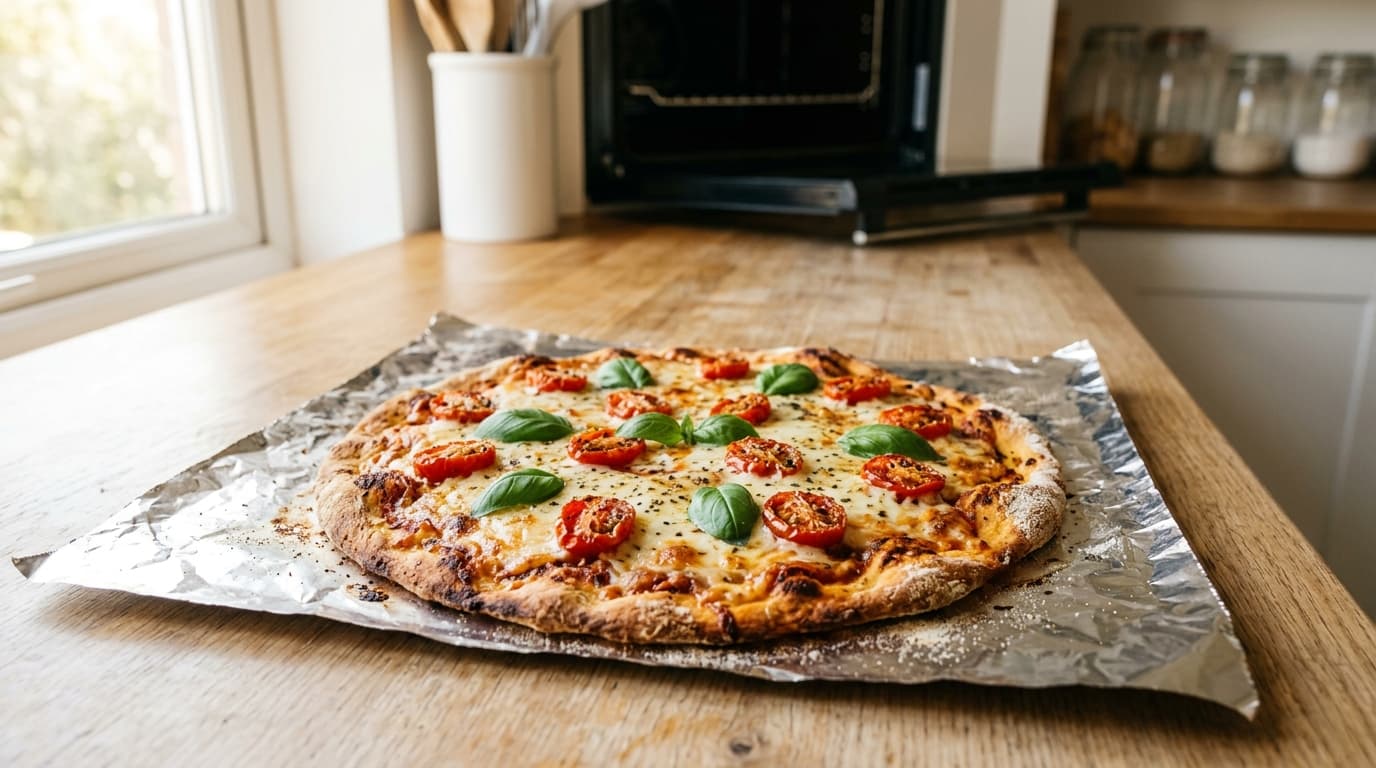
Your own oven is the step people forget
You can buy a perfectly safe pizza and still get sick at home.
None of this is fussiness. Twenty parts per million is a very small amount of crumb.
🛒 Not sure if what you're holding is safe?
Point your phone at any ingredient label and get a clear safe / caution / unsafe answer in about three seconds — including the hidden gluten most labels bury.
What to check before it goes in your trolley
Run this quickly in the aisle:
That last one catches more people than any other. Manufacturers reformulate quietly, and a product that was safe last year is not guaranteed to be safe now.
Making a frozen pizza taste like a real one
A few things that genuinely help:
The honest summary
The best gluten-free frozen pizza is the one that is certified, made somewhere you trust, and built on a crust style you actually like. Those are three separate questions, and only the first two are about safety.
When you are standing in the freezer aisle holding a box you have not bought before, the label is the only information you have — and it is worth reading all of it, not just the front.
🔍 Not sure about a product?
Photograph any food label and the AI reads every ingredient, including the 500+ names gluten hides under. Free for 14 days.
Search Amazon for gluten-free pizza
Amazon search results · Look for a certified gluten-free seal on the label
Gluten-Free pizza on Amazon
Caulipower Pizza Crusts
Cauliflower-based, crispy crust
Schär GF Pizza Crusts
Authentic Italian-style GF crust
Against the Grain Pizza
Cheese-based crust, unique flavor
Celiac Safety Glossary
- Celiac disease
- Celiac disease is a serious autoimmune disorder in which ingesting gluten — a protein found in wheat, barley, and rye — triggers an immune response that damages the small intestine's villi, affecting approximately 1 in 100 people worldwide according to the Celiac Disease Foundation.
- Gluten
- Gluten is a family of storage proteins (prolamins and glutelins) found naturally in cereal grains like wheat (including varieties like spelt, kamut, and farro), barley, and rye, which acts as a binder to give food elasticity and shape.
- Gluten-free certification
- Gluten-free certification, such as the GFCO (Gluten-Free Certification Organization) seal, verifies that a product contains fewer than 10 parts per million (ppm) of gluten — stricter than the FDA's 20 ppm threshold for "gluten-free" labeling.
- Malt (Barley)
- Malt is fermented barley used as a flavoring or sweetener in cereals, chocolates, and beer; it is a major source of hidden gluten that is often overlooked on ingredient lists.
- Wheat starch
- Wheat starch is wheat flour that has had the gluten protein washed out. While some European gluten-free foods use codex-grade wheat starch (tested below 20 ppm), it can still trigger reactions in sensitive individuals.
- Brewer's yeast
- Brewer's yeast is a byproduct of beer brewing that is heavily contaminated with gluten from barley; it is a common hidden ingredient in savory snacks and seasonings.
📢 Found this helpful? Share it!
Stop Guessing. Start Scanning.
Every ingredient label has hidden gluten risks. Check Gluten's AI catches them all — in 3 seconds flat.
Camera + text input
& cross-contamination
$0 today • cancel anytime

The Essential Celiac Cookbook & Survival Bundle
Stop stressing over dinner and crumbling bread. 300+ comfort mains, 200 baking masterclass recipes, 4-week meal plans, and grocery checklists.
About This Article
Check Gluten
Written with AI assistance and checked against published sources — not by a doctor or dietitian. Confirm anything that matters with the label, the manufacturer, or your own healthcare provider.
How our content is checked →Medical Disclaimer: This article is for informational purposes only and is not a substitute for professional medical advice. Always consult your physician or a registered dietitian before making dietary changes related to celiac disease or gluten sensitivity. Read full disclaimer.
📚Sources & Citations
- •Celiac Disease Foundation — celiac.org — Comprehensive research and patient resources on celiac disease
- •Beyond Celiac — beyondceliac.org — Research-driven celiac disease advocacy and resources
- •GFCO (Gluten-Free Certification Organization) — gfco.org — Certification standards (<10 ppm)
- •FDA Gluten-Free Labeling — fda.gov — Federal regulations for <20 ppm labeling
Content reviewed and fact-checked by our clinical & nutrition team. Last updated July 2026.
Never Miss a Hidden Gluten Alert
Weekly tips on safe eating, hidden gluten warnings, and recipes — free, and one click to unsubscribe.
Related Articles
Gluten-Free Soup: Why Most Tins Aren't, and Which Ones Are
Soup is one of the most reliably glutened foods in the supermarket, and the reason is structural rather than accidental. Here's what to look for.
Best Gluten-Free Bread Brands: Certification and Dedicated Facilities Compared
Which gluten-free bread brands are certified, and which are made in a dedicated gluten-free facility? What each brand publishes about itself, without invented taste scores.
Gluten-Free Crackers: What's Actually Safe (and What to Check on the Box)
Most crackers are wheat. Here's what gluten-free versions are made from, how they differ, and the ingredients that quietly disqualify a box.
Gluten-Free Snack Bars: Why Oats Are the Whole Question
Almost every snack bar is built on oats, and oats are the single most misunderstood ingredient in a gluten-free diet. Here's what actually makes a bar safe.