Gluten-Free Snack Bars: Why Oats Are the Whole Question
This post may contain affiliate links. As an Amazon Associate, Check Gluten earns from qualifying purchases. Please read our disclosure policy.
Almost every snack bar is built on oats, and oats are the single most misunderstood ingredient in a gluten-free diet. Here's what actually makes a bar safe.
Almost every snack bar is built on oats, and oats are the single most misunderstood ingredient in a gluten-free diet. Here's what actually makes a bar safe.
Want to save this recipe?
Enter your email and we'll send it to you! Plus, get new recipes every week.
✓Key Takeaways
A snack bar is the thing you keep in a bag for the moment when there is nothing safe to eat, which makes it one of the more important purchases on this diet. It is also a category where the main ingredient is the main problem.
Oats are the whole question
Oats do not contain gluten. They contain avenin, a different protein, and the great majority of people with coeliac disease tolerate them without difficulty.
The trouble is agricultural rather than botanical. Oats are routinely grown in rotation with wheat and barley, harvested with the same equipment, transported in the same trucks and milled in the same facilities. Ordinary commercial oats are contaminated often enough that they cannot be treated as gluten-free.
Certified gluten-free oats are grown, harvested and processed under controls designed to prevent that. They are the only kind that belong in a coeliac diet.
So the question for any oat-based bar is not whether it contains wheat. It is whether the oats were certified. A bar can be entirely free of wheat ingredients and still be unsafe because the oats in it were ordinary oats.
There is a second, smaller point worth knowing: a minority of people with coeliac disease react to avenin itself, even when the oats are certified. If you are following the diet carefully, eating certified oats, and still symptomatic, that is worth raising with your medical team rather than assuming you have made a mistake somewhere else.
Where barley hides in a granola bar
The other reliable source of gluten in this category is barley malt, used as a sweetener and a flavouring. It appears as barley malt syrup, malt extract, malt flavouring or simply malt.
In the United States barley requires no allergen declaration, so a bar containing barley malt syrup will not say "Contains: Barley" anywhere. It appears in the ingredient list and nowhere else, which is exactly why it is the ingredient that catches experienced people out rather than new ones.
Crisped rice is the other quiet one — crisped rice cereal is frequently made with barley malt.
📩 Want more tips like this?
Join celiacs getting weekly gluten-free tips, recipes, and hidden gluten alerts.
No spam. Unsubscribe anytime.
What a safe bar looks like
It carries a gluten-free claim, meaning under 20 parts per million of gluten under FDA rule 21 CFR 101.91, and where it contains oats it says the oats are gluten-free rather than just listing oats.
Brands maintaining gluten-free labelled ranges include Enjoy Life, which is built around allergen avoidance and states it plainly; MadeGood, which is similarly positioned; LÄRABAR, whose bars are typically short-ingredient fruit and nut; RXBAR, which prints its ingredients on the front of the wrapper; and KIND, which labels a large share of its range gluten-free.
In every case the claim is per-product. A brand that makes gluten-free bars also makes bars without the claim, and they hang on the same hook.
Search Amazon for gluten-free health
Amazon search results · Look for a certified gluten-free seal on the label
Gluten-Free health on Amazon

RX Bars Variety Pack
Whole-food protein, no junk
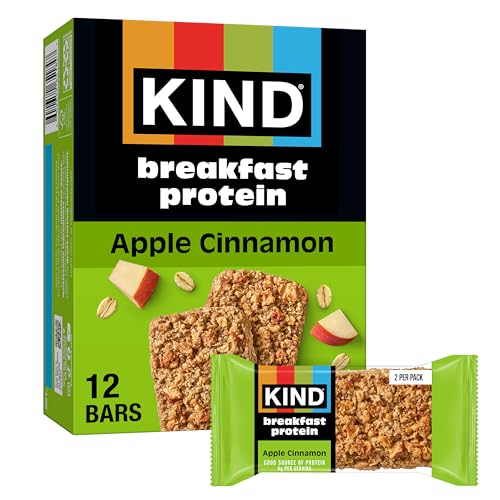
KIND Protein Bars
12g protein, certified GF
Enjoy Life Snack Bars
Free from top 14 allergens
The protein bar variation
Protein bars add two further things to check. Some use wheat protein or seitan-derived protein as a cheap protein source, which will be declared. Others use malt-based sweeteners, which will not be flagged on the allergen line.
Bars marketed for athletic performance are no more likely to be gluten-free than any other bar, and the health-adjacent packaging is not a signal.
🛒 Not sure if what you're holding is safe?
Point your phone at any ingredient label and get a clear safe / caution / unsafe answer in about three seconds — including the hidden gluten most labels bury.
Reading a wrapper in ten seconds
Allergen statement first — "Contains: Wheat" ends it.
Then scan the ingredient list for the word malt in any form, and for oats without the word "gluten-free" attached.
Then the claim. In a category this contaminated, a bar with no gluten-free claim is not worth the risk when a dozen bars with one are on the same shelf.
Keeping one in the bag
The practical value of this category is not nutritional. It is that having something safe with you removes the situation where you are hungry, out, and choosing between something risky and nothing.
Two bars in a bag is a small thing that prevents a specific and common failure. Pick ones you will actually eat, buy a box, and restock it before it runs out.
🔍 Not sure about a product?
Photograph any food label and the AI reads every ingredient, including the 500+ names gluten hides under. Free for 14 days.
Search Amazon for gluten-free health
Amazon search results · Look for a certified gluten-free seal on the label
Gluten-Free health on Amazon
RX Bars Variety Pack
Whole-food protein, no junk
KIND Protein Bars
12g protein, certified GF
Enjoy Life Snack Bars
Free from top 14 allergens
Celiac Safety Glossary
- Gluten
- Gluten is a family of storage proteins (prolamins and glutelins) found naturally in cereal grains like wheat (including varieties like spelt, kamut, and farro), barley, and rye, which acts as a binder to give food elasticity and shape.
- Gluten-free certification
- Gluten-free certification, such as the GFCO (Gluten-Free Certification Organization) seal, verifies that a product contains fewer than 10 parts per million (ppm) of gluten — stricter than the FDA's 20 ppm threshold for "gluten-free" labeling.
- Avenin (Oats)
- Avenin is a protein found in oats that is structurally similar to gluten. While most celiacs can tolerate pure, uncontaminated oats, a small percentage of celiacs react to avenin itself.
- Malt (Barley)
- Malt is fermented barley used as a flavoring or sweetener in cereals, chocolates, and beer; it is a major source of hidden gluten that is often overlooked on ingredient lists.
📢 Found this helpful? Share it!
Stop Guessing. Start Scanning.
Every ingredient label has hidden gluten risks. Check Gluten's AI catches them all — in 3 seconds flat.
Camera + text input
& cross-contamination
$0 today • cancel anytime

The Essential Celiac Cookbook & Survival Bundle
Stop stressing over dinner and crumbling bread. 300+ comfort mains, 200 baking masterclass recipes, 4-week meal plans, and grocery checklists.
About This Article
Check Gluten
Written with AI assistance and checked against published sources — not by a doctor or dietitian. Confirm anything that matters with the label, the manufacturer, or your own healthcare provider.
How our content is checked →Medical Disclaimer: This article is for informational purposes only and is not a substitute for professional medical advice. Always consult your physician or a registered dietitian before making dietary changes related to celiac disease or gluten sensitivity. Read full disclaimer.
📚Sources & Citations
- •Celiac Disease Foundation — celiac.org — Comprehensive research and patient resources on celiac disease
- •Beyond Celiac — beyondceliac.org — Research-driven celiac disease advocacy and resources
- •GFCO (Gluten-Free Certification Organization) — gfco.org — Certification standards (<10 ppm)
- •FDA Gluten-Free Labeling — fda.gov — Federal regulations for <20 ppm labeling
Content reviewed and fact-checked by our clinical & nutrition team. Last updated July 2026.
Never Miss a Hidden Gluten Alert
Weekly tips on safe eating, hidden gluten warnings, and recipes — free, and one click to unsubscribe.
Related Articles
Gluten-Free Crackers: What's Actually Safe (and What to Check on the Box)
Most crackers are wheat. Here's what gluten-free versions are made from, how they differ, and the ingredients that quietly disqualify a box.
Best Gluten-Free Frozen Pizza: What to Look For (and What to Avoid)
Not every gluten-free frozen pizza is celiac-safe. Here's how to read the box, which crust styles hold up, and the shared-oven trap that catches people out.
Gluten-Free Soup: Why Most Tins Aren't, and Which Ones Are
Soup is one of the most reliably glutened foods in the supermarket, and the reason is structural rather than accidental. Here's what to look for.
Best Gluten-Free Bread Brands: Certification and Dedicated Facilities Compared
Which gluten-free bread brands are certified, and which are made in a dedicated gluten-free facility? What each brand publishes about itself, without invented taste scores.