Hidden Gluten in Condiments: The Top 5 Sauces You Must Check
This post may contain affiliate links. As an Amazon Associate, Check Gluten earns from qualifying purchases. Please read our disclosure policy.
Think your salad dressing is safe? Condiments are notorious for hiding wheat under chemical names. Learn which sauces to avoid and what certified GF brands to buy instead.
Think your salad dressing is safe? Condiments are notorious for hiding wheat under chemical names. Learn which sauces to avoid and what certified GF brands to buy instead.
Want to save this recipe?
Enter your email and we'll send it to you! Plus, get new recipes every week.
✓Key Takeaways
The Condiment Minefield
You cooked a perfectly safe, 100% gluten-free chicken breast and served it over rice. Then, you drowned it in teriyaki sauce. Twenty minutes later, the stomach cramps hit.
Condiments, sauces, and dressings are the number one source of hidden gluten exposure for newly diagnosed celiacs. Manufacturers use wheat derivatives as cheap thickeners, stabilizers, and flavor enhancers.
Here are the top 5 condiments that frequently hide gluten, and the exact names you need to look for on the label.
1. Soy Sauce & Asian Condiments
This is the most famous trap. Traditional soy sauce is brewed using a 50/50 mix of soybeans and roasted wheat.
The Danger List:
The Safe Swap:
You must look for 🛒tamariAmazon ↗. Tamari is a Japanese form of soy sauce that is traditionally made without wheat. San-J is a highly recommended brand that offers certified GF Tamari, Teriyaki, and Hoisin sauces.
📩 Want more tips like this?
Join celiacs getting weekly gluten-free tips, recipes, and hidden gluten alerts.
No spam. Unsubscribe anytime.
2. Salad Dressings & Vinaigrettes
A simple vinaigrette should just be oil and vinegar, right? Not in commercial manufacturing.
The Danger List:
The Safe Swap:
Ken's Steak House and Primal Kitchen both clearly label their gluten-free dressings. Better yet, make your own at home using olive oil, balsamic vinegar, and Dijon mustard.
Search Amazon for gluten-free sauce
Amazon search results · Look for a certified gluten-free seal on the label
Gluten-Free sauce on Amazon

San-J Organic Tamari
Brewed GF soy sauce alternative

Primal Kitchen Sauces
All-natural, GF sauces & dressings

Kikkoman GF Soy Sauce
Trusted brand, certified GF
3. Barbecue Sauce
BBQ sauces are incredibly tricky. While many tomato-based sauces are naturally safe, the risks are high.
The Danger List:
The Safe Swap:
Sweet Baby Ray's clearly labels their gluten-free varieties. Stubb's BBQ sauce is also certified gluten-free.
🛒 Not sure if what you're holding is safe?
Point your phone at any ingredient label and get a clear safe / caution / unsafe answer in about three seconds — including the hidden gluten most labels bury.
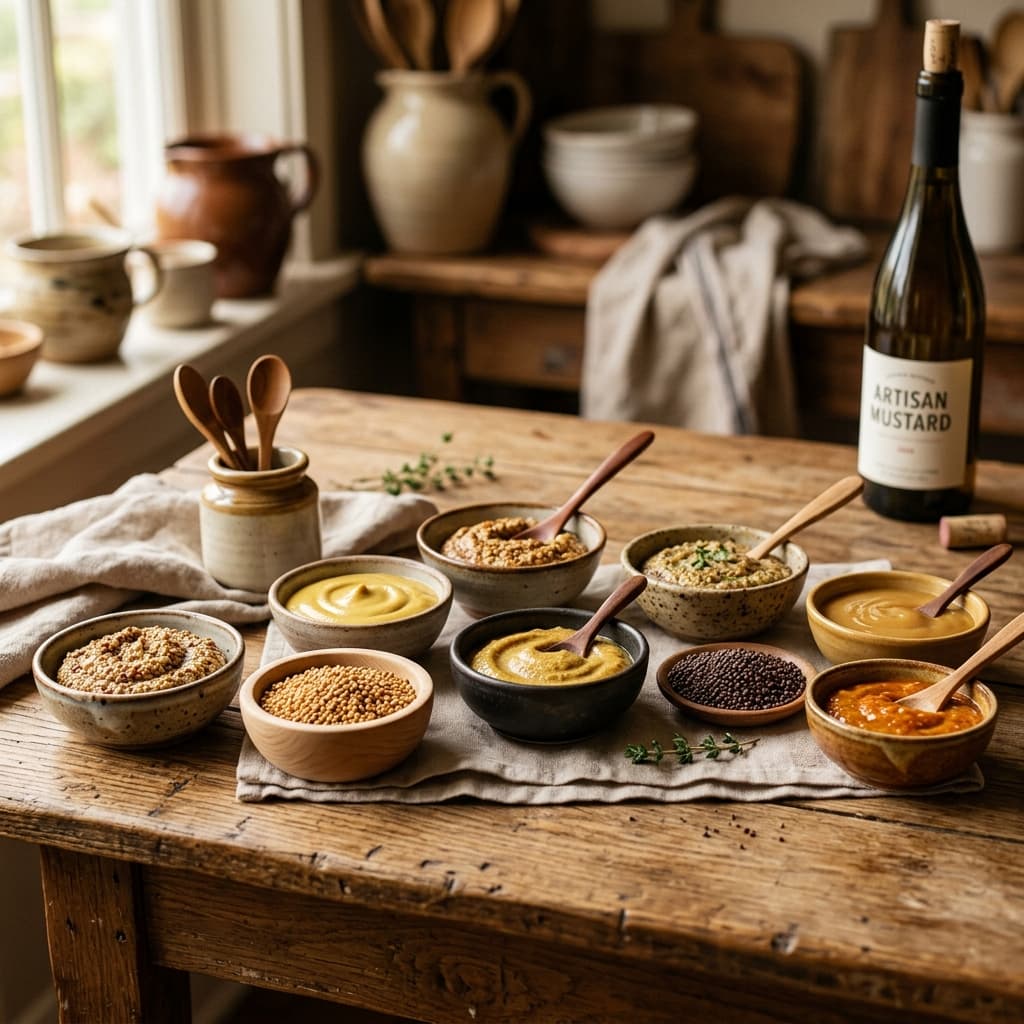
4. Mustard (Specifically Specialty Mustards)
Basic yellow mustard (like French's) is almost always naturally gluten-free. The danger lies in specialty mustards.
The Danger List:
The Safe Swap:
Stick to French's, Heinz, or clearly labeled GF Dijon mustards like Grey Poupon.
5. Gravy and Bouillon Cubes
If you didn't make the gravy from scratch using cornstarch, assume it is toxic.
The Danger List:
The Safe Swap:
Orrington Farms makes fantastic GF broth bases. McCormick makes a certified GF brown gravy packet (but double-check the label, as they make a regular wheat version that looks almost identical).
How to Protect Yourself
Memorizing all these rules is exhausting. The food industry constantly changes formulations. A sauce that was safe in 2024 might contain wheat in 2026.
Never guess. Use the Check Gluten AI scanner on your phone. Just point your camera at the ingredient list on the back of the bottle, and the AI will instantly flag hidden barley malt, wheat starch, or soy sauce in under 3 seconds.
🔍 Not sure about a product?
Photograph any food label and the AI reads every ingredient, including the 500+ names gluten hides under. Free for 14 days.
Search Amazon for gluten-free sauce
Amazon search results · Look for a certified gluten-free seal on the label
Gluten-Free sauce on Amazon
San-J Organic Tamari
Brewed GF soy sauce alternative
Primal Kitchen Sauces
All-natural, GF sauces & dressings
Kikkoman GF Soy Sauce
Trusted brand, certified GF
Celiac Safety Glossary
- Gluten
- Gluten is a family of storage proteins (prolamins and glutelins) found naturally in cereal grains like wheat (including varieties like spelt, kamut, and farro), barley, and rye, which acts as a binder to give food elasticity and shape.
- Gluten-free certification
- Gluten-free certification, such as the GFCO (Gluten-Free Certification Organization) seal, verifies that a product contains fewer than 10 parts per million (ppm) of gluten — stricter than the FDA's 20 ppm threshold for "gluten-free" labeling.
- Malt (Barley)
- Malt is fermented barley used as a flavoring or sweetener in cereals, chocolates, and beer; it is a major source of hidden gluten that is often overlooked on ingredient lists.
- Wheat starch
- Wheat starch is wheat flour that has had the gluten protein washed out. While some European gluten-free foods use codex-grade wheat starch (tested below 20 ppm), it can still trigger reactions in sensitive individuals.
📢 Found this helpful? Share it!
Stop Guessing. Start Scanning.
Every ingredient label has hidden gluten risks. Check Gluten's AI catches them all — in 3 seconds flat.
Camera + text input
& cross-contamination
$0 today • cancel anytime

The Essential Celiac Cookbook & Survival Bundle
Stop stressing over dinner and crumbling bread. 300+ comfort mains, 200 baking masterclass recipes, 4-week meal plans, and grocery checklists.
About This Article
Check Gluten
Written with AI assistance and checked against published sources — not by a doctor or dietitian. Confirm anything that matters with the label, the manufacturer, or your own healthcare provider.
How our content is checked →Medical Disclaimer: This article is for informational purposes only and is not a substitute for professional medical advice. Always consult your physician or a registered dietitian before making dietary changes related to celiac disease or gluten sensitivity. Read full disclaimer.
📚Sources & Citations
- •Celiac Disease Foundation — celiac.org — Comprehensive research and patient resources on celiac disease
- •Beyond Celiac — beyondceliac.org — Research-driven celiac disease advocacy and resources
- •GFCO (Gluten-Free Certification Organization) — gfco.org — Certification standards (<10 ppm)
- •FDA Gluten-Free Labeling — fda.gov — Federal regulations for <20 ppm labeling
Content reviewed and fact-checked by our clinical & nutrition team. Last updated July 2026.
Never Miss a Hidden Gluten Alert
Weekly tips on safe eating, hidden gluten warnings, and recipes — free, and one click to unsubscribe.
Related Articles
Hellmann's, Duke's and Vinegar: The Mayonnaise Question
Mayo is naturally gluten-free, but low-fat varieties and restaurant cross-contamination can be dangerous. Here are the safest mayonnaise brands for celiacs.
Is Vinegar Gluten-Free? Malt vs Apple Cider vs Balsamic — The Celiac Guide
Most vinegars are gluten-free, but MALT vinegar is made from barley and will destroy your gut. Here is the complete breakdown of every vinegar type for celiacs.
Gluten in Pet Food: Why Your Dog's Kibble Might Be Glutening You
If you're strictly gluten-free but still getting sick at home, check your dog's bowl. How pet food, saliva, and kibble dust trigger celiac reactions — and how to fix it.
Are Your Toothpaste and Mouthwash Gluten-Free?
You cleaned out your pantry, but did you clean out your bathroom cabinet? If you are still getting sick on a GF diet, your toothpaste or mouthwash might be the culprit.