Is Soy Sauce Gluten-Free? The Sushi Restaurant Celiac Trap
This post may contain affiliate links. As an Amazon Associate, Check Gluten earns from qualifying purchases. Please read our disclosure policy.
Soy sauce is made from soybeans, so it should be gluten-free, right? Think again. Discover the shocking wheat brewing process of soy sauce, restaurant cross-contamination, and the best celiac-safe alternatives.
Soy sauce is made from soybeans, so it should be gluten-free, right? Think again. Discover the shocking wheat brewing process of soy sauce, restaurant cross-contamination, and the best celiac-safe alternatives.
Want to save this recipe?
Enter your email and we'll send it to you! Plus, get new recipes every week.
✓Key Takeaways
Is Soy Sauce Gluten-Free? The Short Answer
No, traditional soy sauce is absolutely not gluten-free. Many people are shocked to learn that soy sauce is not made solely from soybeans. Traditional Chinese and Japanese soy sauce is brewed using a blend of fermented soybeans and roasted wheat grains in a 50/50 ratio. As a result, standard soy sauce contains high levels of active gluten. For anyone with celiac disease or non-celiac gluten sensitivity, consuming even a drop of traditional soy sauce will trigger an adverse reaction.
The Sushi Restaurant Disaster: A Celiac Story
It is Saturday night, and you are dining at an upscale sushi restaurant with friends. You feel confident about your choices. After all, sushi is just fresh, raw fish, seaweed, and white rice. You order a beautiful platter of salmon and tuna nigiri.
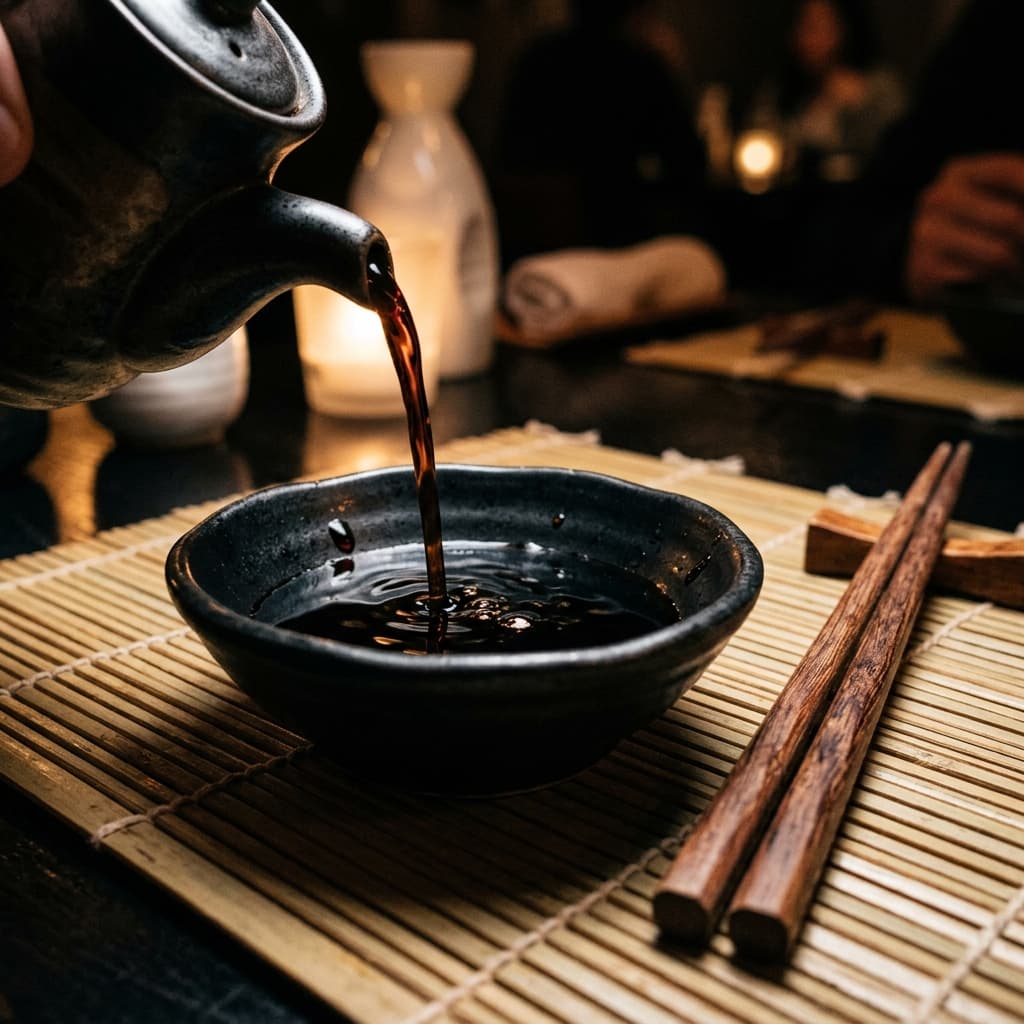
When the plate arrives, you pour some soy sauce from the sleek ceramic pitcher on the table into your dipping dish. You dip your sushi, take a bite, and savor the rich, salty flavor.
By the time you are paying the bill, your stomach begins to swell. An hour later, you are hit with intense abdominal cramping, brain fog, and joint pain. You spend the next three days in bed, exhausted and frustrated, asking yourself: *“How did fresh fish and rice make me so sick?”*
This is the classic sushi restaurant trap. Many celiacs don't realize that traditional soy sauce is a wheat-based condiment. Even worse, soy sauce is used as a hidden seasoning in sushi rice vinegar, imitation crab (which contains wheat binders), and eel sauce. A single meal at an unvetted sushi joint can result in massive gluten exposure.
📩 Want more tips like this?
Join celiacs getting weekly gluten-free tips, recipes, and hidden gluten alerts.
No spam. Unsubscribe anytime.
Core Celiac Concepts to Keep in Mind
To navigate restaurant menus and grocery aisles safely, keep these definitions close:
* Celiac disease: Celiac disease is a serious autoimmune disorder in which ingesting gluten — a protein found in wheat, barley, and rye — triggers an immune response that damages the small intestine's villi, affecting approximately 1 in 100 people worldwide according to the Celiac Disease Foundation.
* Cross-contamination: Cross-contamination occurs when gluten-free food comes into contact with gluten-containing food or surfaces — through shared cutting boards, toasters, fryers, or utensils — making otherwise safe food dangerous for people with celiac disease.
* Gluten-free certification: Gluten-free certification, such as the GFCO (Gluten-Free Certification Organization) seal, verifies that a product contains fewer than 10 parts per million (ppm) of gluten — stricter than the FDA's 20 ppm threshold for "gluten-free" labeling.
Find Gluten-Free Food Safety on Amazon
Compare prices & read celiac reviews
Top Gluten-Free Picks

Bob's Red Mill GF Flour
★★★★★ 4.8Essential GF pantry staple

Canyon Bakehouse GF Bread
★★★★★ 4.8Best-tasting GF bread

Barilla GF Pasta
★★★★★ 4.8Closest to regular pasta taste
As an Amazon Associate, we earn from qualifying purchases at no extra cost to you. Prices and availability are accurate as of the time of listing.
Why Does Soy Sauce Contain Wheat?
To understand why wheat is in soy sauce, we have to look at the traditional brewing process, which dates back over 2,000 years.
Soy sauce is created through fermentation. To make it, equal parts soybeans and roasted wheat grains are crushed and mixed with a culturing mold (koji) and brine (salt water).
* The soybeans provide the rich, savory proteins and amino acids (umami).
* The wheat provides starches that break down into sugars during fermentation, giving the soy sauce its characteristic sweet undertone, deep aroma, and dark amber color.
While the fermentation process breaks down some of the gluten proteins, it does *not* eliminate them. Independent testing shows that traditional soy sauce contains thousands of parts per million of active gluten—far exceeding the safe threshold of 20 ppm.
🍞 Tired of GF food that tastes like cardboard?
These are the gluten-free flours, pastas and snacks our readers rely on — the ones that actually taste good.
Soy Sauce & Alternatives: Safety Comparison
To help you shop and dine safely, here is a comparison of traditional soy sauce and gluten-free alternatives compiled by Check Gluten's 41,000-member community:
*Tamari vs. Soy Sauce:* Tamari is a Japanese style of soy sauce that is brewed as a byproduct of miso paste. It uses little to no wheat. Always look for bottles explicitly labeled "Gluten-Free" to ensure zero wheat was used in the recipe.
Pro Tips for Dining Out Safely as a Celiac
Eating at Asian-style restaurants can be intimidating, but you can do it safely with these strategies:
Check Restaurant Menus Instantly With AI
Don't guess when ordering sushi or stir-fry. Open the Check Gluten App.
You can take a photo of any restaurant menu or paste ingredient lists, and our advanced AI will instantly scan for hidden soy sauce bases, wheat starches in binders, and cross-contamination warnings, giving you total confidence before you order.
FAQs
Why is soy sauce not gluten-free?
Traditional soy sauce is brewed using equal parts soybeans and roasted wheat. The wheat is a core ingredient that provides sugars for the fermentation process, resulting in a finished sauce that contains active wheat gluten.
Is Kikkoman gluten-free?
Standard Kikkoman soy sauce (with the red or green cap) contains wheat and is not gluten-free. However, Kikkoman does manufacture a dedicated "Gluten-Free Soy Sauce" and a "Gluten-Free Tamari," which are clearly labeled and safe for celiacs.
What is the best gluten-free substitute for soy sauce?
Gluten-Free Tamari is the best substitute if you want a taste identical to traditional soy sauce, as it is made purely from fermented soybeans. Coconut aminos are another popular soy-free, gluten-free alternative that is slightly sweeter and lower in sodium.
Does cooking soy sauce destroy gluten?
No. Gluten is a highly stable protein structure that is not destroyed by heat, boiling, or fermentation. Cooking or boiling traditional soy sauce will not make it safe for celiacs.
🔍 Not sure about a product?
Check any food label instantly with our free AI gluten scanner — detects 500+ hidden gluten sources in 3 seconds.
Find Gluten-Free Food Safety on Amazon
Compare prices & read celiac reviews
Top Gluten-Free Picks
Bob's Red Mill GF Flour
★★★★★ 4.8Essential GF pantry staple
Canyon Bakehouse GF Bread
★★★★★ 4.8Best-tasting GF bread
Barilla GF Pasta
★★★★★ 4.8Closest to regular pasta taste
As an Amazon Associate, we earn from qualifying purchases at no extra cost to you. Prices and availability are accurate as of the time of listing.
Celiac Safety Glossary
- Celiac disease
- Celiac disease is a serious autoimmune disorder in which ingesting gluten — a protein found in wheat, barley, and rye — triggers an immune response that damages the small intestine's villi, affecting approximately 1 in 100 people worldwide according to the Celiac Disease Foundation.
- Gluten
- Gluten is a family of storage proteins (prolamins and glutelins) found naturally in cereal grains like wheat (including varieties like spelt, kamut, and farro), barley, and rye, which acts as a binder to give food elasticity and shape.
- Cross-contamination
- Cross-contamination (or cross-contact) occurs when gluten-free food comes into contact with gluten-containing food or surfaces — such as shared cutting boards, toasters, fryers, or utensils — rendering otherwise safe food dangerous for people with celiac disease.
- Gluten-free certification
- Gluten-free certification, such as the GFCO (Gluten-Free Certification Organization) seal, verifies that a product contains fewer than 10 parts per million (ppm) of gluten — stricter than the FDA's 20 ppm threshold for "gluten-free" labeling.
- Parts Per Million (ppm)
- Parts per million (ppm) is a unit of measurement used to quantify gluten concentration. Labeling laws in the US and Europe permit a maximum threshold of 20 ppm, while Australia requires no detectable gluten (0 ppm).
- Malt (Barley)
- Malt is fermented barley used as a flavoring or sweetener in cereals, chocolates, and beer; it is a major source of hidden gluten that is often overlooked on ingredient lists.
- Wheat starch
- Wheat starch is wheat flour that has had the gluten protein washed out. While some European gluten-free foods use codex-grade wheat starch (tested below 20 ppm), it can still trigger reactions in sensitive individuals.
📢 Found this helpful? Share it!
Stop Guessing. Start Scanning.
Every ingredient label has hidden gluten risks. Check Gluten's AI catches them all — in 3 seconds flat.
Camera + text input
& cross-contamination
$0 today • cancel anytime
The Celiac Kitchen Starter Kit
Stop stressing over cross-contamination and what to make for dinner. These are the gluten-free flours, pastas, snacks and tools our readers actually keep in their kitchens.
pastas & baking staples
cross-contamination tools
Real prices & reviews • Updated weekly
About the Author
Sarah Mitchell
Lead Content Writer & Nutritionist, B.S. Nutrition Science
Sarah was diagnosed with celiac disease in 2018 and writes evidence-based guides combining clinical nutrition knowledge with 6+ years of personal gluten-free living experience. All health content is medically reviewed by our advisory team.
Meet our full team →Medical Disclaimer: This article is for informational purposes only and is not a substitute for professional medical advice. Always consult your physician or a registered dietitian before making dietary changes related to celiac disease or gluten sensitivity. Read full disclaimer.
📚Sources & Citations
- •Celiac Disease Foundation — celiac.org — Comprehensive research and patient resources on celiac disease
- •Beyond Celiac — beyondceliac.org — Research-driven celiac disease advocacy and resources
- •GFCO (Gluten-Free Certification Organization) — gfco.org — Certification standards (<10 ppm)
- •FDA Gluten-Free Labeling — fda.gov — Federal regulations for <20 ppm labeling
- •Check Gluten Community — 41,000+ celiacs — First-party data from community feedback and AI label scans
Content reviewed and fact-checked by our clinical & nutrition team. Last updated July 2026.
Never Miss a Hidden Gluten Alert
Join 4,200+ celiacs getting weekly tips on safe eating, hidden gluten warnings, and exclusive recipes.
Related Articles
Gluten-Free at Chipotle: The Safest Fast-Casual Chain for Celiacs
Chipotle is widely considered a safe haven for celiacs, but hidden dangers exist. Learn how to navigate the assembly line, the flour tortilla risk, and how to request a glove change for maximum safety.
Gluten-Free at Chick-fil-A: Why the Grilled Nuggets Are Your Only Option
Chick-fil-A is a fast-food favorite, but navigating the menu with celiac disease requires caution. Discover the truth about the fryers, why breaded chicken is unsafe, and how to order the grilled nuggets safely.
Gluten-Free at Starbucks: The Complete Celiac Drink and Food Guide (2026)
Starbucks can be a minefield for celiacs. Discover which drinks are safe, the hidden wheat in frappuccinos and oat milk, and why almost all food items carry massive cross-contamination risks.
Are Kraft Singles Gluten-Free? The Processed Cheese Cross-Contamination Guide
Kraft Singles are labeled gluten-free, but processed cheese can be tricky. Discover which cheese types hide wheat, the modified food starch question, and the safest cheese brands for celiacs.