How to Deep Clean Your Kitchen After a Gluten Exposure
This post may contain affiliate links. Please read our disclosure policy.
Your mother-in-law came over and baked regular wheat cookies in your kitchen. Panic sets in. Here is the step-by-step guide to removing the gluten threat.
Want to save this recipe?
Enter your email and we'll send it to you! Plus, get new recipes every week.
The Wheat Flour Nightmare
Flour can stay airborne for up to 24 hours. If someone baked with regular wheat flour in your kitchen, your countertops, your cabinet handles, your floor, and your utensils now have a microscopic dusting of poison on them.
Gluten is a stubborn protein. It turns into glue when wet. You cannot just wipe the counter with a dry paper towel and call it safe.
Here is the tactical protocol to decontaminate your kitchen.
---
Step 1: Throw Away Porous Contaminants
You cannot clean porous materials once gluten is ground into them. If they used your wooden cutting board, your wooden spoons, or your scratched non-stick pans—throw them away immediately. Do not attempt to salvage them. You will just get continually sick.
Step 2: The Top-Down Soap Scrub
Gluten is a protein, not a bacteria. Bleach does absolutely nothing to neutralize it. Friction and hot soapy water are your only weapons to mechanically break the protein bonds and wash them away.
Start at the top of your cabinets and work your way down. Use a fresh, brand-new sponge. Wipe down counters, drawer handles, and the microwave keypad.
Step 3: Use High-Pressure Steam
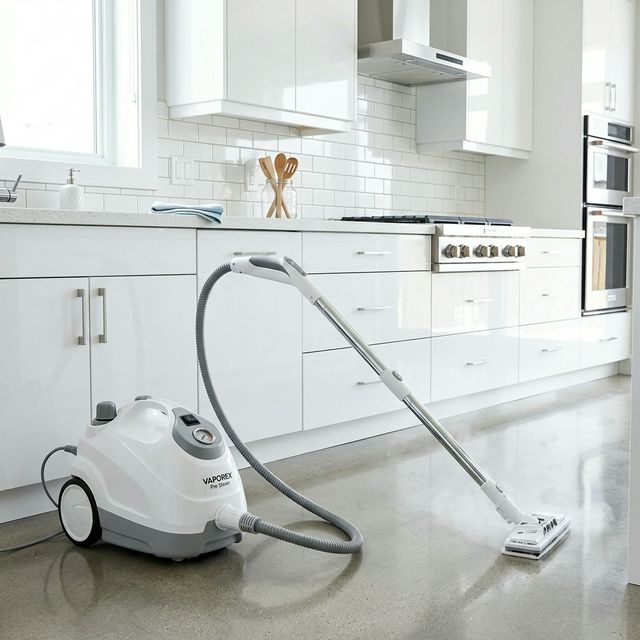
If you want absolute peace of mind, especially for grout lines, oven interiors, and complex equipment, high-pressure steam is incredible. The extreme heat and pressure physically blast the sticky gluten proteins out of microscopic crevices where sponges can't reach.
Dupray Neat Steam Cleaner — This is a heavy-duty steamer that reaches 275°F. It is the ultimate weapon for resetting a contaminated kitchen, cleaning everything from oven racks to tile grout without chemicals.
Step 4: Run the Dishwasher on Sanitary
Take all the silverware, plates, and hard plastic tools that were exposed and run them through a massive load in the dishwasher on the highest heat "Sanitary" setting.
Step 5: Replace Your Sponges
Once the deep clean is over, take the sponge you used to wipe everything down, and throw it in the trash. It is now a gluten-delivery device.
---
Double Check the Replacements
When you have to go buy new groceries to replace what was contaminated, don't leave anything to chance. Use the Check Gluten scanner to ensure all your new staples are perfectly safe.
🔍 Not sure about a product?
Check any food label instantly with our free AI gluten scanner — detects 500+ hidden gluten sources in 3 seconds.
Find Gluten-Free Safety on Amazon
Shop certified gluten-free options
Top Gluten-Free Picks
📢 Found this helpful? Share it!
Stop Guessing. Start Scanning.
Every ingredient label has hidden gluten risks. Check Gluten's AI catches them all — in 3 seconds flat.
Camera + text input
Priority support
No credit card required • Cancel anytime
The Ultimate Celiac Survival Bundle
Stop stressing over cross-contamination and what to make for dinner. Get our complete 500+ recipe cookbook, dining out guide, and label reading cheat sheets.
200+ GF Baking Recipes
& Fast Food Protocols
Instant PDF Download • 60-Day Money Back Guarantee
About the Author
Sarah Mitchell
Lead Content Writer & Nutritionist, B.S. Nutrition Science
Sarah was diagnosed with celiac disease in 2018 and writes evidence-based guides combining clinical nutrition knowledge with 6+ years of personal gluten-free living experience. All health content is medically reviewed by our advisory team.
Meet our full team →Medical Disclaimer: This article is for informational purposes only and is not a substitute for professional medical advice. Always consult your physician or a registered dietitian before making dietary changes related to celiac disease or gluten sensitivity. Read full disclaimer.
Related Articles
The Celiac College Survival Guide: Dining Halls, Dorm Life & Social Eating
How to navigate dining halls, dorm kitchens, late-night pizza runs, and social eating as a celiac college student. From meal plans to microwave hacks — everything you need.
Hidden Gluten in Spices & Seasonings: The Cross-Contamination Risk (2026)
You might be buying gluten-free chicken and vegetables, but your spices could be sabotaging your health. From wheat flour as an anti-caking agent to shared processing lines, spices are a hidden source of gluten. Here is how to choose safe seasonings.
How to Read Every Food Label Like a Celiac Expert in 60 Seconds
Wheat, barley, rye, malt, brewer's yeast, modified food starch — the list of hidden gluten ingredients is terrifyingly long. Here is exactly where to look and what to look for.
Gluten-Free Fast Food: What's Actually Safe at the Drive-Thru? (2026)
Are McDonald's fries gluten-free? Can celiacs eat at Chick-fil-A? The drive-thru is a minefield of shared fryers and cross-contamination. Here is the ultimate guide to ordering safe, gluten-free fast food in the US.