How to Read Every Food Label Like a Celiac Expert in 60 Seconds
This post may contain affiliate links. As an Amazon Associate, Check Gluten earns from qualifying purchases. Please read our disclosure policy.
Wheat, barley, rye, malt, brewer's yeast, modified food starch — the list of hidden gluten ingredients is terrifyingly long. Here is exactly where to look and what to look for.
Wheat, barley, rye, malt, brewer's yeast, modified food starch — the list of hidden gluten ingredients is terrifyingly long. Here is exactly where to look and what to look for.
Want to save this recipe?
Enter your email and we'll send it to you! Plus, get new recipes every week.
✓Key Takeaways
The Label Is Lying to You (Sort Of)
Here's the terrifying reality: a product can contain gluten and have NO allergen warning on the label.
Why? Because the FDA requires labeling for wheat, but NOT for barley or rye. This means a beer brewed with barley can legally sit on a shelf with zero gluten warnings.
If you're celiac, you cannot rely on allergen boxes alone. You must read the full ingredient list, every single time. Here's how to do it in 60 seconds.
---
Step 1: Check for "Certified Gluten-Free" First
The fastest way to know a product is safe is a certified gluten-free seal from one of these organizations:
If you see one of these seals, the product has been independently tested and verified. You're done — it's safe.
If there's no seal, move to Step 2.
---
📩 Want more tips like this?
Join celiacs getting weekly gluten-free tips, recipes, and hidden gluten alerts.
No spam. Unsubscribe anytime.
Step 2: Read the Allergen Box
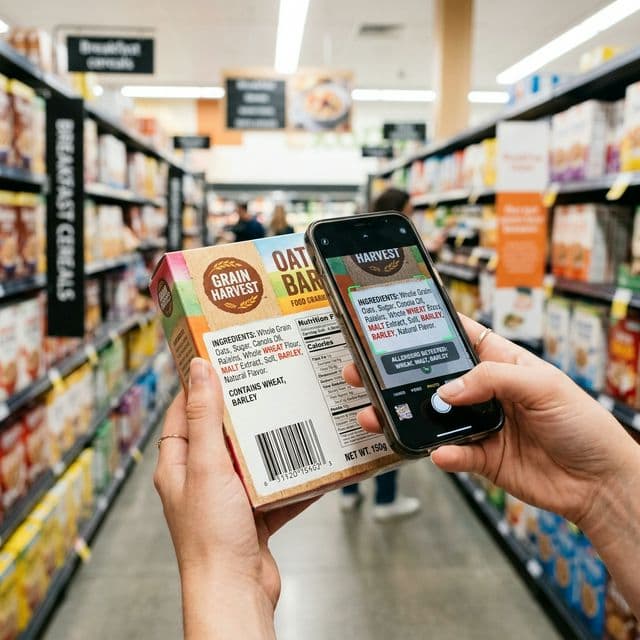
Look for "Contains: Wheat" at the bottom of the nutrition label. If you see it, put it back.
But remember: the allergen box does NOT cover barley or rye. A product could say "Contains: Milk, Soy" and still have barley malt extract buried in the ingredient list.
---
Search Amazon for gluten-free food safety
Amazon search results · Look for a certified gluten-free seal on the label
Gluten-Free food safety on Amazon

Bob's Red Mill GF Flour
Essential GF pantry staple

Canyon Bakehouse GF Bread
Best-tasting GF bread

Barilla GF Pasta
Closest to regular pasta taste
Step 3: Scan Every Ingredient
Here are the ingredients that contain gluten. Memorize this list:
🚫 Obvious Gluten
⚠️ Sneaky Gluten (Needs Investigation)
✅ Always Safe
---
🛒 Not sure if what you're holding is safe?
Point your phone at any ingredient label and get a clear safe / caution / unsafe answer in about three seconds — including the hidden gluten most labels bury.
Step 4: Check "May Contain" and "Shared Facility" Warnings
These are voluntary statements — not required by law. They mean:
For strict celiacs, "shared equipment" warnings are a dealbreaker.
---
Step 5: When In Doubt, Scan It
You shouldn't have to memorize 40+ ingredient names. This is exactly why we built Check Gluten. Point your camera at any ingredient list and get an instant safety analysis — highlighting every hidden gluten source in red.
No more squinting at tiny print in the grocery store aisle. No more Googling "is maltodextrin gluten free?" for the 50th time. Just scan and know.
🔍 Not sure about a product?
Photograph any food label and the AI reads every ingredient, including the 500+ names gluten hides under. Free for 14 days.
Search Amazon for gluten-free food safety
Amazon search results · Look for a certified gluten-free seal on the label
Gluten-Free food safety on Amazon
Bob's Red Mill GF Flour
Essential GF pantry staple
Canyon Bakehouse GF Bread
Best-tasting GF bread
Barilla GF Pasta
Closest to regular pasta taste
Celiac Safety Glossary
- Celiac disease
- Celiac disease is a serious autoimmune disorder in which ingesting gluten — a protein found in wheat, barley, and rye — triggers an immune response that damages the small intestine's villi, affecting approximately 1 in 100 people worldwide according to the Celiac Disease Foundation.
- Gluten
- Gluten is a family of storage proteins (prolamins and glutelins) found naturally in cereal grains like wheat (including varieties like spelt, kamut, and farro), barley, and rye, which acts as a binder to give food elasticity and shape.
- Gluten-free certification
- Gluten-free certification, such as the GFCO (Gluten-Free Certification Organization) seal, verifies that a product contains fewer than 10 parts per million (ppm) of gluten — stricter than the FDA's 20 ppm threshold for "gluten-free" labeling.
- Malt (Barley)
- Malt is fermented barley used as a flavoring or sweetener in cereals, chocolates, and beer; it is a major source of hidden gluten that is often overlooked on ingredient lists.
- Brewer's yeast
- Brewer's yeast is a byproduct of beer brewing that is heavily contaminated with gluten from barley; it is a common hidden ingredient in savory snacks and seasonings.
📢 Found this helpful? Share it!
Stop Guessing. Start Scanning.
Every ingredient label has hidden gluten risks. Check Gluten's AI catches them all — in 3 seconds flat.
Camera + text input
& cross-contamination
$0 today • cancel anytime

The Essential Celiac Cookbook & Survival Bundle
Stop stressing over dinner and crumbling bread. 300+ comfort mains, 200 baking masterclass recipes, 4-week meal plans, and grocery checklists.
About This Article
Check Gluten
Written with AI assistance and checked against published sources — not by a doctor or dietitian. Confirm anything that matters with the label, the manufacturer, or your own healthcare provider.
How our content is checked →Medical Disclaimer: This article is for informational purposes only and is not a substitute for professional medical advice. Always consult your physician or a registered dietitian before making dietary changes related to celiac disease or gluten sensitivity. Read full disclaimer.
📚Sources & Citations
- •Celiac Disease Foundation — celiac.org — Comprehensive research and patient resources on celiac disease
- •Beyond Celiac — beyondceliac.org — Research-driven celiac disease advocacy and resources
- •GFCO (Gluten-Free Certification Organization) — gfco.org — Certification standards (<10 ppm)
- •FDA Gluten-Free Labeling — fda.gov — Federal regulations for <20 ppm labeling
Content reviewed and fact-checked by our clinical & nutrition team. Last updated July 2026.
Never Miss a Hidden Gluten Alert
Weekly tips on safe eating, hidden gluten warnings, and recipes — free, and one click to unsubscribe.
Related Articles
Gluten-Free at Trader Joe’s: 10 Hidden Gluten Traps to Avoid
Trader Joe's is a gluten-free paradise, but it has hidden traps. Read our guide to the 10 hidden gluten traps at Trader Joe's to stay celiac-safe.
Is Ice Cream Gluten-Free? Every Major Brand & Flavor Checked (2026)
Plain vanilla? Probably safe. Cookie dough? Definitely not. But what about that seasonal caramel swirl you're eyeing? Here is how to tell, brand by brand.
10 Everyday Foods That Secretly Contain Gluten (Number 7 Will Shock You)
You ditched bread and pasta. But these 10 sneaky foods are still glutening you. Soy sauce, deli meat, and even your vitamins might be the culprit.
15 "Safe" Foods That Actually Contain Hidden Gluten (You'll Be Shocked)
You're eating gluten and don't even know it. These 15 everyday foods look safe but contain hidden gluten that could be causing your symptoms.