How to Read Food Labels for Gluten: The Complete Guide
This post may contain affiliate links. As an Amazon Associate, Check Gluten earns from qualifying purchases. Please read our disclosure policy.
Spotting gluten on food labels is harder than you think. Learn the 30+ hidden names for gluten and how to decode ingredient lists like a pro.
Spotting gluten on food labels is harder than you think. Learn the 30+ hidden names for gluten and how to decode ingredient lists like a pro.
Want to save this recipe?
Enter your email and we'll send it to you! Plus, get new recipes every week.
✓Key Takeaways
Why Label Reading Is So Hard
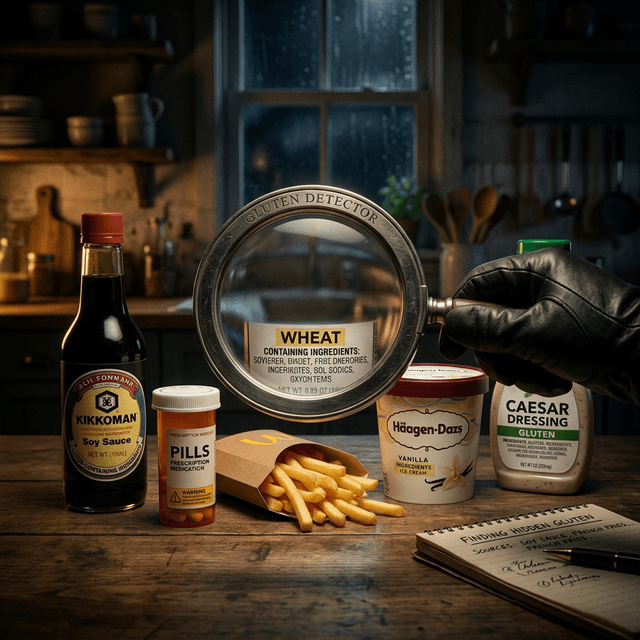
You'd think spotting gluten would be simple — just look for "wheat," right? Unfortunately, gluten hides under dozens of names that most people don't recognize.
The Obvious Gluten Sources
These are easy to spot on labels:
📩 Want more tips like this?
Join celiacs getting weekly gluten-free tips, recipes, and hidden gluten alerts.
No spam. Unsubscribe anytime.
The Hidden Gluten Names
These ingredients contain or may contain gluten but aren't obviously wheat-based:
Definitely Contains Gluten
May Contain Gluten (Check Source)
Shop gluten-free guides on Amazon
Certified options with current prices — skip the label-squinting
Gluten-free guides worth trying

Bob's Red Mill GF Flour
Essential GF pantry staple

Canyon Bakehouse GF Bread
Best-tasting GF bread

Barilla GF Pasta
Closest to regular pasta taste
As an Amazon Associate, we earn from qualifying purchases at no extra cost to you. Prices and availability are captured periodically and may change — the price shown on Amazon at checkout applies.
FDA Labeling Rules
The FDA requires that any product labeled "gluten-free" must contain less than 20 ppm of gluten. However:
🛒 Not sure if what you're holding is safe?
Point your phone at any ingredient label and get a clear safe / caution / unsafe answer in about three seconds — including the hidden gluten most labels bury.
The Fastest Way to Check
Instead of memorizing 30+ ingredient names, let AI do it for you:
Our AI knows all the hidden names, cross-contamination risks, and even checks brand-specific databases. One scan takes 3 seconds — no memorization needed.
🔍 Not sure about a product?
Check any food label instantly with our free AI gluten scanner — detects 500+ hidden gluten sources in 3 seconds.
Shop gluten-free guides on Amazon
Certified options with current prices — skip the label-squinting
Gluten-free guides worth trying
Bob's Red Mill GF Flour
Essential GF pantry staple
Canyon Bakehouse GF Bread
Best-tasting GF bread
Barilla GF Pasta
Closest to regular pasta taste
As an Amazon Associate, we earn from qualifying purchases at no extra cost to you. Prices and availability are captured periodically and may change — the price shown on Amazon at checkout applies.
Celiac Safety Glossary
- Gluten
- Gluten is a family of storage proteins (prolamins and glutelins) found naturally in cereal grains like wheat (including varieties like spelt, kamut, and farro), barley, and rye, which acts as a binder to give food elasticity and shape.
- Cross-contamination
- Cross-contamination (or cross-contact) occurs when gluten-free food comes into contact with gluten-containing food or surfaces — such as shared cutting boards, toasters, fryers, or utensils — rendering otherwise safe food dangerous for people with celiac disease.
- Parts Per Million (ppm)
- Parts per million (ppm) is a unit of measurement used to quantify gluten concentration. Labeling laws in the US and Europe permit a maximum threshold of 20 ppm, while Australia requires no detectable gluten (0 ppm).
- Malt (Barley)
- Malt is fermented barley used as a flavoring or sweetener in cereals, chocolates, and beer; it is a major source of hidden gluten that is often overlooked on ingredient lists.
- Wheat starch
- Wheat starch is wheat flour that has had the gluten protein washed out. While some European gluten-free foods use codex-grade wheat starch (tested below 20 ppm), it can still trigger reactions in sensitive individuals.
- Brewer's yeast
- Brewer's yeast is a byproduct of beer brewing that is heavily contaminated with gluten from barley; it is a common hidden ingredient in savory snacks and seasonings.
📢 Found this helpful? Share it!
Stop Guessing. Start Scanning.
Every ingredient label has hidden gluten risks. Check Gluten's AI catches them all — in 3 seconds flat.
Camera + text input
& cross-contamination
$0 today • cancel anytime
The Ultimate Celiac Survival Bundle
Stop stressing over cross-contamination and what to make for dinner. Get our complete 500+ recipe cookbook, dining out guide, and label reading cheat sheets.
200+ GF Baking Recipes
& Fast Food Protocols
Instant PDF Download • 60-Day Money Back Guarantee
About the Author
Sarah Mitchell
Lead Content Writer & Nutritionist, B.S. Nutrition Science
Sarah was diagnosed with celiac disease in 2018 and writes evidence-based guides combining clinical nutrition knowledge with 6+ years of personal gluten-free living experience. All health content is medically reviewed by our advisory team.
Meet our full team →Medical Disclaimer: This article is for informational purposes only and is not a substitute for professional medical advice. Always consult your physician or a registered dietitian before making dietary changes related to celiac disease or gluten sensitivity. Read full disclaimer.
📚Sources & Citations
- •Celiac Disease Foundation — celiac.org — Comprehensive research and patient resources on celiac disease
- •Beyond Celiac — beyondceliac.org — Research-driven celiac disease advocacy and resources
- •GFCO (Gluten-Free Certification Organization) — gfco.org — Certification standards (<10 ppm)
- •FDA Gluten-Free Labeling — fda.gov — Federal regulations for <20 ppm labeling
- •Check Gluten Community — 41,000+ celiacs — First-party data from community feedback and AI label scans
Content reviewed and fact-checked by our clinical & nutrition team. Last updated July 2026.
Never Miss a Hidden Gluten Alert
Join 4,200+ celiacs getting weekly tips on safe eating, hidden gluten warnings, and exclusive recipes.
Related Articles
Gluten in Pet Food: Why Your Dog's Kibble Might Be Glutening You
If you're strictly gluten-free but still getting sick at home, check your dog's bowl. How pet food, saliva, and kibble dust trigger celiac reactions — and how to fix it.
Is Gin Gluten-Free? The Distillation Science, Botanicals & Juniper Traps
Most gin starts as wheat or barley mash. Is it actually safe for celiacs? The truth about distillation chemistry, flavored gins, and 100% non-grain brands.
Best Gluten-Free Frozen Pizza: What to Look For (and What to Avoid)
Not every gluten-free frozen pizza is celiac-safe. Here's how to read the box, which crust styles hold up, and the shared-oven trap that catches people out.
Gluten-Free Soy Sauce Substitutes: Tamari, Coconut Aminos & What Actually Works
Regular soy sauce is brewed with wheat. Here's what to use instead, how the substitutes actually taste, and which ones still need a label check.