Cures, Marinades and Shared Grills: Where Bacon Hides Gluten
This post may contain affiliate links. As an Amazon Associate, Check Gluten earns from qualifying purchases. Please read our disclosure policy.
You think bacon is just pork and salt. Think again. Here is why your weekend breakfast might be making you sick, and how to find truly celiac-safe bacon.
You think bacon is just pork and salt. Think again. Here is why your weekend breakfast might be making you sick, and how to find truly celiac-safe bacon.
Want to save this recipe?
Enter your email and we'll send it to you! Plus, get new recipes every week.
✓Key Takeaways
Is Bacon Gluten-Free? The Short Answer
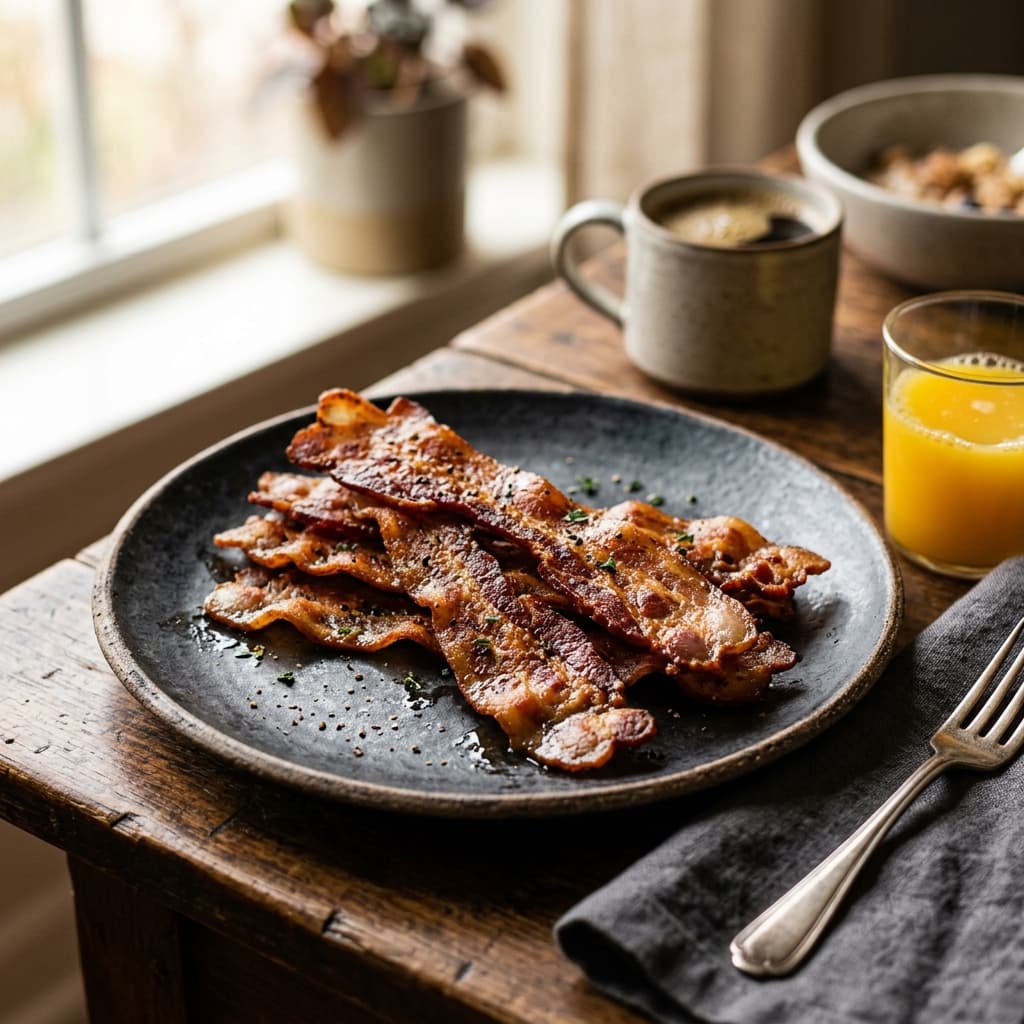
Yes, plain bacon is naturally gluten-free. Bacon is simply a cured cut of pork belly. However, many commercial bacon brands contain hidden gluten from artificial "liquid smoke" flavorings (which often use barley malt) or suffer from high cross-contamination risks when sliced at a shared deli counter.
The Sunday Morning Trap
You woke up to the incredible smell of bacon frying in the kitchen. It's Sunday, you've been eating clean all week, and you're ready for a hearty, traditional breakfast. You know the toast has to be gluten-free, but the bacon?
You eat three crispy slices. By the afternoon, the familiar brain fog sets in. By the evening, you're experiencing severe joint pain and bloating.
You've been glutened. But how?
According to a 2023 survey by the Celiac Disease Foundation, hidden gluten in processed meats is one of the top three causes of accidental gluten exposure. For someone newly diagnosed with celiac disease, realizing that meat can contain gluten is one of the most frustrating learning curves.
📩 Want more tips like this?
Join celiacs getting weekly gluten-free tips, recipes, and hidden gluten alerts.
No spam. Unsubscribe anytime.
Why Would Bacon Have Gluten?
There are three major ways gluten sneaks into your morning bacon:
1. Liquid Smoke and Flavorings
Many commercial bacon brands use artificial "smoke" flavorings to mimic the taste of traditional wood-smoking. These flavorings frequently use barley malt powder or hydrolyzed wheat protein as a carrier.
Gluten is a family of storage proteins found naturally in wheat, barley, and rye. Under FDA regulations in the US, wheat must be explicitly declared on food labels, but barley does not. If a package says "Natural Smoke Flavor" without a gluten-free certification, you are taking a massive risk.
2. The Shared Deli Slicer
If you buy your bacon fresh from the butcher counter or deli, you are navigating a minefield of cross-contamination.
Cross-contamination occurs when gluten-free food comes into contact with gluten-containing food or surfaces, making otherwise safe food dangerous. The same slicer used to cut your bacon may have just been used to slice a terrine or meatloaf bound with wheat breadcrumbs. Never buy deli-sliced bacon unless the butcher uses a dedicated, sterilized slicer (which is incredibly rare).
3. Cross-Contamination in Processing
Even if the ingredients are naturally gluten-free, mass-produced bacon is often processed in facilities that also handle wheat-based sausages, marinades, or breaded products.
Search Amazon for gluten-free health
Amazon search results · Look for a certified gluten-free seal on the label
Gluten-Free health on Amazon

RX Bars Variety Pack
Whole-food protein, no junk
KIND Protein Bars
12g protein, certified GF
Enjoy Life Snack Bars
Free from top 14 allergens
The Safe Brands You Can Trust
If you want to enjoy a worry-free Sunday breakfast, stick to brands that take celiac safety seriously.
🍞 Tired of GF food that tastes like cardboard?
500+ gluten-free recipes, a baking masterclass and 4 weeks of meal plans — instant PDF download.
Cooking Bacon Safely at Home
Once you have safe bacon, you must cook it safely. If you share a kitchen with gluten-eaters, a cast-iron skillet is a notorious source of cross-contamination. Cast iron is porous and holds onto gluten proteins from previous meals.
If you live in a shared household, we highly recommend buying a dedicated 🛒non-stick ceramic skilletAmazon ↗ just for your gluten-free breakfasts. Alternatively, bake your bacon in the oven on a fresh sheet of aluminum foil or a dedicated 🛒silicone baking matAmazon ↗.
FAQs
Is turkey bacon gluten-free?
Yes, plain turkey bacon is naturally gluten-free. However, it is subject to the exact same artificial flavorings and cross-contamination risks as pork bacon. Always check the label for a gluten-free certification.
Is McDonald's bacon gluten-free?
No. While the bacon itself doesn't contain wheat ingredients, McDonald's kitchens are high-risk environments for cross-contamination. It is not considered safe for individuals with celiac disease.
How do I know if the "spices" in bacon contain gluten?
"Spices" rarely contain gluten, but "Natural Flavorings" can hide barley malt. Always use the AI scanner in the Check Gluten App to instantly verify any confusing ingredient list.
🔍 Not sure about a product?
Photograph any food label and the AI reads every ingredient, including the 500+ names gluten hides under. Free for 14 days.
Search Amazon for gluten-free health
Amazon search results · Look for a certified gluten-free seal on the label
Gluten-Free health on Amazon
RX Bars Variety Pack
Whole-food protein, no junk
KIND Protein Bars
12g protein, certified GF
Enjoy Life Snack Bars
Free from top 14 allergens
Celiac Safety Glossary
- Celiac disease
- Celiac disease is a serious autoimmune disorder in which ingesting gluten — a protein found in wheat, barley, and rye — triggers an immune response that damages the small intestine's villi, affecting approximately 1 in 100 people worldwide according to the Celiac Disease Foundation.
- Gluten
- Gluten is a family of storage proteins (prolamins and glutelins) found naturally in cereal grains like wheat (including varieties like spelt, kamut, and farro), barley, and rye, which acts as a binder to give food elasticity and shape.
- Cross-contamination
- Cross-contamination (or cross-contact) occurs when gluten-free food comes into contact with gluten-containing food or surfaces — such as shared cutting boards, toasters, fryers, or utensils — rendering otherwise safe food dangerous for people with celiac disease.
- Gluten-free certification
- Gluten-free certification, such as the GFCO (Gluten-Free Certification Organization) seal, verifies that a product contains fewer than 10 parts per million (ppm) of gluten — stricter than the FDA's 20 ppm threshold for "gluten-free" labeling.
- Malt (Barley)
- Malt is fermented barley used as a flavoring or sweetener in cereals, chocolates, and beer; it is a major source of hidden gluten that is often overlooked on ingredient lists.
📢 Found this helpful? Share it!
Stop Guessing. Start Scanning.
Every ingredient label has hidden gluten risks. Check Gluten's AI catches them all — in 3 seconds flat.
Camera + text input
& cross-contamination
$0 today • cancel anytime

The Essential Celiac Cookbook & Survival Bundle
Stop stressing over dinner and crumbling bread. 300+ comfort mains, 200 baking masterclass recipes, 4-week meal plans, and grocery checklists.
About This Article
Check Gluten
Written with AI assistance and checked against published sources — not by a doctor or dietitian. Confirm anything that matters with the label, the manufacturer, or your own healthcare provider.
How our content is checked →Medical Disclaimer: This article is for informational purposes only and is not a substitute for professional medical advice. Always consult your physician or a registered dietitian before making dietary changes related to celiac disease or gluten sensitivity. Read full disclaimer.
📚Sources & Citations
- •Celiac Disease Foundation — celiac.org — Comprehensive research and patient resources on celiac disease
- •Beyond Celiac — beyondceliac.org — Research-driven celiac disease advocacy and resources
- •GFCO (Gluten-Free Certification Organization) — gfco.org — Certification standards (<10 ppm)
- •FDA Gluten-Free Labeling — fda.gov — Federal regulations for <20 ppm labeling
Content reviewed and fact-checked by our clinical & nutrition team. Last updated July 2026.
Never Miss a Hidden Gluten Alert
Weekly tips on safe eating, hidden gluten warnings, and recipes — free, and one click to unsubscribe.
Related Articles
Can Celiacs Eat Oats? The Purity Protocol vs. Sorted Oats Explained (2026)
If you're reacting to "certified gluten-free" oats, you're not crazy. A minority of celiacs react to avenin (the protein in oats), and many "safe" oat brands use controversial mechanical sorting methods. Here's everything you need to know about Purity Protocol oats.
Still Sick on a Gluten-Free Diet? 10 Reasons Your Celiac Symptoms Won't Go Away (2026)
You have been strictly gluten-free for months. Your bloodwork is improving. But you still feel terrible — bloating, fatigue, brain fog. Before you panic, here are the 10 most common reasons celiacs still feel sick on a GF diet.
Hidden Gluten in Makeup, Skincare, & Shampoo: What You Need to Know (2026)
You aren't eating your shampoo, so does it need to be gluten-free? The answer depends on your symptoms. Here is the definitive guide to gluten in cosmetics, lipsticks, and skincare, plus the hidden ingredient names you need to watch out for.
Hidden Gluten in Medications & Supplements: A Celiac's Survival Guide (2026)
Your doctor prescribed a new medication, but is it gluten-free? Pharmaceutical companies are not required to clearly label gluten in prescription or over-the-counter drugs. Here's how to find hidden gluten in your medicine cabinet.