Pancake Syrup vs Real Maple: Which One Carries Gluten
This post may contain affiliate links. As an Amazon Associate, Check Gluten earns from qualifying purchases. Please read our disclosure policy.
100% pure maple syrup is gluten-free, but artificial pancake syrups are packed with caramel color and flavorings that can hide gluten. Here is what celiacs need to know.
100% pure maple syrup is gluten-free, but artificial pancake syrups are packed with caramel color and flavorings that can hide gluten. Here is what celiacs need to know.
Want to save this recipe?
Enter your email and we'll send it to you! Plus, get new recipes every week.
✓Key Takeaways
Is Maple Syrup Gluten-Free? The Short Answer
Yes, 100% pure maple syrup is naturally gluten-free. However, cheap, artificial "pancake syrups" (like Aunt Jemima / Pearl Milling Company) frequently use caramel color to mimic the look of real syrup. Caramel color can be derived from barley malt or wheat, making artificial syrups a hidden cross-contamination risk for people with celiac disease.
The Sunday Morning Mistake
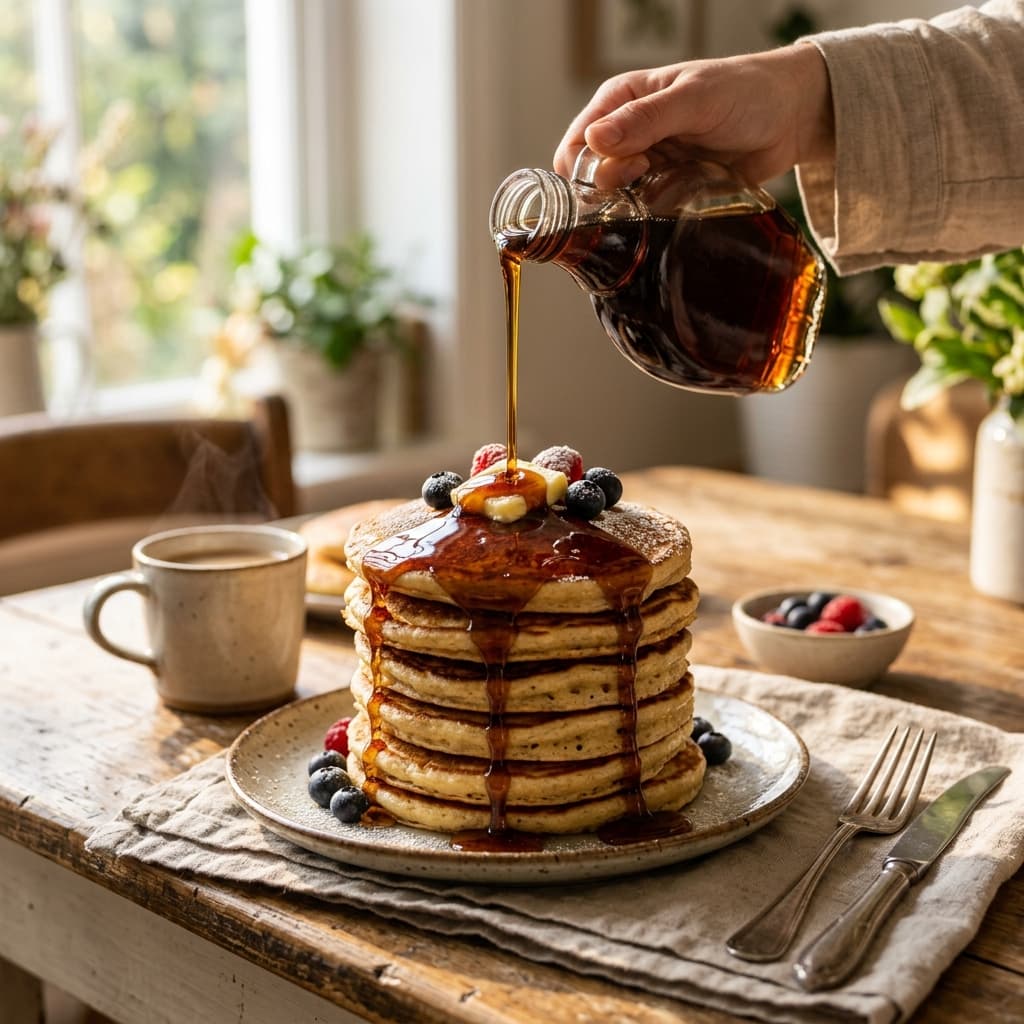
You survived the hardest part: You found a gluten-free pancake mix that actually tastes good. You carefully cooked them on a clean griddle. You plated a beautiful, fluffy stack of pancakes. Then, you drowned them in the cheap plastic bottle of syrup you've had in the fridge for six months.
By noon, the brain fog and stomach pain hit you like a freight train.
What went wrong? The trap wasn't the pancakes—it was the syrup.
If you have celiac disease, you must understand the massive difference between *pure maple syrup* and *artificial pancake syrup*.
📩 Want more tips like this?
Join celiacs getting weekly gluten-free tips, recipes, and hidden gluten alerts.
No spam. Unsubscribe anytime.
Pure Maple Syrup vs. Pancake Syrup
100% Pure Maple Syrup is naturally gluten-free.
It has exactly one ingredient: sap from a maple tree that has been boiled down. There is no gluten, no additives, and virtually zero risk of cross-contamination because it is processed in dedicated facilities.
Artificial "Pancake Syrup" is highly processed and potentially dangerous.
Take a look at the ingredients of a standard bottle of Aunt Jemima (now Pearl Milling Company), Log Cabin, or generic store-brand syrup. You won't find any maple sap.
Instead, you'll find:
* High Fructose Corn Syrup
* Artificial Flavors
* Caramel Color
Search Amazon for gluten-free guides
Amazon search results · Look for a certified gluten-free seal on the label
Gluten-Free guides on Amazon

Bob's Red Mill GF Flour
Essential GF pantry staple

Canyon Bakehouse GF Bread
Best-tasting GF bread

Barilla GF Pasta
Closest to regular pasta taste
The Caramel Color Risk
Caramel color is the ingredient that makes clear corn syrup look like brown maple syrup.
In the United States, caramel color is almost always derived from corn. However, it *can* legally be derived from barley malt or wheat. Because the FDA does not require companies to disclose the source grain of caramel color, it is a constant source of anxiety for the celiac community.
While the statistical risk of wheat-derived caramel color is relatively low, many highly sensitive celiacs react to artificial syrups. Furthermore, these artificial syrups are processed in massive, multi-use food plants, significantly raising the risk of cross-contamination.
🍞 Tired of GF food that tastes like cardboard?
500+ gluten-free recipes, a baking masterclass and 4 weeks of meal plans — instant PDF download.
The Solution: Upgrade Your Syrup
When you have celiac disease, your diet is restricted enough. Don't ruin a perfectly safe GF pancake with artificial chemicals.
Always buy 100% Pure Maple Syrup. Yes, it is more expensive, but it is infinitely safer and tastes drastically better.
FAQs
Are Eggo Waffles gluten-free?
Standard Eggo Waffles are NOT gluten-free. However, Kellogg's does manufacture a specific box of "Eggo Gluten-Free Waffles" which are safe. Always pair them with 100% pure maple syrup.
Is Aunt Jemima syrup gluten-free?
Aunt Jemima (now rebranded as Pearl Milling Company) is an artificial pancake syrup. While it does not explicitly list wheat ingredients, it contains caramel color and artificial flavors, making it a cross-contamination risk for individuals with celiac disease.
Does caramel color always contain gluten?
No. In North America, caramel color is almost always derived from corn and is technically gluten-free. However, because it *can* be derived from barley malt, many celiacs choose to avoid it unless the product carries a certified gluten-free seal.
🔍 Not sure about a product?
Photograph any food label and the AI reads every ingredient, including the 500+ names gluten hides under. Free for 14 days.
Search Amazon for gluten-free guides
Amazon search results · Look for a certified gluten-free seal on the label
Gluten-Free guides on Amazon
Bob's Red Mill GF Flour
Essential GF pantry staple
Canyon Bakehouse GF Bread
Best-tasting GF bread
Barilla GF Pasta
Closest to regular pasta taste
Celiac Safety Glossary
- Celiac disease
- Celiac disease is a serious autoimmune disorder in which ingesting gluten — a protein found in wheat, barley, and rye — triggers an immune response that damages the small intestine's villi, affecting approximately 1 in 100 people worldwide according to the Celiac Disease Foundation.
- Gluten
- Gluten is a family of storage proteins (prolamins and glutelins) found naturally in cereal grains like wheat (including varieties like spelt, kamut, and farro), barley, and rye, which acts as a binder to give food elasticity and shape.
- Cross-contamination
- Cross-contamination (or cross-contact) occurs when gluten-free food comes into contact with gluten-containing food or surfaces — such as shared cutting boards, toasters, fryers, or utensils — rendering otherwise safe food dangerous for people with celiac disease.
- Gluten-free certification
- Gluten-free certification, such as the GFCO (Gluten-Free Certification Organization) seal, verifies that a product contains fewer than 10 parts per million (ppm) of gluten — stricter than the FDA's 20 ppm threshold for "gluten-free" labeling.
- Malt (Barley)
- Malt is fermented barley used as a flavoring or sweetener in cereals, chocolates, and beer; it is a major source of hidden gluten that is often overlooked on ingredient lists.
📢 Found this helpful? Share it!
Stop Guessing. Start Scanning.
Every ingredient label has hidden gluten risks. Check Gluten's AI catches them all — in 3 seconds flat.
Camera + text input
& cross-contamination
$0 today • cancel anytime

The Essential Celiac Cookbook & Survival Bundle
Stop stressing over dinner and crumbling bread. 300+ comfort mains, 200 baking masterclass recipes, 4-week meal plans, and grocery checklists.
About This Article
Check Gluten
Written with AI assistance and checked against published sources — not by a doctor or dietitian. Confirm anything that matters with the label, the manufacturer, or your own healthcare provider.
How our content is checked →Medical Disclaimer: This article is for informational purposes only and is not a substitute for professional medical advice. Always consult your physician or a registered dietitian before making dietary changes related to celiac disease or gluten sensitivity. Read full disclaimer.
📚Sources & Citations
- •Celiac Disease Foundation — celiac.org — Comprehensive research and patient resources on celiac disease
- •Beyond Celiac — beyondceliac.org — Research-driven celiac disease advocacy and resources
- •GFCO (Gluten-Free Certification Organization) — gfco.org — Certification standards (<10 ppm)
- •FDA Gluten-Free Labeling — fda.gov — Federal regulations for <20 ppm labeling
Content reviewed and fact-checked by our clinical & nutrition team. Last updated July 2026.
Never Miss a Hidden Gluten Alert
Weekly tips on safe eating, hidden gluten warnings, and recipes — free, and one click to unsubscribe.
Related Articles
Is Vanilla Extract Gluten-Free? Pure vs Imitation
Baking a GF cake? Don't let your vanilla extract ruin it. Discover the difference between pure and imitation vanilla, and why the alcohol used matters for celiacs.
Is Yeast Gluten-Free? Baker's vs Brewer's vs Nutritional Yeast
Not all yeast is created equal. While baker's yeast is safe for your GF bread, Brewer's yeast is packed with gluten. Here is the ultimate celiac guide to yeast.
Is Baking Powder Gluten-Free? Brands to Trust for GF Baking
You are making a gluten-free cake, but did you check the baking powder? Discover why some baking powders contain hidden wheat starch and which brands are certified safe.
Is Caramel Color Gluten-Free? How to Read Soda Labels
It is found in almost every dark soda, candy, and syrup on the market. But for celiacs, the words "caramel color" often trigger immediate panic.