Are Kraft Singles Gluten-Free? The Processed Cheese Cross-Contamination Guide
This post may contain affiliate links. As an Amazon Associate, Check Gluten earns from qualifying purchases. Please read our disclosure policy.
Kraft Singles are labeled gluten-free, but processed cheese can be tricky. Discover which cheese types hide wheat, the modified food starch question, and the safest cheese brands for celiacs.
Kraft Singles are labeled gluten-free, but processed cheese can be tricky. Discover which cheese types hide wheat, the modified food starch question, and the safest cheese brands for celiacs.
Want to save this recipe?
Enter your email and we'll send it to you! Plus, get new recipes every week.
✓Key Takeaways
Are Kraft Singles Gluten-Free? The Short Answer
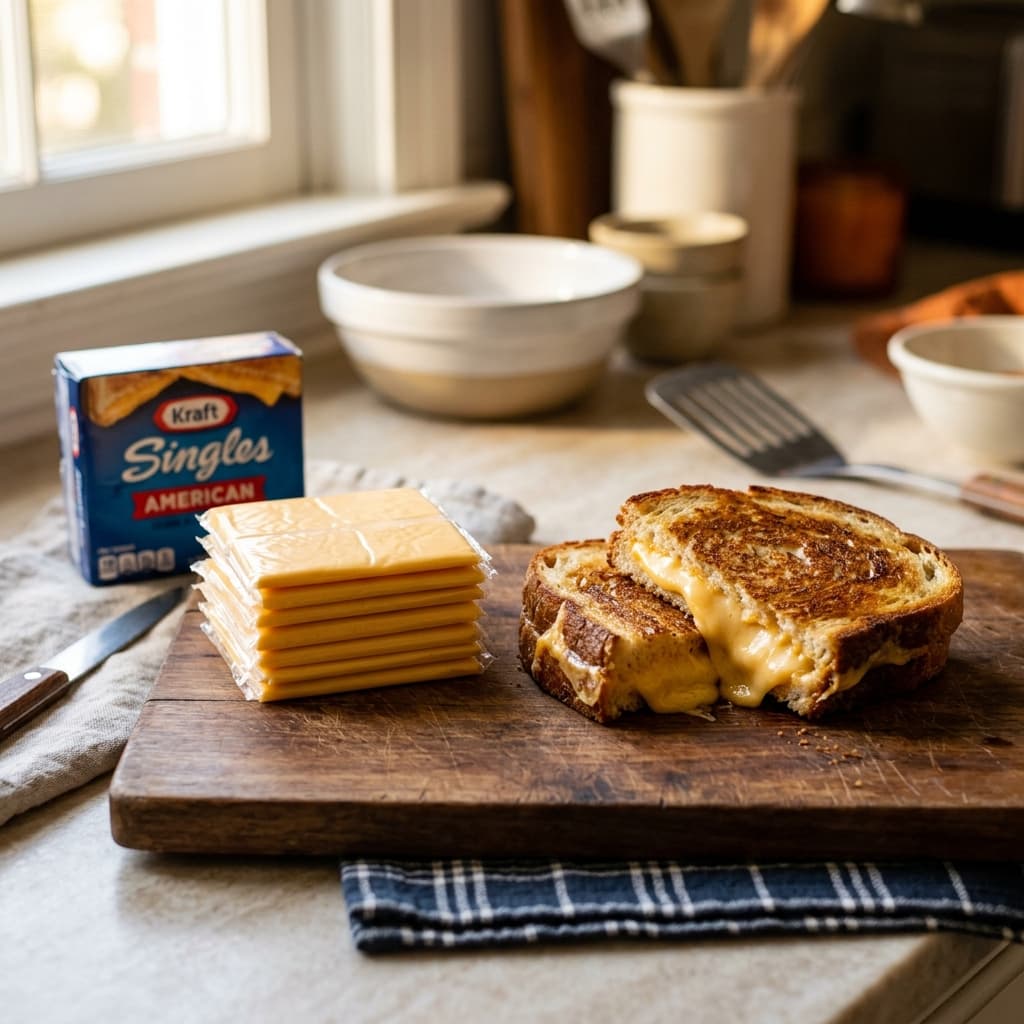
Yes, Kraft Singles American cheese slices are considered gluten-free. Kraft Heinz states that their Kraft Singles products do not contain wheat, rye, barley, or oat ingredients. The modified food starch used in Kraft Singles is derived from corn, not wheat. However, Kraft Singles are not third-party certified gluten-free, and they are produced in facilities that also process products containing wheat. For highly sensitive celiacs, this means a small cross-contamination risk remains.
The Grilled Cheese Heartbreak: A Celiac Story
Your eight-year-old was just diagnosed with celiac disease three months ago. It has been an emotional whirlwind — learning to read labels, overhauling the pantry, navigating school lunches, and dealing with the guilt every time your child asks, *"Why can't I eat what everyone else eats?"*
Tonight, you want to make something simple and comforting: a grilled cheese sandwich. You have gluten-free bread. You pull out the familiar yellow package of Kraft Singles — the same cheese you have been using for years. But then you pause. You flip the package over and scan the ingredient list: *"milk, whey, milk protein concentrate, modified food starch, calcium phosphate..."*
Modified food starch. Your heart sinks. You have read that modified food starch can be made from wheat. Is this safe? Is it corn-based? The label does not specify. You put the cheese down, look at your child's hopeful face, and feel completely paralyzed.
This is the processed cheese dilemma. It is a moment thousands of celiac parents face — standing in the kitchen, holding a product they have used their entire lives, suddenly unsure if it is safe for their family.
The good news? In the case of Kraft Singles specifically, the modified food starch is corn-based, and the product is considered safe. But the uncertainty is real, and the broader processed cheese category has genuine pitfalls.
📩 Want more tips like this?
Join celiacs getting weekly gluten-free tips, recipes, and hidden gluten alerts.
No spam. Unsubscribe anytime.
Key Celiac Definitions
Understanding these terms will help you navigate the cheese aisle with confidence:
* Celiac disease: Celiac disease is a serious autoimmune disorder in which ingesting gluten — a protein found in wheat, barley, and rye — triggers an immune response that damages the small intestine's villi, affecting approximately 1 in 100 people worldwide according to the Celiac Disease Foundation.
* Modified food starch: Modified food starch is a processed starch used as a thickener and texturizer in many foods. In the United States, when derived from wheat, it must be labeled as "modified wheat starch" or declared in an allergen statement per FDA regulations.
* Cross-contamination: Cross-contamination occurs when gluten-free food comes into contact with gluten-containing food or surfaces — through shared cutting boards, toasters, fryers, or utensils — making otherwise safe food dangerous for people with celiac disease.
Search Amazon for gluten-free food safety
Amazon search results · Look for a certified gluten-free seal on the label
Gluten-Free food safety on Amazon

Bob's Red Mill GF Flour
Essential GF pantry staple

Canyon Bakehouse GF Bread
Best-tasting GF bread

Barilla GF Pasta
Closest to regular pasta taste
The Modified Food Starch Question
The biggest source of confusion in processed cheese is modified food starch. Here is what you need to know:
According to FDA labeling regulations (FALCPA — the Food Allergen Labeling and Consumer Protection Act of 2004), if modified food starch is derived from wheat, the manufacturer must declare it as "modified wheat starch" or list "wheat" in a "Contains:" allergen statement.
If a U.S. product label simply says "modified food starch" without any wheat allergen declaration, it is virtually always derived from corn, potato, or tapioca — all of which are naturally gluten-free.
Kraft Heinz has confirmed in consumer communications that the modified food starch in Kraft Singles is corn-based. This makes Kraft Singles safe from a gluten ingredient standpoint.
However, this rule applies primarily to U.S.-manufactured products. Imported processed cheeses, European brands, and private-label products may follow different labeling conventions. Always read the allergen statement on imported cheese products.
🛒 Not sure if what you're holding is safe?
Point your phone at any ingredient label and get a clear safe / caution / unsafe answer in about three seconds — including the hidden gluten most labels bury.
Natural vs. Processed Cheese: Which Is Safer?
Not all cheese is created equal when it comes to celiac safety. Here is the fundamental difference:
Natural Cheese (Safest)
Natural cheese — such as cheddar, mozzarella, Swiss, Gouda, Brie, Parmesan, and goat cheese — is made from milk, bacterial cultures, enzymes (rennet), and salt. These four ingredients are all naturally gluten-free. According to Beyond Celiac, natural cheese in block, wedge, or wheel form is one of the safest food categories for celiacs.
Processed Cheese (Requires Caution)
Processed cheese — such as American cheese singles, cheese spreads, and cheese sauces — is made by blending natural cheese with emulsifiers, stabilizers, and thickeners (including modified food starch). While most U.S. brands use corn-based starch, the addition of these extra ingredients creates more opportunities for gluten-containing additives.
Cheese Products to Watch Out For
Cheese Brand Safety Comparison
Based on published ingredient lists and manufacturer gluten-free statements:
Pro Tips for Cheese-Loving Celiacs
Scan Cheese Labels Instantly With AI
Before you buy a new cheese product — especially processed varieties, cheese sauces, or flavored cream cheeses — open the Check Gluten App.
Scan the barcode on any cheese package, and our AI-powered scanner will instantly analyze the ingredient list for wheat-based starch, malt vinegar, beer-based ingredients, and hidden wheat flour in seasoning blends — ensuring every cheese choice is celiac-safe.
FAQs
Are Kraft Singles safe for celiac disease?
Yes, Kraft Singles are considered safe for celiacs. Kraft Heinz confirms that the modified food starch used in Kraft Singles is corn-based, and the product does not contain wheat, rye, barley, or oat ingredients. However, they are not third-party certified gluten-free.
Does processed cheese contain gluten?
Most major U.S. processed cheese brands do not contain gluten ingredients. The modified food starch used as a thickener is typically corn-based. However, always read the allergen statement, especially on imported or store-brand processed cheese products.
Is shredded cheese gluten-free?
Pre-shredded cheese typically uses potato starch, corn starch, or cellulose as anti-caking agents — all of which are gluten-free. Wheat starch is very rarely used and must be declared on U.S. labels per FDA regulations.
What cheese should celiacs avoid?
Celiacs should avoid beer cheese dips and soups (made with wheat-based beer), flavored cream cheeses with cookie or pretzel mix-ins, and any cheese product that lists "modified wheat starch" or wheat allergens on the label.
Is Velveeta gluten-free?
Velveeta does not contain wheat ingredients and is considered safe for most celiacs. The product uses modified food starch from corn. However, Velveeta is not certified gluten-free by a third-party organization.
🔍 Not sure about a product?
Photograph any food label and the AI reads every ingredient, including the 500+ names gluten hides under. Free for 14 days.
Search Amazon for gluten-free food safety
Amazon search results · Look for a certified gluten-free seal on the label
Gluten-Free food safety on Amazon
Bob's Red Mill GF Flour
Essential GF pantry staple
Canyon Bakehouse GF Bread
Best-tasting GF bread
Barilla GF Pasta
Closest to regular pasta taste
Celiac Safety Glossary
- Celiac disease
- Celiac disease is a serious autoimmune disorder in which ingesting gluten — a protein found in wheat, barley, and rye — triggers an immune response that damages the small intestine's villi, affecting approximately 1 in 100 people worldwide according to the Celiac Disease Foundation.
- Gluten
- Gluten is a family of storage proteins (prolamins and glutelins) found naturally in cereal grains like wheat (including varieties like spelt, kamut, and farro), barley, and rye, which acts as a binder to give food elasticity and shape.
- Cross-contamination
- Cross-contamination (or cross-contact) occurs when gluten-free food comes into contact with gluten-containing food or surfaces — such as shared cutting boards, toasters, fryers, or utensils — rendering otherwise safe food dangerous for people with celiac disease.
- Gluten-free certification
- Gluten-free certification, such as the GFCO (Gluten-Free Certification Organization) seal, verifies that a product contains fewer than 10 parts per million (ppm) of gluten — stricter than the FDA's 20 ppm threshold for "gluten-free" labeling.
- Avenin (Oats)
- Avenin is a protein found in oats that is structurally similar to gluten. While most celiacs can tolerate pure, uncontaminated oats, a small percentage of celiacs react to avenin itself.
- Malt (Barley)
- Malt is fermented barley used as a flavoring or sweetener in cereals, chocolates, and beer; it is a major source of hidden gluten that is often overlooked on ingredient lists.
- Wheat starch
- Wheat starch is wheat flour that has had the gluten protein washed out. While some European gluten-free foods use codex-grade wheat starch (tested below 20 ppm), it can still trigger reactions in sensitive individuals.
📢 Found this helpful? Share it!
Stop Guessing. Start Scanning.
Every ingredient label has hidden gluten risks. Check Gluten's AI catches them all — in 3 seconds flat.
Camera + text input
& cross-contamination
$0 today • cancel anytime

The Essential Celiac Cookbook & Survival Bundle
Stop stressing over dinner and crumbling bread. 300+ comfort mains, 200 baking masterclass recipes, 4-week meal plans, and grocery checklists.
About This Article
Check Gluten
Written with AI assistance and checked against published sources — not by a doctor or dietitian. Confirm anything that matters with the label, the manufacturer, or your own healthcare provider.
How our content is checked →Medical Disclaimer: This article is for informational purposes only and is not a substitute for professional medical advice. Always consult your physician or a registered dietitian before making dietary changes related to celiac disease or gluten sensitivity. Read full disclaimer.
📚Sources & Citations
- •Celiac Disease Foundation — celiac.org — Comprehensive research and patient resources on celiac disease
- •Beyond Celiac — beyondceliac.org — Research-driven celiac disease advocacy and resources
- •GFCO (Gluten-Free Certification Organization) — gfco.org — Certification standards (<10 ppm)
- •FDA Gluten-Free Labeling — fda.gov — Federal regulations for <20 ppm labeling
Content reviewed and fact-checked by our clinical & nutrition team. Last updated July 2026.
Never Miss a Hidden Gluten Alert
Weekly tips on safe eating, hidden gluten warnings, and recipes — free, and one click to unsubscribe.
Related Articles
The Bagel Shop Knife: Cream Cheese and Cross-Contamination
Cream cheese is naturally gluten-free, but bagel shops are a minefield of cross-contamination. Learn how to navigate flavored cream cheeses and ordering safely.
Easy 30-Minute Gluten-Free Mac and Cheese (No Box Required)
Throw away the tiny box. This creamy, cheesy, perfectly comforting stovetop mac and cheese takes exactly 30 minutes and tastes incredible.
The Ice Cream Scoop: Cross-Contamination at the Counter
You think a simple scoop of vanilla ice cream is perfectly safe. But the local ice cream shop is actually one of the most dangerous places for a celiac to eat. Here is why.
The Celiac vs. Dairy Problem: Why Lactose Intolerance is so Common
You gave up gluten, but your stomach still hurts. Why do so many newly diagnosed celiacs suddenly become lactose intolerant? Here is the science behind the dairy problem.