Are Potatoes Gluten-Free? Safe Preparation Guide for Celiacs
This post may contain affiliate links. As an Amazon Associate, Check Gluten earns from qualifying purchases. Please read our disclosure policy.
Yes, plain potatoes are naturally gluten-free! But preparation methods can add gluten. Learn how to enjoy potatoes safely with celiac disease.
Want to save this recipe?
Enter your email and we'll send it to you! Plus, get new recipes every week.
✓Key Takeaways
The Short Answer: Yes, All Potatoes Are Naturally Gluten-Free
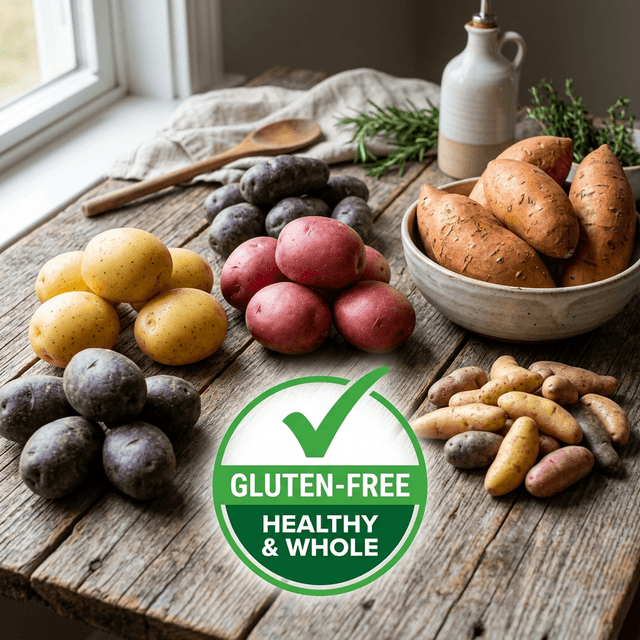
Potatoes are 100% naturally gluten-free in every variety — russet, red, Yukon Gold, sweet potatoes, fingerling, purple — all safe for celiac disease.
Potatoes are one of the best staple foods for a gluten-free diet. The issue is never the potato itself — it's how it's prepared.
Safe Potato Preparations
📩 Want more tips like this?
Join celiacs getting weekly gluten-free tips, recipes, and hidden gluten alerts.
No spam. Unsubscribe anytime.
When Potatoes Might NOT Be Safe
French Fries 🍟
The #1 potato gluten trap:
At restaurants, always ask: "Are the fries cooked in a dedicated fryer, or shared with breaded items?"
Mashed Potatoes (Restaurant/Packaged)
Scalloped/Au Gratin Potatoes
Potato Products to Check
Restaurant Potato Guide
*Always verify with your local restaurant as practices may vary.*
🔍 Still reading labels the hard way?
Check Gluten scans any food label in 3 seconds and tells you exactly what's safe. Trusted by celiacs worldwide.
How to Enjoy Potatoes Safely
The Bottom Line
Potatoes are a celiac's best friend — naturally GF, versatile, and delicious. Just watch out for preparation methods that add gluten, especially shared fryers and flour-based sauces. When eating out, ask the right questions, and scan packaged products with Check Gluten.
🔍 Not sure about a product?
Check any food label instantly with our free AI gluten scanner — detects 500+ hidden gluten sources in 3 seconds.
Find Gluten-Free Food Safety on Amazon
Shop certified gluten-free options
Top Gluten-Free Picks

Bob's Red Mill GF Flour
Essential GF pantry staple

Canyon Bakehouse GF Bread
Best-tasting GF bread

Barilla GF Pasta
Closest to regular pasta taste
As an Amazon Associate, we earn from qualifying purchases at no extra cost to you. Prices and availability are accurate as of the time of listing.
Celiac Safety Glossary
- Celiac disease
- Celiac disease is a serious autoimmune disorder in which ingesting gluten — a protein found in wheat, barley, and rye — triggers an immune response that damages the small intestine's villi, affecting approximately 1 in 100 people worldwide according to the Celiac Disease Foundation.
- Gluten
- Gluten is a family of storage proteins (prolamins and glutelins) found naturally in cereal grains like wheat (including varieties like spelt, kamut, and farro), barley, and rye, which acts as a binder to give food elasticity and shape.
- Wheat starch
- Wheat starch is wheat flour that has had the gluten protein washed out. While some European gluten-free foods use codex-grade wheat starch (tested below 20 ppm), it can still trigger reactions in sensitive individuals.
📢 Found this helpful? Share it!
Stop Guessing. Start Scanning.
Every ingredient label has hidden gluten risks. Check Gluten's AI catches them all — in 3 seconds flat.
Camera + text input
Priority support
No credit card required • Cancel anytime
The Ultimate Celiac Survival Bundle
Stop stressing over cross-contamination and what to make for dinner. Get our complete 500+ recipe cookbook, dining out guide, and label reading cheat sheets.
200+ GF Baking Recipes
& Fast Food Protocols
Instant PDF Download • 60-Day Money Back Guarantee
About the Author
Sarah Mitchell
Lead Content Writer & Nutritionist, B.S. Nutrition Science
Sarah was diagnosed with celiac disease in 2018 and writes evidence-based guides combining clinical nutrition knowledge with 6+ years of personal gluten-free living experience. All health content is medically reviewed by our advisory team.
Meet our full team →Medical Disclaimer: This article is for informational purposes only and is not a substitute for professional medical advice. Always consult your physician or a registered dietitian before making dietary changes related to celiac disease or gluten sensitivity. Read full disclaimer.
Never Miss a Hidden Gluten Alert
Join 4,200+ celiacs getting weekly tips on safe eating, hidden gluten warnings, and exclusive recipes.
Related Articles
Gluten-Free at Chick-fil-A: Why the Grilled Nuggets Are Your Only Option
Chick-fil-A is a fast-food favorite, but navigating the menu with celiac disease requires caution. Discover the truth about the fryers, why breaded chicken is unsafe, and how to order the grilled nuggets safely.
Are Kraft Singles Gluten-Free? The Processed Cheese Cross-Contamination Guide
Kraft Singles are labeled gluten-free, but processed cheese can be tricky. Discover which cheese types hide wheat, the modified food starch question, and the safest cheese brands for celiacs.
Is Yogurt Gluten-Free? The Hidden Granola and Cookie Crumble Danger
Plain yogurt is naturally gluten-free, but mix-ins like granola, cookie crumbles, and brownie bits hide wheat. Discover safe brands, yogurt shop risks, and how to avoid the parfait trap.
Are Lay's Potato Chips Gluten-Free? The Shared Line Flavor Trap
Lay's Classic are just potatoes, oil, and salt — but flavored varieties hide wheat in seasonings. Discover which Lay's flavors are safe, cross-contamination risks, and certified alternatives.