Gluten-Free in Sydney, Australia: The Ultimate Celiac Travel Guide
This post may contain affiliate links. As an Amazon Associate, Check Gluten earns from qualifying purchases. Please read our disclosure policy.
Sydney is one of the safest cities in the world for celiacs. Discover Coeliac Australia's strict labeling laws, dedicated bakeries, and the best gluten-free brunch spots by the harbor.
Sydney is one of the safest cities in the world for celiacs. Discover Coeliac Australia's strict labeling laws, dedicated bakeries, and the best gluten-free brunch spots by the harbor.
Heading to Sydney?
Check out our complete Celiac-Safe Sydney Gluten-Free Guide with celiac phrases, safety ratings, local tips, and celiac-reviewed restaurants.
Want to save this recipe?
Enter your email and we'll send it to you! Plus, get new recipes every week.
✓Key Takeaways
Is Sydney Gluten-Free Friendly? The Short Answer
Yes, Sydney, Australia is considered one of the safest cities in the world for travelers with celiac disease. Australia legally mandates that any product labeled "Gluten-Free" must contain no detectable gluten (less than 3ppm), which is significantly stricter than US and European standards.
A Celiac's Paradise Down Under
Traveling with celiac disease usually involves packing half a suitcase full of safe snacks, obsessively researching restaurants, and preparing a stack of translation cards.
But if you are traveling to Sydney, Australia, you can leave the anxiety at home.
Australia is globally recognized as having some of the strictest, most protective gluten-free labeling laws on the planet. Combined with an incredible, health-conscious foodie culture, Sydney is quite literally a paradise for anyone who requires a strict gluten-free diet.
📩 Want more tips like this?
Join celiacs getting weekly gluten-free tips, recipes, and hidden gluten alerts.
No spam. Unsubscribe anytime.
The Coeliac Australia Advantage
The reason Sydney is so safe comes down to the law. In Australia, the standard for "gluten-free" is significantly stricter than in the United States or Europe.
* No Detectable Gluten: For a product or menu item to legally be labeled "Gluten-Free" in Australia, it must have *no detectable gluten* (less than 3ppm). In the US and EU, the standard is under 20ppm.
* Oats are Excluded: In Australia, oats cannot legally be classified as gluten-free due to the protein avenin, which some celiacs react to. This means you don't have to worry about cross-contaminated oat milk in your coffee.
* Mandatory Allergen Declaration: Any ingredient derived from wheat, rye, barley, or oats must be explicitly declared on packaged food labels, no matter how small the amount.
Because the laws are so strict, restaurants take cross-contamination incredibly seriously. If a Sydney cafe marks a dish as "GF", they are legally bound to ensure it is free from cross-contamination.
Search Amazon for gluten-free travel
Amazon search results · Look for a certified gluten-free seal on the label
Gluten-Free travel on Amazon

LÄRABAR Variety Pack
Perfect shelf-stable travel snack

RX Bars Variety Pack
High-protein travel bars

Simple Mills Snack Packs
TSA-friendly cracker packs
Top Dedicated Gluten-Free Spots in Sydney
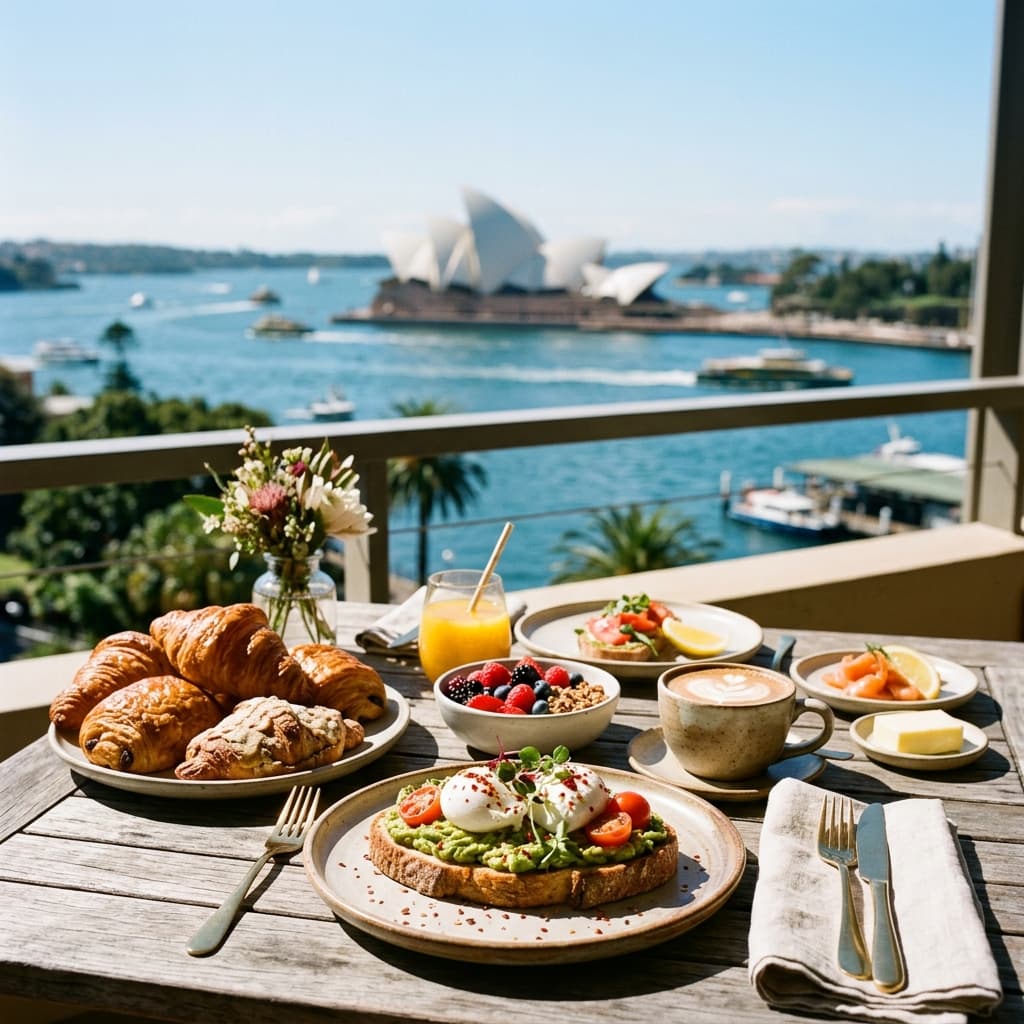
Sydney's cafe culture is legendary, and celiacs do not have to miss out on the famous Aussie brunch. Here are some of the best 100% dedicated gluten-free spots in the city:
🍽️ Eating out and unsure what to ask?
Scan a menu item or label and get the exact questions to ask your server about sourcing and shared equipment — no awkward guesswork.
Navigating Supermarkets
If you are staying in an Airbnb, grocery shopping in Sydney is a joy. The two major supermarket chains are Coles and Woolworths. Both have massive, clearly marked "Health Food" aisles packed with 🛒gluten-free pastaAmazon ↗, breads (try the brand *Abbott's Bakery*), and snacks.
Remember, because of the strict labeling laws, you can buy packaged items with total confidence.
The "Gluten-Friendly" Warning
While Sydney is incredibly safe, you still need to be an advocate for your health. Some restaurants, fearful of the strict legal liability of the "Gluten-Free" label, will use terms like "Gluten-Friendly" or "Low Gluten" on their menus.
If you see these terms, it almost always means the dish is made with gluten-free ingredients but is prepared in a shared kitchen or shared fryer. Always ask standard cross-contamination questions before ordering from a "Gluten-Friendly" menu.
FAQs
Are oats considered gluten-free in Australia?
No. Under Australian law, oats cannot be labeled gluten-free because they contain avenin, a protein that triggers a reaction in some individuals with celiac disease.
What does "No Detectable Gluten" mean in Australia?
In Australia, products labeled "Gluten-Free" must test at less than 3 parts per million (ppm) of gluten, effectively meaning no detectable traces. This is stricter than the FDA standard of 20ppm.
Is it safe to use the Check Gluten App in Australia?
Yes! While Australia's laws are strict, checking foreign ingredient lists can still be confusing. You can use the Check Gluten App AI scanner in Woolworths to instantly verify any local Australian snack, ensuring your vacation down under is completely stress-free.
🔍 Not sure about a product?
Photograph any food label and the AI reads every ingredient, including the 500+ names gluten hides under. Free for 14 days.
Search Amazon for gluten-free travel
Amazon search results · Look for a certified gluten-free seal on the label
Gluten-Free travel on Amazon
LÄRABAR Variety Pack
Perfect shelf-stable travel snack
RX Bars Variety Pack
High-protein travel bars
Simple Mills Snack Packs
TSA-friendly cracker packs
Celiac Safety Glossary
- Celiac disease
- Celiac disease is a serious autoimmune disorder in which ingesting gluten — a protein found in wheat, barley, and rye — triggers an immune response that damages the small intestine's villi, affecting approximately 1 in 100 people worldwide according to the Celiac Disease Foundation.
- Gluten
- Gluten is a family of storage proteins (prolamins and glutelins) found naturally in cereal grains like wheat (including varieties like spelt, kamut, and farro), barley, and rye, which acts as a binder to give food elasticity and shape.
- Cross-contamination
- Cross-contamination (or cross-contact) occurs when gluten-free food comes into contact with gluten-containing food or surfaces — such as shared cutting boards, toasters, fryers, or utensils — rendering otherwise safe food dangerous for people with celiac disease.
- Parts Per Million (ppm)
- Parts per million (ppm) is a unit of measurement used to quantify gluten concentration. Labeling laws in the US and Europe permit a maximum threshold of 20 ppm, while Australia requires no detectable gluten (0 ppm).
- Avenin (Oats)
- Avenin is a protein found in oats that is structurally similar to gluten. While most celiacs can tolerate pure, uncontaminated oats, a small percentage of celiacs react to avenin itself.
- Malt (Barley)
- Malt is fermented barley used as a flavoring or sweetener in cereals, chocolates, and beer; it is a major source of hidden gluten that is often overlooked on ingredient lists.
📢 Found this helpful? Share it!
Stop Guessing. Start Scanning.
Every ingredient label has hidden gluten risks. Check Gluten's AI catches them all — in 3 seconds flat.
Camera + text input
& cross-contamination
$0 today • cancel anytime

The Essential Celiac Cookbook & Survival Bundle
Stop stressing over dinner and crumbling bread. 300+ comfort mains, 200 baking masterclass recipes, 4-week meal plans, and grocery checklists.
About This Article
Check Gluten
Written with AI assistance and checked against published sources — not by a doctor or dietitian. Confirm anything that matters with the label, the manufacturer, or your own healthcare provider.
How our content is checked →Medical Disclaimer: This article is for informational purposes only and is not a substitute for professional medical advice. Always consult your physician or a registered dietitian before making dietary changes related to celiac disease or gluten sensitivity. Read full disclaimer.
📚Sources & Citations
- •Celiac Disease Foundation — celiac.org — Comprehensive research and patient resources on celiac disease
- •Beyond Celiac — beyondceliac.org — Research-driven celiac disease advocacy and resources
- •GFCO (Gluten-Free Certification Organization) — gfco.org — Certification standards (<10 ppm)
- •FDA Gluten-Free Labeling — fda.gov — Federal regulations for <20 ppm labeling
Content reviewed and fact-checked by our clinical & nutrition team. Last updated July 2026.
Never Miss a Hidden Gluten Alert
Weekly tips on safe eating, hidden gluten warnings, and recipes — free, and one click to unsubscribe.
Related Articles
Gluten-Free in Dublin, Ireland: Coeliac Pubs and Travel Guide
Ireland has one of the highest rates of celiac disease in the world, making Dublin an incredibly safe travel destination. Discover safe fish and chips, GF Guinness alternatives, and dedicated bakeries.
Gluten-Free in Mexico City: Celiac Tacos and Travel Safety Guide
Mexican cuisine is naturally corn-based, but Mexico City presents unique cross-contamination challenges. Learn how to navigate street food, find dedicated GF bakeries, and eat tacos safely.
Gluten-Free at Disney World: The Ultimate Celiac Vacation Guide
Disney World is widely considered the safest vacation destination on earth for celiacs. From dedicated fryers to allergen menus, here is how to eat safely at the parks.
Gluten-Free in Italy: Why It's the Safest Country in the World for Celiacs
The land of pasta and pizza is actually the safest place on earth for someone with celiac disease. Here is why the Italian government makes living gluten-free a priority.