Is Nutella Gluten-Free? The Celiac Guide to Hazelnut Spreads
This post may contain affiliate links. As an Amazon Associate, Check Gluten earns from qualifying purchases. Please read our disclosure policy.
Cocoa and hazelnuts are gluten-free, but is Nutella safe for celiacs? Discover the official gluten-free status of Nutella, cross-contamination dangers, and the best brands.
Cocoa and hazelnuts are gluten-free, but is Nutella safe for celiacs? Discover the official gluten-free status of Nutella, cross-contamination dangers, and the best brands.
Want to save this recipe?
Enter your email and we'll send it to you! Plus, get new recipes every week.
✓Key Takeaways
Is Nutella Gluten-Free? The Short Answer
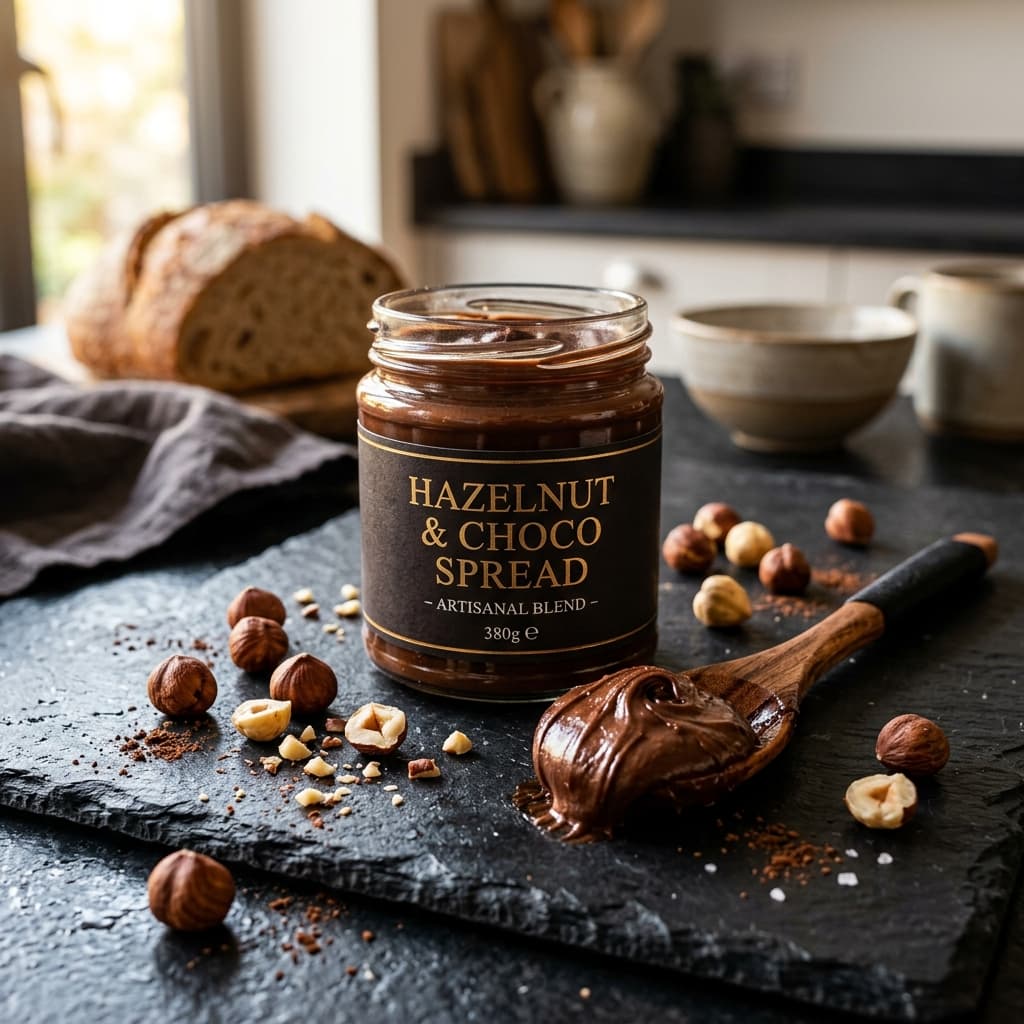
Yes, Nutella is naturally gluten-free. According to Ferrero, the manufacturer of Nutella, the spread contains no wheat, barley, rye, or oats, and is processed in facilities that are strictly monitored to prevent gluten contamination. Nutella is officially labeled “Gluten-Free” in the United States and many other global markets, making the product itself completely safe for individuals with celiac disease.
The Double-Dipped Knife: A Celiac Story
It is a beautiful Saturday morning, and you have just toasted a perfect, warm slice of gluten-free bread. You open the pantry and pull down the family-sized jar of Nutella, excited to spread the rich, creamy chocolate-hazelnut goodness over your toast.
You unscrew the lid, peel back the gold foil, and look inside.
There, embedded in the smooth, dark chocolate surface, are three tiny, toasted crumbs.
Your heart sinks. Your roommate or partner—who eats regular wheat bread—used a butter knife to spread Nutella on their toast, double-dipped the knife back into the jar to get a second scoop, and left wheat crumbs behind.
You know that even a single microscopic crumb of wheat bread contains enough gluten to trigger an autoimmune attack in your small intestine, leading to days of bloating, joint pain, and fatigue. You put the jar back, your breakfast ruined.
In the celiac community, this is known as the double-dipped knife trap. It is one of the most common ways celiacs get accidentally “glutened” in their own homes. Even if a product is certified 100% gluten-free, the way it is handled in a shared kitchen can make it incredibly dangerous.
📩 Want more tips like this?
Join celiacs getting weekly gluten-free tips, recipes, and hidden gluten alerts.
No spam. Unsubscribe anytime.
Essential Terms for Celiacs
To protect your gut from hidden hazards, always keep these core definitions in mind:
* Celiac disease: Celiac disease is a serious autoimmune disorder in which ingesting gluten — a protein found in wheat, barley, and rye — triggers an immune response that damages the small intestine's villi, affecting approximately 1 in 100 people worldwide according to the Celiac Disease Foundation.
* Cross-contamination: Cross-contamination occurs when gluten-free food comes into contact with gluten-containing food or surfaces — through shared cutting boards, toasters, fryers, or utensils — making otherwise safe food dangerous for people with celiac disease.
* Gluten-free certification: Gluten-free certification, such as the GFCO (Gluten-Free Certification Organization) seal, verifies that a product contains fewer than 10 parts per million (ppm) of gluten — stricter than the FDA's 20 ppm threshold for "gluten-free" labeling.
Find Gluten-Free Food Safety on Amazon
Compare prices & read celiac reviews
Top Gluten-Free Picks

Bob's Red Mill GF Flour
★★★★★ 4.8Essential GF pantry staple

Canyon Bakehouse GF Bread
★★★★★ 4.8Best-tasting GF bread

Barilla GF Pasta
★★★★★ 4.8Closest to regular pasta taste
As an Amazon Associate, we earn from qualifying purchases at no extra cost to you. Prices and availability are accurate as of the time of listing.
Nutella Ingredient Analysis: Is It Safe?
To understand why Nutella is naturally gluten-free, we only need to look at its remarkably simple ingredient list. Nutella is formulated using seven basic ingredients:
Because none of these ingredients are grain-based, and Ferrero maintains dedicated allergen-free production lines, there is zero risk of gluten entering the product during manufacturing.
🍞 Tired of GF food that tastes like cardboard?
These are the gluten-free flours, pastas and snacks our readers rely on — the ones that actually taste good.
Hazelnut Spreads: Gluten-Free Comparison Guide
While Nutella is the most famous brand, there are several outstanding hazelnut spreads on the market. Here is a comparison of their gluten-free status based on feedback from Check Gluten's 41,000-member community:
*Safety Alert:* When buying imported or store-brand hazelnut spreads, watch out for varieties that include pre-packaged cookie sticks or crackers for dipping (like "Nutella & Go"). While the Nutella spread itself is safe, the included breadsticks are made of wheat and will highly contaminate the package.
Pro Tips: How to Establish a Celiac-Safe Spread System
If you live in a shared household with wheat-eaters, sharing condiment jars is a ticking time bomb. Here is how to keep your Nutella, peanut butter, and jams 100% safe:
If you are looking for more safety tips for dining out or traveling, check out our guide to eating safely at restaurants with celiac and our guide to avoiding hidden gluten in medications.
Scan Your Spreads Instantly With AI
Ingredient lists on chocolate spreads and nut butters can sometimes hide emulsifiers or flavorings derived from barley malt.
Before you buy, open the Check Gluten App. Scan the barcode of any hazelnut spread jar or chocolate snack package, and our advanced AI will instantly analyze the ingredient list for hidden gluten, barley derivatives, and shared facility cross-contact risk, keeping you safe and healthy.
FAQs
Is Nutella certified gluten-free?
Nutella is not certified by a third-party organization like the GFCO, but it is explicitly labeled "Gluten-Free" by the manufacturer, Ferrero. Under FDA guidelines, any product labeled gluten-free must contain fewer than 20 parts per million (ppm) of gluten, which is safe for celiacs.
Does Nutella contain wheat?
No, Nutella does not contain wheat. The ingredients are milk, sugar, palm oil, hazelnuts, cocoa, lecithin, and vanillin. It is entirely wheat-free.
Can celiacs eat Nutella & Go breadsticks?
No! While the Nutella dipping sauce in the "Nutella & Go" packs is gluten-free, the accompanying breadsticks are made from wheat flour and contain active gluten. The entire package is unsafe for celiacs. Look instead for "Nutella & Go" packs that feature gluten-free pretzels or simply buy the jar.
Is there gluten in hazelnut?
No. Hazelnuts are a type of tree nut and are naturally 100% gluten-free. Gluten is a protein found only in grass-family grains like wheat, barley, and rye.
🔍 Not sure about a product?
Check any food label instantly with our free AI gluten scanner — detects 500+ hidden gluten sources in 3 seconds.
Find Gluten-Free Food Safety on Amazon
Compare prices & read celiac reviews
Top Gluten-Free Picks
Bob's Red Mill GF Flour
★★★★★ 4.8Essential GF pantry staple
Canyon Bakehouse GF Bread
★★★★★ 4.8Best-tasting GF bread
Barilla GF Pasta
★★★★★ 4.8Closest to regular pasta taste
As an Amazon Associate, we earn from qualifying purchases at no extra cost to you. Prices and availability are accurate as of the time of listing.
Celiac Safety Glossary
- Celiac disease
- Celiac disease is a serious autoimmune disorder in which ingesting gluten — a protein found in wheat, barley, and rye — triggers an immune response that damages the small intestine's villi, affecting approximately 1 in 100 people worldwide according to the Celiac Disease Foundation.
- Gluten
- Gluten is a family of storage proteins (prolamins and glutelins) found naturally in cereal grains like wheat (including varieties like spelt, kamut, and farro), barley, and rye, which acts as a binder to give food elasticity and shape.
- Cross-contamination
- Cross-contamination (or cross-contact) occurs when gluten-free food comes into contact with gluten-containing food or surfaces — such as shared cutting boards, toasters, fryers, or utensils — rendering otherwise safe food dangerous for people with celiac disease.
- Gluten-free certification
- Gluten-free certification, such as the GFCO (Gluten-Free Certification Organization) seal, verifies that a product contains fewer than 10 parts per million (ppm) of gluten — stricter than the FDA's 20 ppm threshold for "gluten-free" labeling.
- Parts Per Million (ppm)
- Parts per million (ppm) is a unit of measurement used to quantify gluten concentration. Labeling laws in the US and Europe permit a maximum threshold of 20 ppm, while Australia requires no detectable gluten (0 ppm).
- Avenin (Oats)
- Avenin is a protein found in oats that is structurally similar to gluten. While most celiacs can tolerate pure, uncontaminated oats, a small percentage of celiacs react to avenin itself.
- Malt (Barley)
- Malt is fermented barley used as a flavoring or sweetener in cereals, chocolates, and beer; it is a major source of hidden gluten that is often overlooked on ingredient lists.
📢 Found this helpful? Share it!
Stop Guessing. Start Scanning.
Every ingredient label has hidden gluten risks. Check Gluten's AI catches them all — in 3 seconds flat.
Camera + text input
& cross-contamination
$0 today • cancel anytime
The Celiac Kitchen Starter Kit
Stop stressing over cross-contamination and what to make for dinner. These are the gluten-free flours, pastas, snacks and tools our readers actually keep in their kitchens.
pastas & baking staples
cross-contamination tools
Real prices & reviews • Updated weekly
About the Author
Sarah Mitchell
Lead Content Writer & Nutritionist, B.S. Nutrition Science
Sarah was diagnosed with celiac disease in 2018 and writes evidence-based guides combining clinical nutrition knowledge with 6+ years of personal gluten-free living experience. All health content is medically reviewed by our advisory team.
Meet our full team →Medical Disclaimer: This article is for informational purposes only and is not a substitute for professional medical advice. Always consult your physician or a registered dietitian before making dietary changes related to celiac disease or gluten sensitivity. Read full disclaimer.
📚Sources & Citations
- •Celiac Disease Foundation — celiac.org — Comprehensive research and patient resources on celiac disease
- •Beyond Celiac — beyondceliac.org — Research-driven celiac disease advocacy and resources
- •GFCO (Gluten-Free Certification Organization) — gfco.org — Certification standards (<10 ppm)
- •FDA Gluten-Free Labeling — fda.gov — Federal regulations for <20 ppm labeling
- •Check Gluten Community — 41,000+ celiacs — First-party data from community feedback and AI label scans
Content reviewed and fact-checked by our clinical & nutrition team. Last updated July 2026.
Never Miss a Hidden Gluten Alert
Join 4,200+ celiacs getting weekly tips on safe eating, hidden gluten warnings, and exclusive recipes.
Related Articles
Gluten-Free at Chipotle: The Safest Fast-Casual Chain for Celiacs
Chipotle is widely considered a safe haven for celiacs, but hidden dangers exist. Learn how to navigate the assembly line, the flour tortilla risk, and how to request a glove change for maximum safety.
Gluten-Free at Chick-fil-A: Why the Grilled Nuggets Are Your Only Option
Chick-fil-A is a fast-food favorite, but navigating the menu with celiac disease requires caution. Discover the truth about the fryers, why breaded chicken is unsafe, and how to order the grilled nuggets safely.
Gluten-Free at Starbucks: The Complete Celiac Drink and Food Guide (2026)
Starbucks can be a minefield for celiacs. Discover which drinks are safe, the hidden wheat in frappuccinos and oat milk, and why almost all food items carry massive cross-contamination risks.
Are Kraft Singles Gluten-Free? The Processed Cheese Cross-Contamination Guide
Kraft Singles are labeled gluten-free, but processed cheese can be tricky. Discover which cheese types hide wheat, the modified food starch question, and the safest cheese brands for celiacs.