The Bagel Shop Knife: Cream Cheese and Cross-Contamination
This post may contain affiliate links. As an Amazon Associate, Check Gluten earns from qualifying purchases. Please read our disclosure policy.
Cream cheese is naturally gluten-free, but bagel shops are a minefield of cross-contamination. Learn how to navigate flavored cream cheeses and ordering safely.
Cream cheese is naturally gluten-free, but bagel shops are a minefield of cross-contamination. Learn how to navigate flavored cream cheeses and ordering safely.
Want to save this recipe?
Enter your email and we'll send it to you! Plus, get new recipes every week.
✓Key Takeaways
Is Cream Cheese Gluten-Free? The Short Answer
Yes, plain cream cheese is naturally gluten-free. Classic cream cheese is made from milk, cream, cheese cultures, salt, and stabilizers (like carob bean gum). None of these ingredients contain gluten. However, flavored cream cheeses and bagel shop environments pose a severe threat to anyone with celiac disease or gluten sensitivity.
The Bagel Shop Knife Trap: A Celiac Story
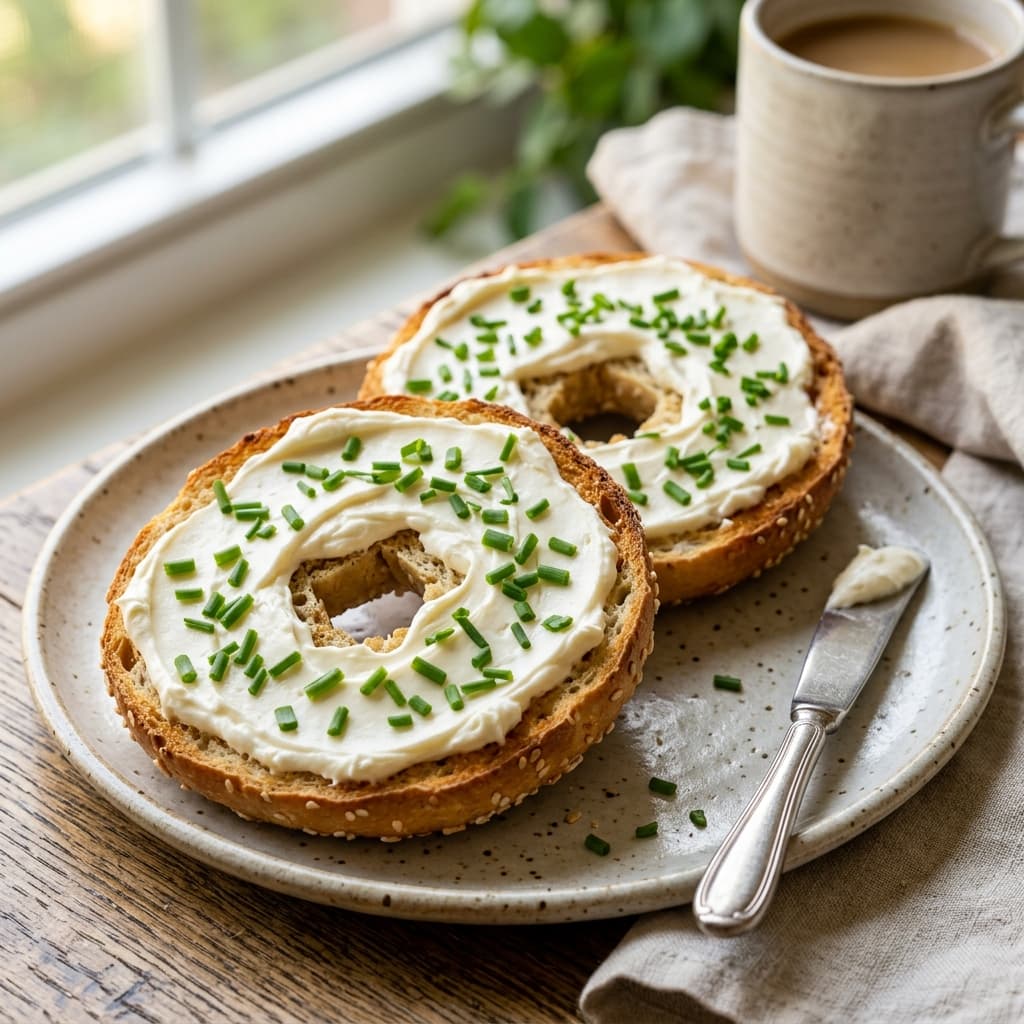
Imagine waking up on a Saturday morning, craving a toasted bagel. You find a local bagel shop that proudly advertises "Gluten-Free Bagels Available!" You drive over, order your gluten-free bagel, and ask for a smear of plain cream cheese. You watch the worker retrieve the gluten-free bagel from a separate package, toast it in a dedicated toaster (or oven), and then reach for the cream cheese tub.
Using a metal spatula, they scoop a generous dollop of cream cheese, spread it over your gluten-free bagel, and hand it to you.
Within hours, your stomach is in knots, and you are dealing with a severe celiac flare-up.
What went wrong? The toaster was clean, and the bagel was safe. The disaster occurred at the cream cheese tub. The worker used the exact same spatula to scoop cream cheese for wheat bagels all morning, double-dipping the knife and transferring thousands of microscopic wheat crumbs directly into the shared cream cheese container. For someone with celiac disease, this level of cross-contamination is just as dangerous as eating a slice of regular bread.
📩 Want more tips like this?
Join celiacs getting weekly gluten-free tips, recipes, and hidden gluten alerts.
No spam. Unsubscribe anytime.
Essential Terms for Celiacs
To understand how to protect your gut, keep these core concepts in mind:
* Celiac disease: Celiac disease is a serious autoimmune disorder in which ingesting gluten — a protein found in wheat, barley, and rye — triggers an immune response that damages the small intestine's villi, affecting approximately 1 in 100 people worldwide according to the Celiac Disease Foundation.
* Cross-contamination: Cross-contamination occurs when gluten-free food comes into contact with gluten-containing food or surfaces — through shared cutting boards, toasters, fryers, or utensils — making otherwise safe food dangerous for people with celiac disease.
* Gluten-free certification: Gluten-free certification, such as the GFCO (Gluten-Free Certification Organization) seal, verifies that a product contains fewer than 10 parts per million (ppm) of gluten — stricter than the FDA's 20 ppm threshold for "gluten-free" labeling.
Search Amazon for gluten-free food safety
Amazon search results · Look for a certified gluten-free seal on the label
Gluten-Free food safety on Amazon

Bob's Red Mill GF Flour
Essential GF pantry staple

Canyon Bakehouse GF Bread
Best-tasting GF bread

Barilla GF Pasta
Closest to regular pasta taste
Where Does Gluten Hide in Cream Cheese?
There are two main areas of concern when eating cream cheese:
1. Sweet and Savory Flavored Spreads
Plain cream cheese is safe, but flavored varieties can contain gluten ingredients:
* Cookie/Cake Flavors: Spreads like "cookies and cream" or "pumpkin cheesecake" often contain actual cookie crumbs or graham cracker pieces made from wheat flour.
* Savory Flavors: Spreads containing bacon or seasonings may use hydrolyzed wheat protein, soy sauce, or barley malt yeast as flavor enhancers.
* Thickeners: Low-fat or vegan cream cheese brands sometimes add food starch to replicate the texture of full-fat dairy. If the starch source isn't specified, it could be wheat-derived (especially in imported products).
2. Bagel Shop Cross-Contamination
As described in our story, the double-dipping of knives and spatulas at bagel shops makes shared cream cheese tubs a celiac nightmare. Crumbs from sesame, rye, and wheat bagels find a permanent home in those tubs.
🍞 Tired of GF food that tastes like cardboard?
500+ gluten-free recipes, a baking masterclass and 4 weeks of meal plans — instant PDF download.
Safe Cream Cheese Brands You Can Trust
According to their published ingredient lists and manufacturer gluten-free statements, these packaged cream cheese brands are safe to buy at the store:
How to Order Safely at a Bagel Shop
If you want to enjoy a gluten-free bagel at a local shop, follow this strict protocol:
If you are looking for other celiac-safe breakfast tips, check out our guide to gluten-free medications or read about gluten-free student dorm life.
Verify Your Breakfast Spreads Instantly
Don't let hidden starches or cross-contact spoil your morning.
Download the Check Gluten App. Scan the barcode of any cream cheese tub or dairy-free spread at the store, and our advanced AI will instantly analyze the ingredients list for hidden wheat starch, gluten-containing thickeners, and shared-facility risks.
FAQs
Is Philadelphia cream cheese gluten-free?
Yes, Philadelphia cream cheese (plain and most standard fruit/savory flavors) does not contain gluten. Kraft Heinz, the manufacturer, clearly labels any gluten-containing ingredients (such as wheat, barley, or rye) on the package.
Does whipped cream cheese contain gluten?
No. Whipped cream cheese is simply standard cream cheese with nitrogen or air whipped into it to create a fluffier texture. The ingredients remain the same, making it naturally gluten-free.
Are dairy-free cream cheeses gluten-free?
Most dairy-free and vegan cream cheeses (made from almonds, cashews, or coconut oil) are naturally gluten-free and explicitly labeled. However, always check the label for thickeners like maltodextrin or starch, which can occasionally be wheat-derived.
What is the risk of double-dipping at bagel shops?
When a worker uses a knife to spread cream cheese on a wheat bagel, crumbs stick to the knife. When they dip that same knife back into the tub to get more cream cheese, the crumbs are deposited into the tub. This contaminates the entire batch of cream cheese for any future celiac customers.
🔍 Not sure about a product?
Photograph any food label and the AI reads every ingredient, including the 500+ names gluten hides under. Free for 14 days.
Search Amazon for gluten-free food safety
Amazon search results · Look for a certified gluten-free seal on the label
Gluten-Free food safety on Amazon
Bob's Red Mill GF Flour
Essential GF pantry staple
Canyon Bakehouse GF Bread
Best-tasting GF bread
Barilla GF Pasta
Closest to regular pasta taste
Celiac Safety Glossary
- Celiac disease
- Celiac disease is a serious autoimmune disorder in which ingesting gluten — a protein found in wheat, barley, and rye — triggers an immune response that damages the small intestine's villi, affecting approximately 1 in 100 people worldwide according to the Celiac Disease Foundation.
- Gluten
- Gluten is a family of storage proteins (prolamins and glutelins) found naturally in cereal grains like wheat (including varieties like spelt, kamut, and farro), barley, and rye, which acts as a binder to give food elasticity and shape.
- Cross-contamination
- Cross-contamination (or cross-contact) occurs when gluten-free food comes into contact with gluten-containing food or surfaces — such as shared cutting boards, toasters, fryers, or utensils — rendering otherwise safe food dangerous for people with celiac disease.
- Gluten-free certification
- Gluten-free certification, such as the GFCO (Gluten-Free Certification Organization) seal, verifies that a product contains fewer than 10 parts per million (ppm) of gluten — stricter than the FDA's 20 ppm threshold for "gluten-free" labeling.
- Parts Per Million (ppm)
- Parts per million (ppm) is a unit of measurement used to quantify gluten concentration. Labeling laws in the US and Europe permit a maximum threshold of 20 ppm, while Australia requires no detectable gluten (0 ppm).
- Malt (Barley)
- Malt is fermented barley used as a flavoring or sweetener in cereals, chocolates, and beer; it is a major source of hidden gluten that is often overlooked on ingredient lists.
- Wheat starch
- Wheat starch is wheat flour that has had the gluten protein washed out. While some European gluten-free foods use codex-grade wheat starch (tested below 20 ppm), it can still trigger reactions in sensitive individuals.
📢 Found this helpful? Share it!
Stop Guessing. Start Scanning.
Every ingredient label has hidden gluten risks. Check Gluten's AI catches them all — in 3 seconds flat.
Camera + text input
& cross-contamination
$0 today • cancel anytime

The Essential Celiac Cookbook & Survival Bundle
Stop stressing over dinner and crumbling bread. 300+ comfort mains, 200 baking masterclass recipes, 4-week meal plans, and grocery checklists.
About This Article
Check Gluten
Written with AI assistance and checked against published sources — not by a doctor or dietitian. Confirm anything that matters with the label, the manufacturer, or your own healthcare provider.
How our content is checked →Medical Disclaimer: This article is for informational purposes only and is not a substitute for professional medical advice. Always consult your physician or a registered dietitian before making dietary changes related to celiac disease or gluten sensitivity. Read full disclaimer.
📚Sources & Citations
- •Celiac Disease Foundation — celiac.org — Comprehensive research and patient resources on celiac disease
- •Beyond Celiac — beyondceliac.org — Research-driven celiac disease advocacy and resources
- •GFCO (Gluten-Free Certification Organization) — gfco.org — Certification standards (<10 ppm)
- •FDA Gluten-Free Labeling — fda.gov — Federal regulations for <20 ppm labeling
Content reviewed and fact-checked by our clinical & nutrition team. Last updated July 2026.
Never Miss a Hidden Gluten Alert
Weekly tips on safe eating, hidden gluten warnings, and recipes — free, and one click to unsubscribe.
Related Articles
The Ice Cream Scoop: Cross-Contamination at the Counter
You think a simple scoop of vanilla ice cream is perfectly safe. But the local ice cream shop is actually one of the most dangerous places for a celiac to eat. Here is why.
Are Kraft Singles Gluten-Free? The Processed Cheese Cross-Contamination Guide
Kraft Singles are labeled gluten-free, but processed cheese can be tricky. Discover which cheese types hide wheat, the modified food starch question, and the safest cheese brands for celiacs.
Malt Flavouring in Rice Krispies: Why Rice Isn't Enough
Rice is naturally gluten-free, but traditional Kellogg's Rice Krispies contain a dangerous hidden ingredient. Learn why malt flavoring is not safe for celiac disease and find certified alternatives.
The Celiac vs. Dairy Problem: Why Lactose Intolerance is so Common
You gave up gluten, but your stomach still hurts. Why do so many newly diagnosed celiacs suddenly become lactose intolerant? Here is the science behind the dairy problem.