Is Mustard Gluten-Free? The Ultimate Condiment Guide
This post may contain affiliate links. As an Amazon Associate, Check Gluten earns from qualifying purchases. Please read our disclosure policy.
Plain yellow mustard is naturally gluten-free, but specialty mustards often hide barley malt vinegar or wheat flour. Discover which mustard brands are safe for celiacs.
Plain yellow mustard is naturally gluten-free, but specialty mustards often hide barley malt vinegar or wheat flour. Discover which mustard brands are safe for celiacs.
Want to save this recipe?
Enter your email and we'll send it to you! Plus, get new recipes every week.
✓Key Takeaways
Is Mustard Gluten-Free? The Short Answer
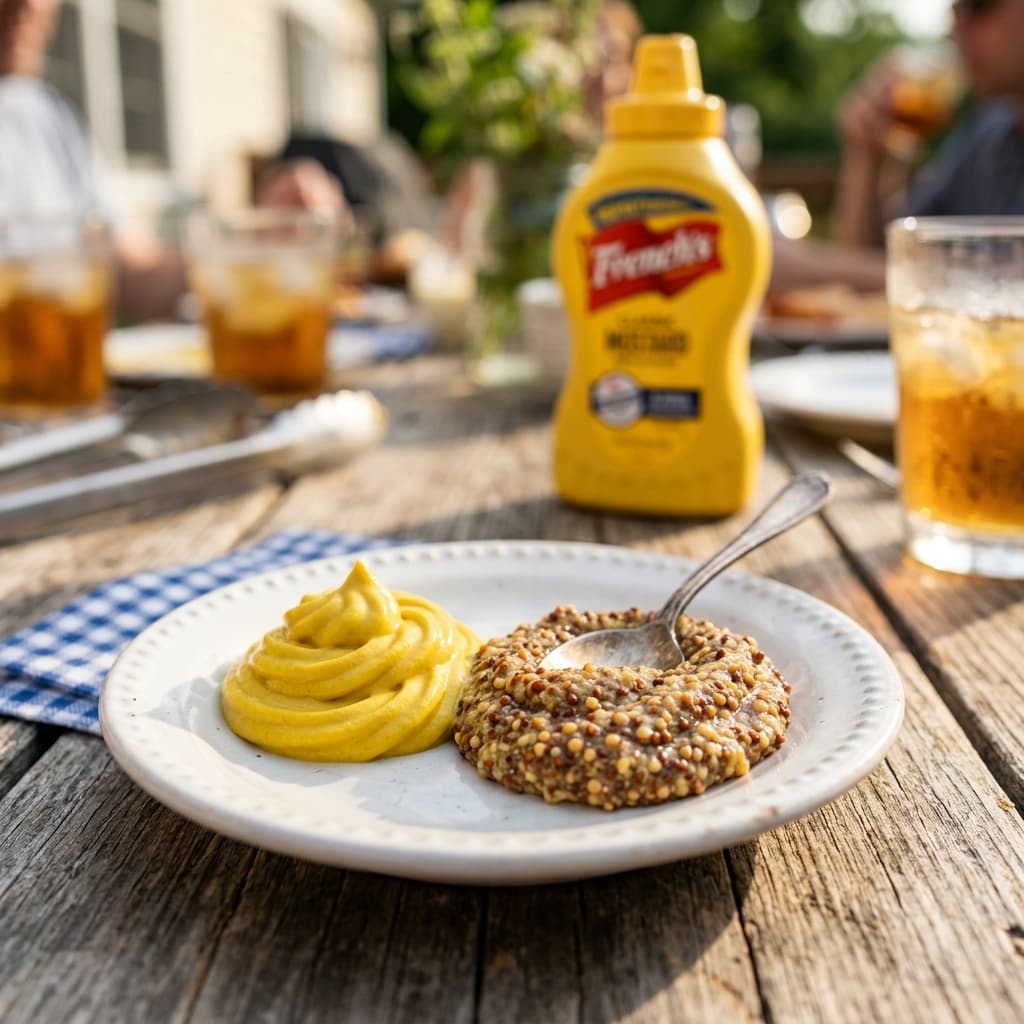
Yes, classic yellow mustard is naturally gluten-free. The basic ingredients for mustard are simply mustard seeds, water, distilled vinegar, and spices (like turmeric). These ingredients do not contain the gluten protein. However, specialty mustards and artisan blends carry a significant risk. Many gourmet mustards (like English mustard, beer mustard, or certain Dijon varieties) use wheat flour as a thickener or malt vinegar (derived from barley) for flavor.
The Deli Sandwich Trap
You're at a high-end deli. You carefully ask for your sandwich on a certified gluten-free bun, and you verify that the deli meat is safe. The server asks if you want their "house spicy brown mustard." You say yes.
An hour later, your stomach is in knots.
The bread was safe. The meat was safe. The mustard was the culprit. Many high-end restaurants and delis make their own mustard in-house, frequently cutting it with beer (which contains barley) or using malt vinegar to deepen the flavor profile.
📩 Want more tips like this?
Join celiacs getting weekly gluten-free tips, recipes, and hidden gluten alerts.
No spam. Unsubscribe anytime.
Where Does Gluten Hide in Mustard?
When evaluating a mustard bottle, you have to look for three major red flags:
1. Malt Vinegar
Standard distilled white vinegar and apple cider vinegar are perfectly safe. However, malt vinegar is made from fermented barley and is highly dangerous for anyone with celiac disease. In the United Kingdom and Canada, malt vinegar is a very common ingredient in condiments, including mustard.
2. Beer and Ale Mustards
Pub-style "Beer Mustards" are incredibly popular, especially for bratwursts and pretzels. These mustards actively contain beer, which is brewed from barley and sometimes wheat. They are strictly off-limits.
3. Wheat Flour Thickeners
Some specific regional mustards (like traditional Colman's English Mustard) use a small amount of wheat flour to thicken the paste and mellow out the intense heat of the mustard seed.
Find Gluten-Free Condiments on Amazon
Compare prices & read celiac reviews
Top Gluten-Free Picks

Bob's Red Mill GF Flour
★★★★★ 4.8Essential GF pantry staple

Canyon Bakehouse GF Bread
★★★★★ 4.8Best-tasting GF bread

Barilla GF Pasta
★★★★★ 4.8Closest to regular pasta taste
As an Amazon Associate, we earn from qualifying purchases at no extra cost to you. Prices and availability are accurate as of the time of listing.
Safe Mustard Brands You Can Trust
If you want to enjoy a hot dog or sandwich safely, stick to these trusted brands:
*Warning:* At a summer BBQ, always be wary of the shared squeeze bottle. Even if the mustard itself is safe, the plastic nozzle may have touched a wheat bun. Always wipe the nozzle or ask to use the mustard first!
🍞 Tired of GF food that tastes like cardboard?
These are the gluten-free flours, pastas and snacks our readers rely on — the ones that actually taste good.
FAQs
Is honey mustard gluten-free?
Usually, yes. Standard honey mustard is just a blend of yellow mustard, honey, and mayonnaise. However, some commercial honey mustard dressings use modified food starch as a thickener, which can occasionally be derived from wheat if manufactured outside the US. Always check the label.
Is Dijon mustard safe?
Yes, traditional Dijon mustard (like Grey Poupon) is made with white wine instead of vinegar and is generally considered safe. However, always verify that the brand does not use shared equipment with gluten-containing products.
How can I quickly check if a gourmet mustard is safe?
Don't guess when it comes to specialty condiments. Download the Check Gluten App. Scan the barcode on the jar, and our AI will instantly alert you if the ingredients list malt vinegar, beer, or wheat flour.
🔍 Not sure about a product?
Check any food label instantly with our free AI gluten scanner — detects 500+ hidden gluten sources in 3 seconds.
Find Gluten-Free Condiments on Amazon
Compare prices & read celiac reviews
Top Gluten-Free Picks
Bob's Red Mill GF Flour
★★★★★ 4.8Essential GF pantry staple
Canyon Bakehouse GF Bread
★★★★★ 4.8Best-tasting GF bread
Barilla GF Pasta
★★★★★ 4.8Closest to regular pasta taste
As an Amazon Associate, we earn from qualifying purchases at no extra cost to you. Prices and availability are accurate as of the time of listing.
Celiac Safety Glossary
- Celiac disease
- Celiac disease is a serious autoimmune disorder in which ingesting gluten — a protein found in wheat, barley, and rye — triggers an immune response that damages the small intestine's villi, affecting approximately 1 in 100 people worldwide according to the Celiac Disease Foundation.
- Gluten
- Gluten is a family of storage proteins (prolamins and glutelins) found naturally in cereal grains like wheat (including varieties like spelt, kamut, and farro), barley, and rye, which acts as a binder to give food elasticity and shape.
- Gluten-free certification
- Gluten-free certification, such as the GFCO (Gluten-Free Certification Organization) seal, verifies that a product contains fewer than 10 parts per million (ppm) of gluten — stricter than the FDA's 20 ppm threshold for "gluten-free" labeling.
- Malt (Barley)
- Malt is fermented barley used as a flavoring or sweetener in cereals, chocolates, and beer; it is a major source of hidden gluten that is often overlooked on ingredient lists.
📢 Found this helpful? Share it!
Stop Guessing. Start Scanning.
Every ingredient label has hidden gluten risks. Check Gluten's AI catches them all — in 3 seconds flat.
Camera + text input
& cross-contamination
$0 today • cancel anytime
The Celiac Kitchen Starter Kit
Stop stressing over cross-contamination and what to make for dinner. These are the gluten-free flours, pastas, snacks and tools our readers actually keep in their kitchens.
pastas & baking staples
cross-contamination tools
Real prices & reviews • Updated weekly
About the Author
Sarah Mitchell
Lead Content Writer & Nutritionist, B.S. Nutrition Science
Sarah was diagnosed with celiac disease in 2018 and writes evidence-based guides combining clinical nutrition knowledge with 6+ years of personal gluten-free living experience. All health content is medically reviewed by our advisory team.
Meet our full team →Medical Disclaimer: This article is for informational purposes only and is not a substitute for professional medical advice. Always consult your physician or a registered dietitian before making dietary changes related to celiac disease or gluten sensitivity. Read full disclaimer.
📚Sources & Citations
- •Celiac Disease Foundation — celiac.org — Comprehensive research and patient resources on celiac disease
- •Beyond Celiac — beyondceliac.org — Research-driven celiac disease advocacy and resources
- •GFCO (Gluten-Free Certification Organization) — gfco.org — Certification standards (<10 ppm)
- •FDA Gluten-Free Labeling — fda.gov — Federal regulations for <20 ppm labeling
- •Check Gluten Community — 41,000+ celiacs — First-party data from community feedback and AI label scans
Content reviewed and fact-checked by our clinical & nutrition team. Last updated July 2026.
Never Miss a Hidden Gluten Alert
Join 4,200+ celiacs getting weekly tips on safe eating, hidden gluten warnings, and exclusive recipes.
Related Articles
Are Kraft Singles Gluten-Free? The Processed Cheese Cross-Contamination Guide
Kraft Singles are labeled gluten-free, but processed cheese can be tricky. Discover which cheese types hide wheat, the modified food starch question, and the safest cheese brands for celiacs.
Is Yogurt Gluten-Free? The Hidden Granola and Cookie Crumble Danger
Plain yogurt is naturally gluten-free, but mix-ins like granola, cookie crumbles, and brownie bits hide wheat. Discover safe brands, yogurt shop risks, and how to avoid the parfait trap.
Are Lay's Potato Chips Gluten-Free? The Shared Line Flavor Trap
Lay's Classic are just potatoes, oil, and salt — but flavored varieties hide wheat in seasonings. Discover which Lay's flavors are safe, cross-contamination risks, and certified alternatives.
Is Soy Sauce Gluten-Free? The Sushi Restaurant Celiac Trap
Soy sauce is made from soybeans, so it should be gluten-free, right? Think again. Discover the shocking wheat brewing process of soy sauce, restaurant cross-contamination, and the best celiac-safe alternatives.