The Celiac Diagnosis Grief Cycle: Why You're Mourning Food (And That's Completely Normal)
This post may contain affiliate links. Please read our disclosure policy.
You're not being dramatic. You just lost every comfort food, every spontaneous restaurant moment, and every carefree holiday meal — all at once. Here's why it hurts so much and how to actually move through it.
Want to save this recipe?
Enter your email and we'll send it to you! Plus, get new recipes every week.
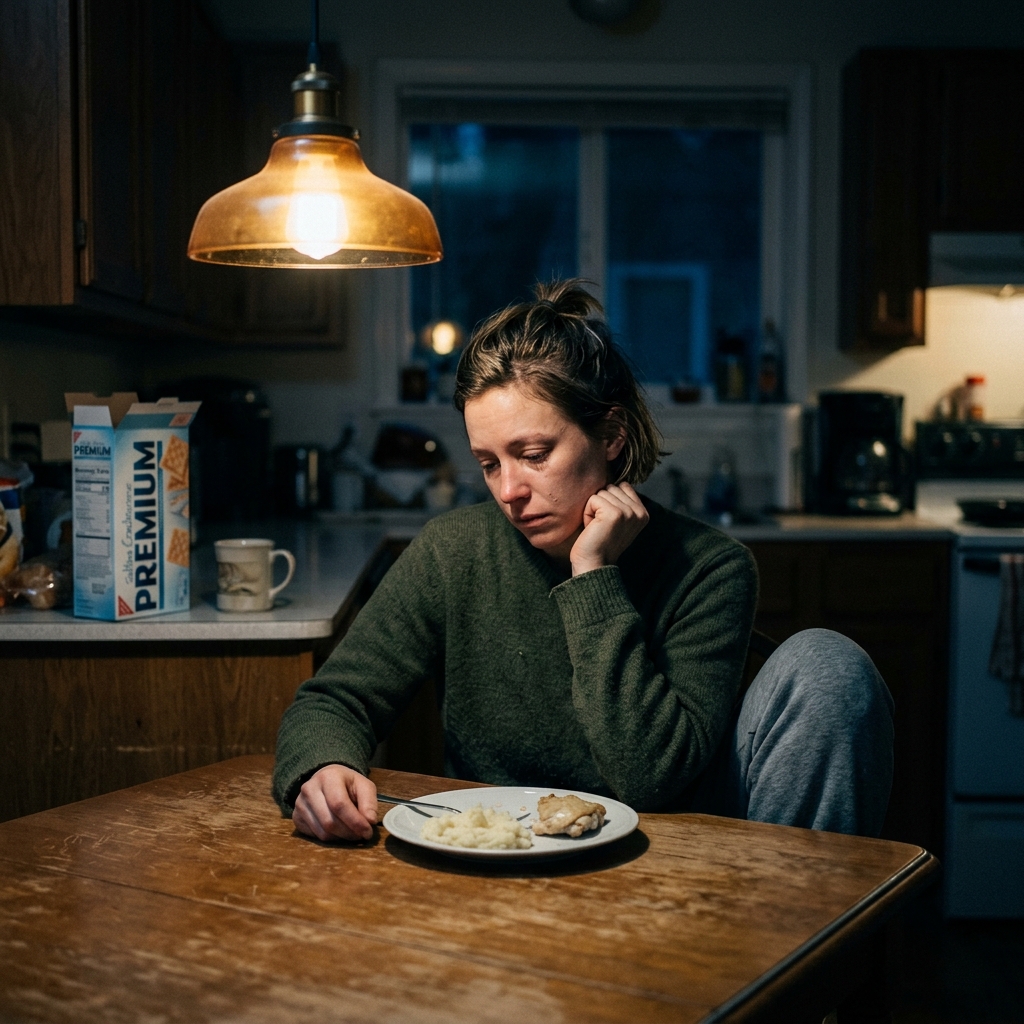
The Night I Sat on the Kitchen Floor and Cried Over a Croissant
It had been eleven days since my celiac diagnosis.
I was doing "fine." I'd cleaned out the pantry. I'd ordered GF pasta. I'd bookmarked recipes. I was handling it. I was being an adult.
Then I walked past a bakery on my way home from work, and the smell of fresh, buttery croissants floated out the door.
And I just... broke.
I went home, sat on the kitchen floor, and sobbed. Not because I couldn't have a croissant. But because I suddenly understood what "never again" actually meant. Never again would I spontaneously grab a slice of pizza with friends. Never again would I eat my grandmother's holiday stuffing. Never again would I walk into any restaurant, anywhere in the world, and just... order whatever I wanted without fear.
If you've been there — on the kitchen floor, in the grocery aisle, in the bathroom at a restaurant — I need you to hear something that nobody told me:
You are grieving. And grief over food is real, valid, and psychologically documented.
This Is Actual Grief. Not Drama.
Psychologists who study chronic illness have identified that a celiac diagnosis triggers a legitimate grief response — the same neurological process that occurs when you lose a relationship, a home, or a loved one.
Why? Because you haven't just lost bread. You've lost:
Dr. Alessio Fasano's research at Massachusetts General Hospital has documented that celiac patients experience anxiety and depression at rates 3x higher than the general population — and a significant portion of that is tied to the psychosocial impact of the diet, not just the disease itself.
You are not being weak. You are processing a massive, sudden loss that touches every single meal, every social interaction, and every holiday for the rest of your life.
The 5 Stages of Celiac Grief
Just like the Kübler-Ross model, celiac grief tends to move through recognizable phases. You might bounce between them. You might revisit some. That's normal.
Stage 1: Denial — "Maybe It's Not That Serious"
*"My test was borderline. Maybe I don't really have celiac. Maybe I can just eat a little bit of gluten and see what happens."*
This stage is dangerous because it can delay your gut healing by months or years. The internal damage happens whether you feel symptoms or not. Even "silent celiacs" with no outward symptoms are accumulating intestinal damage with every gluten exposure.
What helps: Read the science. Understand that celiac disease is a progressive autoimmune condition, not a sensitivity spectrum. Our article on what actually happens inside your body when you get glutened lays out the biology in detail.
Stage 2: Anger — "This Isn't Fair"
*"Why ME? I ate healthy. I exercised. I did everything right. And now I can't even have a damn sandwich?"*
The anger phase often gets directed at:
What helps: Channel the anger into advocacy. Write a review of a restaurant that handled your celiac well. Share your story in a Facebook community. Anger that moves outward becomes action. Anger that stays inward becomes depression.
Stage 3: Bargaining — "Maybe If I Just…"
*"What if I only eat gluten on holidays? What if I take enzymes before eating bread? What if I do a 'cheat day' once a month?"*
This is the stage where you start Googling "can celiacs eat sourdough" (no), "does toasting bread remove gluten" (no), and "gluten-digesting enzymes" (they don't work for celiac).
What helps: Understanding that there is currently no alternative to the strict GF diet. No pill, no enzyme, no amount of wishing. The celiac disease treatment and research article covers what's genuinely in the pipeline. Hope is good — but bargaining with your intestines today will cost you.
Stage 4: Depression — "I Don't Even Want to Eat Anymore"
*"Eating used to bring me joy. Now every meal is a risk assessment. I'm exhausted. I don't even want to go to restaurants anymore. I've stopped accepting dinner invitations."*
This is the stage that scares people around you. You stop cooking elaborate meals. You eat the same three "safe" things every day because decision fatigue has crushed your spirit. You decline social events because you can't face another conversation about your "diet."
What helps:
Stage 5: Acceptance — "This Is My Life. And I Can Make It Good."
Acceptance does not mean "I'm fine and I never think about it." Acceptance means:
*"I have celiac disease. It's permanent. Some days it still makes me sad. But I have a system, I have safe foods I genuinely love, and I refuse to let this disease steal my joy."*
You will still have bad days. You'll still get mad when a restaurant gets it wrong. You'll still feel a sting when your coworker's birthday cake smells incredible.
But the floor-crying moments get further apart. The grocery trips get faster. The restaurant research becomes second nature. And one day, you'll bring GF chocolate chip cookies to a party and watch someone's eyes go wide: "THESE are gluten-free?!" — and you'll feel something powerful. Pride.
🔍 Still reading labels the hard way?
Check Gluten scans any food label in 3 seconds and tells you exactly what's safe. Trusted by celiacs worldwide.
3 Evidence-Based Coping Strategies
1. The "Replacement, Not Deprivation" Mindset
Every time you think "I can never have ____ again," immediately follow it with "but I CAN have ____."
The brain responds to deprivation language with panic and sadness. Replacement language gives it a path forward.
2. The "First Time Again" Project
Make a list of 10 foods you miss the most. Then, one by one, find or create a GF version that genuinely satisfies you.
Each "first time again" moment is a small victory that rewires your brain from "loss" to "discovery." Keep a journal. When you find a GF version that genuinely hits, write it down. On bad days, read the list.
Our Ultimate Bundle was literally built for this project — it has the recipes, the meal plans, and the product guides designed to help you rebuild a food life you actually love, not just tolerate.
3. The 20-Minute Social Script
Social anxiety around food is one of the biggest triggers for celiac depression. Prepare a 20-second script that you've rehearsed so it rolls off your tongue automatically:
*"I have celiac disease — it's an autoimmune condition where even a crumb of gluten damages my intestines. So I bring my own food / eat beforehand / call restaurants ahead. It's totally manageable! Anyway, how's your [job / kid / vacation]?"*
Pivot. Always pivot. The faster you redirect, the less airtime your disease gets, and the more normal the interaction feels.
When to Seek Professional Help
Please reach out to a mental health professional if:
The Celiac Disease Foundation maintains a directory of GI-specialized mental health professionals. You deserve support that goes beyond dietary advice.
You're Not Broken. You're Rebuilding.
The grief is real. The losses are real. But you are still here, still researching, still learning, still trying to eat well and stay healthy despite an autoimmune disease that never takes a day off.
That's not weakness. That's extraordinary resilience.
And someday — maybe not today, maybe not this month — you'll sit at a table with a plate of food you made, food that's safe, food that's *delicious*, and you'll realize: you didn't just survive the diagnosis. You built an entirely new relationship with food. And it's yours.
📩 Want more tips like this?
Join celiacs getting weekly gluten-free tips, recipes, and hidden gluten alerts.
No spam. Unsubscribe anytime.
FAQs
Is it normal to grieve after a celiac diagnosis?
Yes. Research from the University of Nottingham confirmed that newly diagnosed celiacs experience grief responses comparable to other chronic illness diagnoses. Food is tied to identity, culture, and social bonding — losing access to it is a genuine psychosocial loss.
How long does the grief last?
There's no fixed timeline. Most celiacs report that the acute grief phase (denial through depression) lasts 3-12 months. However, grief "echoes" can resurface during holidays, travel, or social events for years. This is completely normal.
Can celiac disease cause clinical depression?
Yes. Studies show celiac disease carries a 1.8x increased risk of depression even after starting a GF diet. This appears to be driven by both neurological effects of the disease and the psychosocial burden of dietary management.
My family says I'm "being dramatic" about my diagnosis. What do I do?
Share our article on handling unsupportive family. Sometimes, people need to see the medical reality in writing before they take it seriously. Your grief is valid regardless of whether others validate it.
Will I ever enjoy food again?
Yes. Every celiac I know — every single one — has found their way back to food joy. It looks different. It requires more planning. But the moment you bite into a GF chocolate chip cookie that tastes exactly right, something in your brain clicks: *I'm going to be okay.*
🔍 Not sure about a product?
Check any food label instantly with our free AI gluten scanner — detects 500+ hidden gluten sources in 3 seconds.
Find Gluten-Free Health on Amazon
Shop certified gluten-free options
Top Gluten-Free Picks
📢 Found this helpful? Share it!
Stop Guessing. Start Scanning.
Every ingredient label has hidden gluten risks. Check Gluten's AI catches them all — in 3 seconds flat.
Camera + text input
Priority support
No credit card required • Cancel anytime
The Ultimate Celiac Survival Bundle
Stop stressing over cross-contamination and what to make for dinner. Get our complete 500+ recipe cookbook, dining out guide, and label reading cheat sheets.
200+ GF Baking Recipes
& Fast Food Protocols
Instant PDF Download • 60-Day Money Back Guarantee
About the Author
Sarah Mitchell
Lead Content Writer & Nutritionist, B.S. Nutrition Science
Sarah was diagnosed with celiac disease in 2018 and writes evidence-based guides combining clinical nutrition knowledge with 6+ years of personal gluten-free living experience. All health content is medically reviewed by our advisory team.
Meet our full team →Medical Disclaimer: This article is for informational purposes only and is not a substitute for professional medical advice. Always consult your physician or a registered dietitian before making dietary changes related to celiac disease or gluten sensitivity. Read full disclaimer.
Related Articles
Still Sick on a Gluten-Free Diet? 10 Reasons Your Celiac Symptoms Won't Go Away (2026)
You have been strictly gluten-free for months. Your bloodwork is improving. But you still feel terrible — bloating, fatigue, brain fog. Before you panic, here are the 10 most common reasons celiacs still feel sick on a GF diet.
Celiac Disease & Bone Health: The Osteoporosis Risk Nobody Warned You About (2026)
At 34, my doctor told me I had the bones of a 65-year-old. My DEXA scan showed osteopenia in my spine and hips — years of undiagnosed celiac had silently stolen my bone density. Here is why every celiac needs a bone density scan.
Celiac Disease & Your Teeth: Enamel Defects, Canker Sores, and Signs Your Dentist Should Catch (2026)
My dentist noticed the damage before my GI doctor did. Pitting, discoloration, and grooves on my permanent teeth that no amount of brushing could fix. Turns out, my mouth was screaming "celiac" for 15 years before anyone listened.
Celiac Disease & Thyroid Problems: The Autoimmune Connection Your Doctor Might Miss (2026)
If you have celiac disease, there is a 1 in 4 chance you also have a thyroid disorder. And if you have Hashimoto's, there is a 1 in 10 chance you have undiagnosed celiac. Here is why these two conditions travel together — and what to do about it.