Stop Apologizing for Your Diet: Setting Boundaries as a Celiac
This post may contain affiliate links. As an Amazon Associate, Check Gluten earns from qualifying purchases. Please read our disclosure policy.
You are not a burden, and you do not have to eat food that makes you sick just to be polite. Here is how to firmly set boundaries with friends and family about your health.
You are not a burden, and you do not have to eat food that makes you sick just to be polite. Here is how to firmly set boundaries with friends and family about your health.
Want to save this recipe?
Enter your email and we'll send it to you! Plus, get new recipes every week.
📩 Want more tips like this?
Join celiacs getting weekly gluten-free tips, recipes, and hidden gluten alerts.
No spam. Unsubscribe anytime.
🛒 Not sure if what you're holding is safe?
Point your phone at any ingredient label and get a clear safe / caution / unsafe answer in about three seconds — including the hidden gluten most labels bury.
The Social Pressure of Eating
Having Celiac Disease is isolating. But the hardest part isn't giving up your favorite foods; it's the crushing social pressure from friends, coworkers, and family members who simply don't understand the severity of your immune system.
How many times have you heard:
* *"Oh, come on, one little bite won't hurt you."*
* *"I picked the croutons out, it's fine!"*
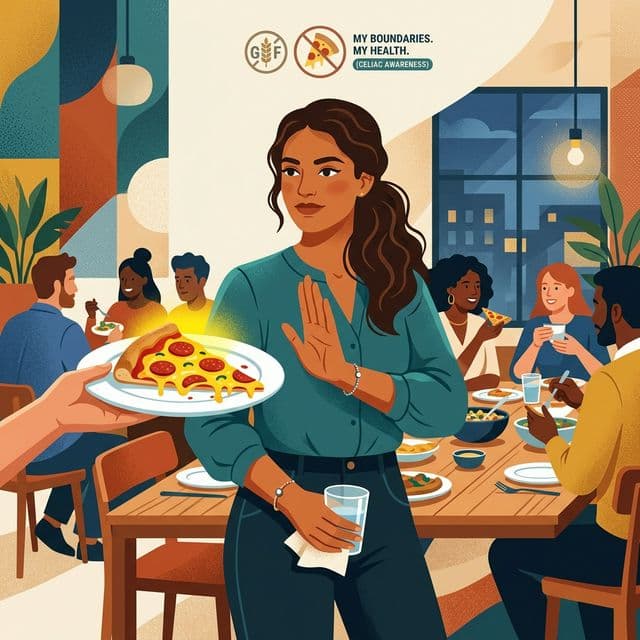
* *"You're being so difficult, just eat the pizza."*
Every time you hear this, you feel like a burden. But you need to hear this loudly and clearly: You are not a burden, and you are not being dramatic.
Your Health is Not Up for Debate
When a family member offers you food that isn't safe, they are often doing it out of love. But eating it just to "keep the peace" teaches them that your medical dietary requirements are just a preference that can be ignored.
You have to set a hard boundary.
The next time a relative insists you eat something you aren't 100% sure about, say:
*"I appreciate you thinking of me, but my doctor has been very strict about cross-contamination. Because this wasn't prepared in a separate kitchen, it will make me violently ill for a week. I'm going to eat the food I brought, but I'm so happy to be here spending time with you!"*
Make it about the medical reality, not a personal preference.
Bring Your Own Safe Party Food
The best strategy for family events is to always arrive with your own incredible food. When your dish looks amazing, no one feels sorry for you—they get jealous.
Party Essentials to Always Have Stocked:
🛒Simple Mills [almond flourAmazon ↗ Crackers + Dip Kit](https://www.amazon.com/dp/B0FHLT2Z11?tag=reda04b-20&linkCode=osi&th=1&psc=1) — These look and taste so premium that your non-celiac family will start eating them too.
🛒Hu Kitchen Chocolate Bars (Variety Pack)Amazon ↗ — When someone brings out the Oreos, pull out these. Beautifully wrapped, vegan, GF, and taste like boutique truffles.
The Trust Issue
Sometimes, a friend will swear they cooked a dish safely for you. But unless they understand that a standard wooden spoon holds gluten in its pores, the food is dangerous.
Instead of arguing with them about their kitchen habits, use tools to take the pressure off. Bring the Check Gluten app to the party. If they used a strange sauce or seasoning packet, scan it in front of them to show them the hidden wheat! It shifts the "blame" to the app and keeps you safe.
🔍 Not sure about a product?
Photograph any food label and the AI reads every ingredient, including the 500+ names gluten hides under. Free for 14 days.
Search Amazon for gluten-free health
Amazon search results · Look for a certified gluten-free seal on the label
Gluten-Free health on Amazon

RX Bars Variety Pack
Whole-food protein, no junk

KIND Protein Bars
12g protein, certified GF
Enjoy Life Snack Bars
Free from top 14 allergens
Celiac Safety Glossary
- Celiac disease
- Celiac disease is a serious autoimmune disorder in which ingesting gluten — a protein found in wheat, barley, and rye — triggers an immune response that damages the small intestine's villi, affecting approximately 1 in 100 people worldwide according to the Celiac Disease Foundation.
- Gluten
- Gluten is a family of storage proteins (prolamins and glutelins) found naturally in cereal grains like wheat (including varieties like spelt, kamut, and farro), barley, and rye, which acts as a binder to give food elasticity and shape.
- Cross-contamination
- Cross-contamination (or cross-contact) occurs when gluten-free food comes into contact with gluten-containing food or surfaces — such as shared cutting boards, toasters, fryers, or utensils — rendering otherwise safe food dangerous for people with celiac disease.
📢 Found this helpful? Share it!
Stop Guessing. Start Scanning.
Every ingredient label has hidden gluten risks. Check Gluten's AI catches them all — in 3 seconds flat.
Camera + text input
& cross-contamination
$0 today • cancel anytime

The Essential Celiac Cookbook & Survival Bundle
Stop stressing over dinner and crumbling bread. 300+ comfort mains, 200 baking masterclass recipes, 4-week meal plans, and grocery checklists.
About This Article
Check Gluten
Written with AI assistance and checked against published sources — not by a doctor or dietitian. Confirm anything that matters with the label, the manufacturer, or your own healthcare provider.
How our content is checked →Medical Disclaimer: This article is for informational purposes only and is not a substitute for professional medical advice. Always consult your physician or a registered dietitian before making dietary changes related to celiac disease or gluten sensitivity. Read full disclaimer.
📚Sources & Citations
- •Celiac Disease Foundation — celiac.org — Comprehensive research and patient resources on celiac disease
- •Beyond Celiac — beyondceliac.org — Research-driven celiac disease advocacy and resources
- •GFCO (Gluten-Free Certification Organization) — gfco.org — Certification standards (<10 ppm)
- •FDA Gluten-Free Labeling — fda.gov — Federal regulations for <20 ppm labeling
Content reviewed and fact-checked by our clinical & nutrition team. Last updated July 2026.
Never Miss a Hidden Gluten Alert
Weekly tips on safe eating, hidden gluten warnings, and recipes — free, and one click to unsubscribe.
Related Articles
10 Things to Say to Someone With Celiac Disease (And 5 to NEVER Say)
Celiac disease is incredibly isolating. If your friend, partner, or family member was just diagnosed, here is exactly how to support them—and the phrases that drive us crazy.
"Just a Little Bit Won't Hurt, Right?" How to Handle Family Who Don't Understand Celiac
They mean well, but family members who pressure you to "just scrape the croutons off" are exhausting. Here is exactly what to say to protect your health without starting a family feud.
Gluten-Free Dating: How to Navigate Restaurants, Relationships, and Rejection
Dating with celiac disease: when to tell your date, how to handle restaurants, and the GF kiss question answered.
Celiac Disease and Dating: The Honest Guide Nobody Writes
How to tell someone you have celiac on a first date, handle the "it is just a little gluten" comments, navigate shared kitchens, and build a relationship where your partner actually gets it.