Is Cornstarch Gluten-Free? The Ultimate Thickener Guide
This post may contain affiliate links. As an Amazon Associate, Check Gluten earns from qualifying purchases. Please read our disclosure policy.
Cornstarch is a pantry staple for thickening sauces and soups. While naturally gluten-free, the high risk of cross-contamination makes buying the right brand critical for celiacs.
Cornstarch is a pantry staple for thickening sauces and soups. While naturally gluten-free, the high risk of cross-contamination makes buying the right brand critical for celiacs.
Want to save this recipe?
Enter your email and we'll send it to you! Plus, get new recipes every week.
✓Key Takeaways
Is Cornstarch Gluten-Free? The Short Answer
Yes, pure cornstarch is naturally gluten-free. It is extracted entirely from the endosperm of the corn kernel, which does not contain the gluten protein. However, because cornstarch is a fine, powdery flour, it is frequently processed in the same agricultural mills and manufacturing facilities as wheat flour. For individuals with celiac disease, generic cornstarch carries a severe risk of cross-contamination.
The Gravy Disaster
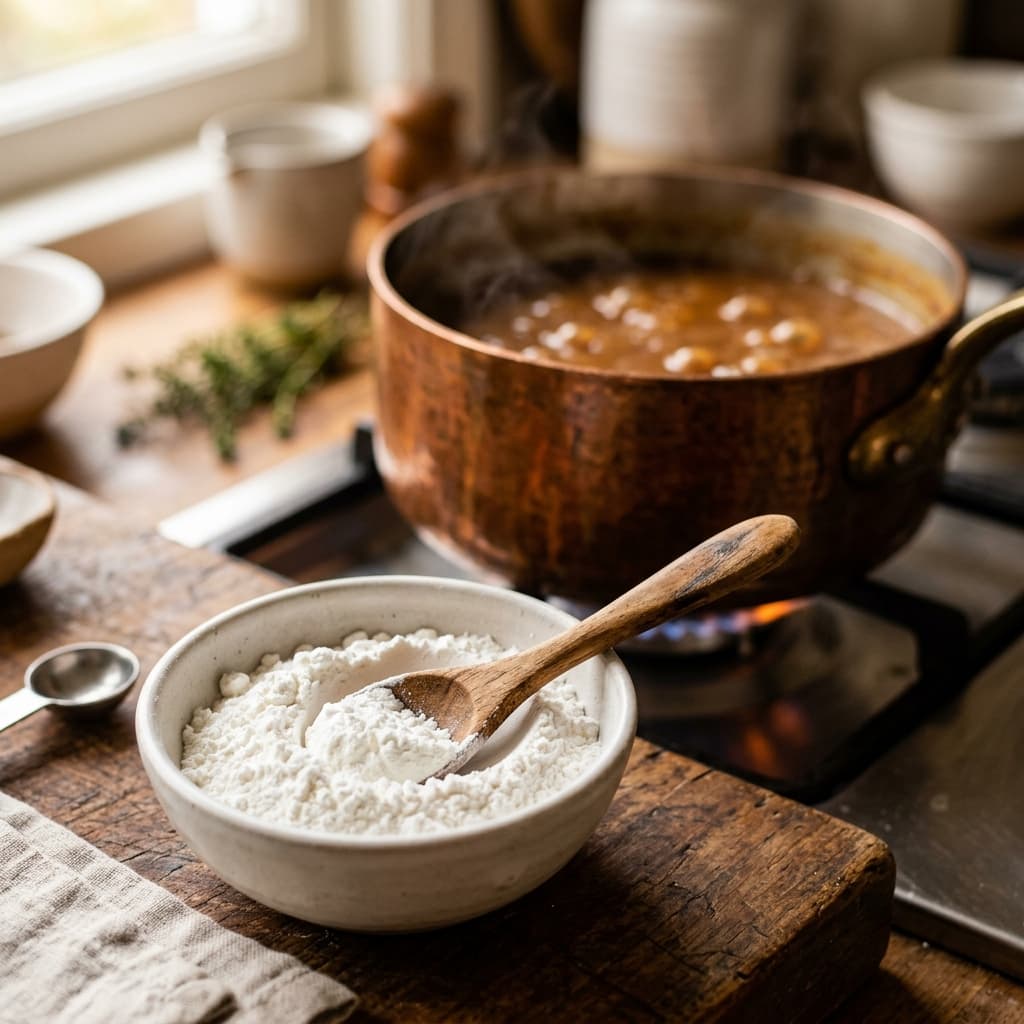
It is Thanksgiving. You volunteered to make the gluten-free gravy so that you could eat it safely. You used gluten-free turkey drippings, gluten-free chicken broth, and thickened it with a brand new, generic box of cornstarch from the grocery store.
Twenty minutes after dinner, your stomach is in knots. You did everything right. Why are you having a celiac reaction?
The answer lies not in the ingredients, but in how the product was manufactured.
📩 Want more tips like this?
Join celiacs getting weekly gluten-free tips, recipes, and hidden gluten alerts.
No spam. Unsubscribe anytime.
The Danger of Fine Powders
In the world of food manufacturing, fine powders (like flour, starch, and powdered sugar) are notorious for cross-contamination.
When a factory mills wheat flour, the dust literally hangs in the air. It settles into the machinery, on the conveyor belts, and in the packaging funnels. If that exact same machinery is later used to package generic cornstarch without undergoing an intense, sterilized wet-cleaning process, the cornstarch will pick up wheat dust.
Under FDA guidelines, a product must test below 20 parts per million (ppm) of gluten to be considered safe for celiacs. A single speck of wheat dust falling into a box of cornstarch can push it over that limit.
Avoid Bulk Bins at All Costs
Never, ever buy cornstarch from the bulk bins at health food stores. The scoops are frequently swapped between the wheat flour bins and the cornstarch bins by other customers, making them a guaranteed source of cross-contamination.
Search Amazon for gluten-free baking
Amazon search results · Look for a certified gluten-free seal on the label
Gluten-Free baking on Amazon

Bob's Red Mill GF 1-to-1 Flour
Direct substitute for regular flour

King Arthur GF Flour
Professional baking quality

Xanthan Gum
Essential GF binder
Safe Cornstarch Brands You Can Trust
To protect yourself, you must buy cornstarch from companies that test their final products and maintain strict facility protocols.
🍞 Tired of GF food that tastes like cardboard?
500+ gluten-free recipes, a baking masterclass and 4 weeks of meal plans — instant PDF download.
Gluten-Free Alternatives to Cornstarch
If you have a corn allergy in addition to celiac disease, or if you simply prefer a different texture, there are excellent gluten-free alternatives for thickening sauces and pies:
* 🛒Tapioca StarchAmazon ↗: Extracted from the cassava root. It creates a very glossy, smooth finish, making it perfect for fruit pies.
* 🛒Arrowroot PowderAmazon ↗: Works similarly to cornstarch but freezes better. It is excellent for sauces you plan to meal-prep and freeze.
* Potato Starch: A great thickener for savory soups and gravies.
FAQs
Is modified corn starch gluten-free?
In the United States, yes. By law, if "modified food starch" is derived from wheat, it must be explicitly declared on the label (e.g., "Modified Food Starch (Wheat)"). If it just says "Modified Corn Starch," it is derived from corn. However, cross-contamination risks still apply depending on the manufacturer.
Can I substitute 🛒gluten-free flourAmazon ↗ for cornstarch?
Yes, but you need twice as much. If a recipe calls for 1 tablespoon of cornstarch to thicken a sauce, you will need 2 tablespoons of an all-purpose gluten-free flour blend.
How can I verify if my pantry staples are safe?
Stop guessing and start scanning. Download the Check Gluten App. You can scan any ingredient label in your pantry, and our AI will instantly warn you if the brand is known for high-risk manufacturing practices.
🔍 Not sure about a product?
Photograph any food label and the AI reads every ingredient, including the 500+ names gluten hides under. Free for 14 days.
Search Amazon for gluten-free baking
Amazon search results · Look for a certified gluten-free seal on the label
Gluten-Free baking on Amazon
Bob's Red Mill GF 1-to-1 Flour
Direct substitute for regular flour
King Arthur GF Flour
Professional baking quality
Xanthan Gum
Essential GF binder
Celiac Safety Glossary
- Celiac disease
- Celiac disease is a serious autoimmune disorder in which ingesting gluten — a protein found in wheat, barley, and rye — triggers an immune response that damages the small intestine's villi, affecting approximately 1 in 100 people worldwide according to the Celiac Disease Foundation.
- Gluten
- Gluten is a family of storage proteins (prolamins and glutelins) found naturally in cereal grains like wheat (including varieties like spelt, kamut, and farro), barley, and rye, which acts as a binder to give food elasticity and shape.
- Cross-contamination
- Cross-contamination (or cross-contact) occurs when gluten-free food comes into contact with gluten-containing food or surfaces — such as shared cutting boards, toasters, fryers, or utensils — rendering otherwise safe food dangerous for people with celiac disease.
- Gluten-free certification
- Gluten-free certification, such as the GFCO (Gluten-Free Certification Organization) seal, verifies that a product contains fewer than 10 parts per million (ppm) of gluten — stricter than the FDA's 20 ppm threshold for "gluten-free" labeling.
- Parts Per Million (ppm)
- Parts per million (ppm) is a unit of measurement used to quantify gluten concentration. Labeling laws in the US and Europe permit a maximum threshold of 20 ppm, while Australia requires no detectable gluten (0 ppm).
📢 Found this helpful? Share it!
Stop Guessing. Start Scanning.
Every ingredient label has hidden gluten risks. Check Gluten's AI catches them all — in 3 seconds flat.
Camera + text input
& cross-contamination
$0 today • cancel anytime

The Essential Celiac Cookbook & Survival Bundle
Stop stressing over dinner and crumbling bread. 300+ comfort mains, 200 baking masterclass recipes, 4-week meal plans, and grocery checklists.
About This Article
Check Gluten
Written with AI assistance and checked against published sources — not by a doctor or dietitian. Confirm anything that matters with the label, the manufacturer, or your own healthcare provider.
How our content is checked →Medical Disclaimer: This article is for informational purposes only and is not a substitute for professional medical advice. Always consult your physician or a registered dietitian before making dietary changes related to celiac disease or gluten sensitivity. Read full disclaimer.
📚Sources & Citations
- •Celiac Disease Foundation — celiac.org — Comprehensive research and patient resources on celiac disease
- •Beyond Celiac — beyondceliac.org — Research-driven celiac disease advocacy and resources
- •GFCO (Gluten-Free Certification Organization) — gfco.org — Certification standards (<10 ppm)
- •FDA Gluten-Free Labeling — fda.gov — Federal regulations for <20 ppm labeling
Content reviewed and fact-checked by our clinical & nutrition team. Last updated July 2026.
Never Miss a Hidden Gluten Alert
Weekly tips on safe eating, hidden gluten warnings, and recipes — free, and one click to unsubscribe.
Related Articles
Is Vanilla Extract Gluten-Free? Pure vs Imitation
Baking a GF cake? Don't let your vanilla extract ruin it. Discover the difference between pure and imitation vanilla, and why the alcohol used matters for celiacs.
Is Baking Powder Gluten-Free? Brands to Trust for GF Baking
You are making a gluten-free cake, but did you check the baking powder? Discover why some baking powders contain hidden wheat starch and which brands are certified safe.
Is Yeast Gluten-Free? Baker's vs Brewer's vs Nutritional Yeast
Not all yeast is created equal. While baker's yeast is safe for your GF bread, Brewer's yeast is packed with gluten. Here is the ultimate celiac guide to yeast.
The Gluten-Free Condiments Guide: 10 Sauces That Are Secretly Dangerous
That bottle of soy sauce, BBQ sauce, or salad dressing in your fridge might be the reason you keep getting sick. Here are the safe swaps every celiac needs.